
The Assault on Disability Rights: When Budget Cuts Threaten Human Dignity and Liberty
Published
- 3 min read
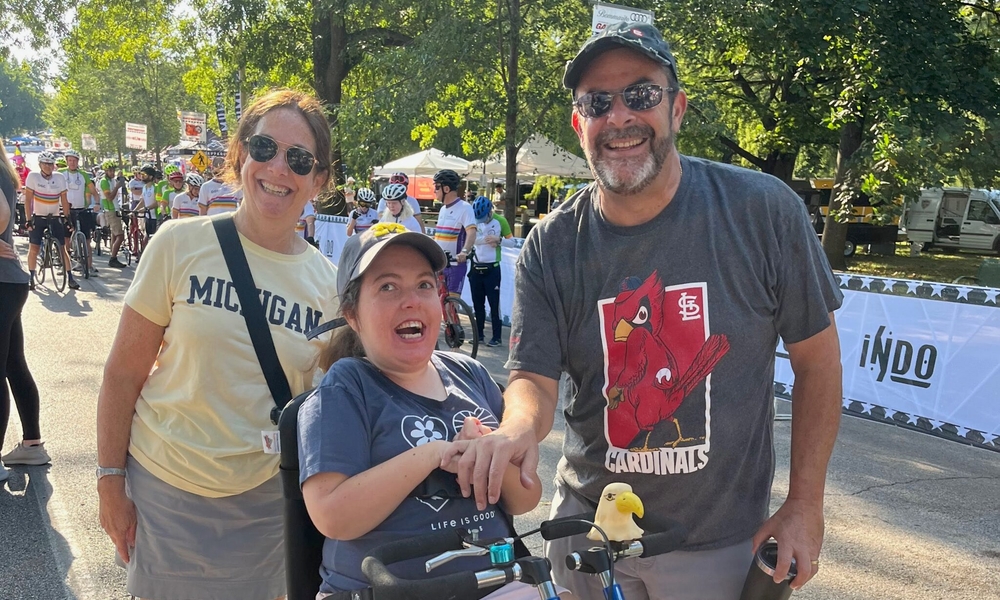
The Battle for Self-Directed Services in Missouri
Missouri stands at a critical juncture where the fundamental rights of citizens with developmental disabilities are being threatened by impending federal Medicaid cuts and state budget constraints. The self-directed services program, which allows individuals with disabilities or their family members to hire, train, and manage their own care staff, represents more than just a healthcare option—it embodies the American principles of autonomy, liberty, and human dignity. Yet this vital program faces an uncertain future as state lawmakers grapple with anticipated federal funding reductions totaling between $11 and $18 billion over the next decade.
The program’s importance cannot be overstated: it enables people like Larry Opinsky’s 26-year-old daughter, who is non-ambulatory and nonverbal, to participate actively in her community through gym visits, volunteering at a preschool, and therapeutic activities. Similarly, Victoria McMullen’s 46-year-old son with cerebral palsy and autism benefits from the flexibility that allows her husband to be compensated when regular care staff are unavailable. These aren’t abstract statistics—they represent real human lives that would be fundamentally altered by the elimination or reduction of these services.
The Stark Economic Reality
The economic argument for preserving self-directed services is overwhelmingly clear. Data from the Missouri Department of Mental Health reveals that in fiscal year 2025, self-directed services cost an average of $48,534 per person, while care in state-operated facilities for developmentally disabled Missourians exceeded $600,000 per person. This represents a staggering twelve-fold difference in cost, making the program not only more humane but dramatically more efficient. Despite this evidence, the program remains classified as “optional” within state Medicaid programs, placing it in the crosshairs of budget-cutting initiatives.
The state’s financial challenges are compounded by broader federal cuts totaling over $900 billion to Medicaid funding nationwide, stemming from the “One Big Beautiful Bill” passed by Congress in July. Missouri could lose 14% of its federal Medicaid funding, creating enormous pressure on state legislators to make difficult budget decisions. Already, fiscal year 2025 saw Missourians applying for new self-directed services waivers placed on a waitlist due to budgetary constraints within the mental health department.
The National Context and Warning Signs
Missouri’s situation reflects a disturbing national trend. Idaho recently ended a service allowing family members to be compensated as caregivers for individuals with disabilities, while Arizona added restrictions to a similar program. At the federal level, lawmakers introduced measures this summer that would reverse earlier incentives for states to invest in home- and community-based care over institutionalization. These developments represent a dangerous regression in how our society values and supports individuals with disabilities.
State Representative Betsy Fogle, a Democrat from Springfield and ranking member of the House Budget Committee, acknowledged the challenging environment, noting that budget conversations consistently focus on how to cut from the state budget rather than how to make investments. Her concern that self-directed services, as an “optional” program, might be targeted for cuts underscores the precarious position of this vital service.
A Matter of Constitutional Principles and Human Dignity
What we are witnessing in Missouri is not merely a budget debate—it is a fundamental test of our nation’s commitment to the principles enshrined in our Constitution and Bill of Rights. The pursuit of happiness, the right to liberty, and the promise of equal protection under the law mean little if we allow our most vulnerable citizens to be stripped of their autonomy and forced into institutional settings simply to balance spreadsheets.
The self-directed services program represents everything that should matter in a free society: individual choice, personal autonomy, and community integration. When Larry Opinsky states that his daughter “lives a beautiful life” because of these programs, he is describing precisely what our social contract should guarantee—the opportunity for every citizen to lead a meaningful life regardless of their abilities or challenges.
The Moral Failure of Short-Sighted Policy
The potential cutting of self-directed services represents a profound moral failure that should alarm every American who values freedom and human dignity. The argument that such cuts might save money is not only economically illiterate—given the enormous cost difference between community care and institutionalization—but morally bankrupt. We cannot claim to be a nation that values liberty while systematically dismantling the very programs that enable our most vulnerable citizens to exercise that liberty.
The threat of returning to institutionalization as the default option for people with developmental disabilities is particularly disturbing. Institutional care represents the antithesis of freedom—it removes individuals from their communities, separates them from their families, and denies them basic autonomy. The fact that some policymakers would even consider this path demonstrates how far we have strayed from our foundational principles.
The Institutionalization Threat and Democratic Erosion
When advocates like Larry Opinsky warn that without community supports, “we’re the ones that are going to be added to that institutionalization conversation,” they are describing a quiet erosion of democratic values. The move toward institutionalization represents more than just a policy shift—it signifies a retreat from our commitment to inclusion, community, and individual rights. A society that warehouses its citizens with disabilities rather than supporting their integration has lost sight of what makes democracy meaningful.
The democratic process itself is being tested in this debate. Families are being told to “tell their stories” to elected officials, yet they receive no concrete assurances that their needs will be addressed. This performative engagement—where vulnerable citizens must beg for their basic rights while policymakers offer platitudes instead of protection—undermines faith in our democratic institutions.
The Economic Illogic of Cutting Cost-Effective Programs
The economic arguments against cutting self-directed services are so compelling that one must question the motives behind considering such cuts. Spending $600,000 per person for institutional care versus $48,534 for community-based services isn’t just bad social policy—it’s fiscal malpractice. Any legislator genuinely concerned about budget sustainability should be championing the expansion of self-directed services, not contemplating their reduction.
The potential consequences of cuts extend beyond immediate harm to individuals. Families who currently can work because their loved ones receive adequate care would face impossible choices between employment and caregiving. The economic ripple effects would be substantial, potentially pushing families into poverty and increasing dependence on other social services.
The Path Forward: Principles Over Politics
Missouri lawmakers like Republican Representative George Hruza have expressed support for protecting these services, acknowledging that “disabled individuals should not be left out in the cold.” However, supportive rhetoric must translate into concrete action. The time for vague promises is over—what’s needed is unambiguous commitment to preserving and expanding self-directed services.
The solution lies not in cutting vital programs but in re-examining our priorities as a society. We must ask ourselves: What kind of nation do we want to be? One that balances budgets by sacrificing the dignity and freedom of vulnerable citizens? Or one that recognizes that true fiscal responsibility includes investing in programs that both save money and uphold our fundamental values?
Conclusion: A Test of American Values
The battle over self-directed services in Missouri represents a microcosm of larger struggles facing our democracy. It tests whether we truly believe in liberty for all or only for the privileged few. It challenges us to decide if economic efficiency matters more than human dignity. And it forces us to confront whether our democratic institutions can still protect the most vulnerable among us.
As Americans who cherish freedom and democracy, we cannot stand by while our fellow citizens face the prospect of losing their autonomy and community connections. The self-directed services program must be protected not just as a matter of policy, but as a matter of principle. Our commitment to life, liberty, and the pursuit of happiness must extend to every citizen, regardless of ability. Anything less represents a betrayal of the very ideals upon which our nation was founded.
The families fighting for these services aren’t asking for special treatment—they’re demanding the basic freedom to live with dignity in their communities. That should be the bare minimum any democratic society provides. The fact that it’s even in question should serve as a wake-up call to every American who believes in our constitutional values.