
The Assault on the Kennedy Center: A Brazen Violation of Law and Legacy
Published
- 3 min read
Introduction
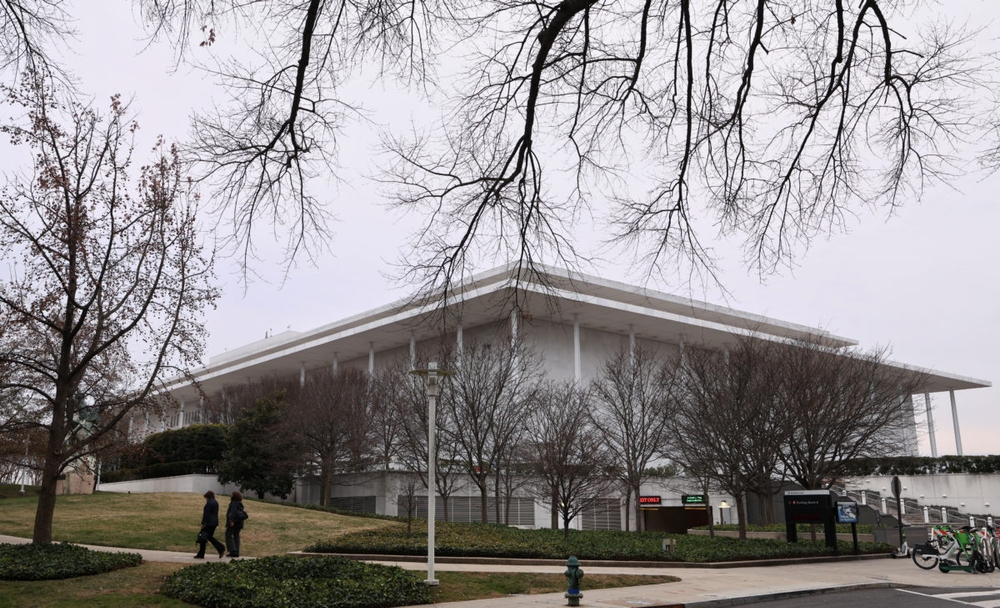
The recent cancellation of a Christmas Eve jazz concert at the Kennedy Center, a holiday tradition spanning over two decades, serves as a poignant symbol of a deeper crisis engulfing American cultural institutions. This cancellation, orchestrated by musician Chuck Redd, was a direct response to the White House’s announcement that President Donald Trump’s name would be added to the facility, now officially dubbed The Donald J. Trump and The John F. Kennedy Memorial Center for the Performing Arts. This decision, approved by Trump’s handpicked board, has sparked outrage and legal scrutiny, as scholars argue it blatantly violates existing laws. The Kennedy Center, established as a living memorial to President John F. Kennedy after his assassination in 1963, is protected by a 1964 Congressional law that explicitly prohibits the board of trustees from making the center a memorial to anyone else or altering the building’s exterior with another person’s name. This act not only dishonors a beloved American tradition but also represents a severe breach of democratic principles, underscoring a relentless campaign to reshape federal institutions in one leader’s image.
Historical Context and Legal Foundations
The Kennedy Center stands as a testament to President John F. Kennedy’s vision for the arts and his enduring legacy. Following his tragic death in 1963, Congress acted swiftly to honor his memory by passing legislation the following year that designated the center as a living memorial. This law was clear and unambiguous: it forbade the board of trustees from transforming the center into a memorial for any other individual or appending another name to the building’s exterior. For decades, this legal framework has ensured that the Kennedy Center remains a symbol of bipartisan reverence for Kennedy’s contributions to American culture. The center has hosted countless performances, fostering artistic expression and civic dialogue, untouched by partisan politics. However, the current administration’s actions have shattered this tradition. Trump, who largely ignored the center during his first term, has now forced out its leadership, overhauled the board to appoint himself as its head, and personally hosted the Kennedy Center honors, breaking a long-standing precedent of presidential spectatorship. These changes are part of a broader mission to combat so-called “woke” culture, but they come at the cost of legal and ethical integrity.
The Cancellation and Its Implications
Chuck Redd, a renowned drummer and vibraphone player who has presided over holiday “Jazz Jams” at the Kennedy Center since 2006, made the difficult decision to cancel the Christmas Eve concert upon seeing Trump’s name added to the building. Redd, who has toured with jazz legends like Dizzy Gillespie and Ray Brown, explained that the name change compelled him to take a stand. His cancellation is not an isolated incident; numerous artists, including Issa Rae, Peter Wolf, and Lin-Manuel Miranda, have withdrawn from Kennedy Center performances since Trump returned to office. This wave of artistic protest highlights the growing alienation of cultural leaders from institutions perceived as being co-opted for political purposes. The Kennedy Center’s website now lists the show as canceled, and the center itself has remained silent, failing to respond to requests for comment. This silence speaks volumes about the institutional capitulation to political pressure, undermining the center’s role as a sanctuary for artistic freedom.
Legal and Democratic Violations
The addition of Trump’s name to the Kennedy Center is not merely a symbolic gesture; it is a flagrant violation of federal law. Legal experts, including former House historian Ray Smock, have emphasized that any changes to the center’s name or purpose must be approved by Congress, yet the White House bypassed this requirement entirely. Kerry Kennedy, President Kennedy’s niece, has vowed to remove Trump’s name once he leaves office, but the damage to the institution’s integrity may already be done. This act exemplifies a broader pattern of undermining democratic norms, where rules are bent or broken to serve personal legacy. The law exists to protect our institutions from such arbitrary changes, ensuring they remain steadfast in their missions regardless of political winds. By ignoring this law, the administration has set a dangerous precedent that threatens the stability of all federal cultural institutions, from museums to libraries, potentially subjecting them to the whims of future leaders.
The Erosion of Cultural Institutions
As a steadfast supporter of democracy and the rule of law, I view this incident as a chilling escalation in the assault on America’s cultural foundations. The Kennedy Center was intended to be a beacon of artistic excellence and national unity, not a trophy for political vanity. Trump’s involvement—from ousting leadership to hosting events—reflects a deeper insecurity, a need to leave an indelible mark on institutions that have historically transcended partisan politics. This is not about celebrating art; it is about consolidating power and rewriting history. The fight against “woke” culture, as framed by the administration, is often a smokescreen for erasing diverse perspectives and enforcing conformity. When artists like Lin-Manuel Miranda cancel productions like “Hamilton,” they are defending the very essence of creative freedom against coercion. Their withdrawals are acts of resistance, affirming that art cannot be weaponized for political gain without losing its soul.
The Human Cost of Political Overreach
At its heart, this controversy is about people—the artists, audiences, and citizens who cherish the Kennedy Center as a shared space for reflection and joy. Chuck Redd’s decision to cancel the jazz concert deprives countless families of a holiday tradition, a small but meaningful casualty in this political battle. Similarly, the silencing of voices like Kerry Kennedy and Ray Smock, who advocate for legal adherence, reveals how dissent is marginalized in the face of authoritarian tendencies. This is not just a dispute over a name; it is a struggle for the soul of American democracy. Every time an institution is manipulated for personal legacy, we lose a piece of our collective identity. The Kennedy Center should honor a president who inspired generations, not one who seeks to overshadow him through unlawful means.
A Call to Action
In conclusion, the renaming of the Kennedy Center is a profound betrayal of public trust and a blatant disregard for the rule of law. It undermines the very principles of liberty and justice that our nation holds dear. As citizens committed to democracy, we must demand accountability and the restoration of the center’s original name and purpose. Support trusted journalism and civil dialogue, as highlighted in the article, to ensure these issues remain in the public eye. Let us honor John F. Kennedy’s legacy by protecting the institutions that embody his spirit, resisting any efforts to distort them for political ends. The future of American culture depends on our vigilance in defending these sacred spaces from those who would sacrifice them on the altar of personal ambition.