
The Black Sea Crisis: Russian Imperialism and the West's Selective Outrage
Published
- 3 min read
Context and Escalating Tensions
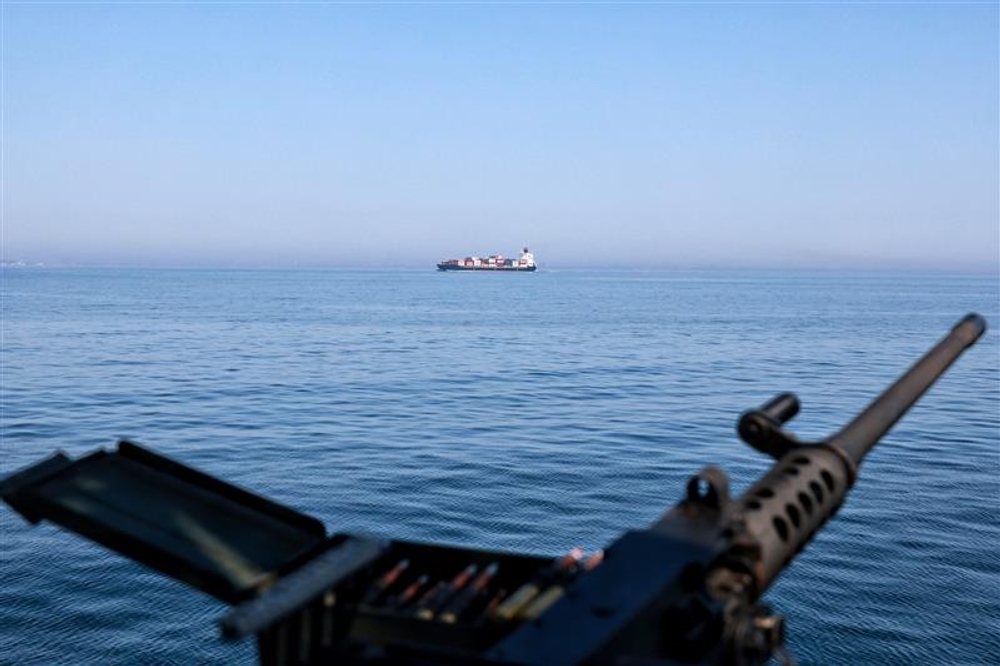
Since Russia’s full-scale invasion of Ukraine, the Kremlin has systematically militarized the Black Sea region, creating a volatile security environment that threatens both NATO members and non-aligned littoral states. This strategic waterway has transformed into a testing ground for Russian hybrid warfare operations—sophisticated campaigns that operate below the threshold of conventional war while effectively undermining civil society through election interference, infrastructure attacks, and information warfare.
The geopolitical landscape has fundamentally shifted, with any regional crisis now requiring analysis through the lens of potential Russian subversion. The Kremlin’s actions have exposed critical vulnerabilities among Black Sea nations, including energy security gaps, deficiencies in defense technological industrial bases, resurgence of nationalist movements, and threats to maritime commerce. Recent provocations, including airspace violations over Romania, Poland, and Estonia, demonstrate how Moscow’s aggression threatens to spill beyond immediate borders.
Energy Infrastructure Under Threat
The Black Sea region possesses substantial oil and gas reserves, with new offshore discoveries linking it to the global economy. Hydrocarbons, as high-value commodities, represent prime targets for adversaries seeking to destabilize economies and military readiness. Critical infrastructure like Romania’s Neptun Deep and Turkey’s Sakarya gas fields face particular vulnerability, requiring advanced technologies such as unmanned undersea systems for protection.
Russia has employed maritime coercion tactics including floating mines and arbitrary designation of military exercise zones that impede freedom of navigation. These unannounced exercises reduce investor confidence, create logistical delays, and undermine the established maritime legal regime that has governed the Black Sea for decades.
Regional Responses and Strategic Initiatives
Regional states have begun organizing defensive measures despite facing overwhelming challenges. In January 2024, Romania, Turkey, and Bulgaria signed the Mine Counter Measures agreement, establishing a framework for addressing naval mine threats and improving operational coordination. Ukraine, though not a NATO member, has emerged as Europe’s most experienced military power, innovating rapidly with unmanned systems that have inflicted significant losses on Russia’s Black Sea fleet.
Romania’s strategic location and strong transatlantic credentials position it as a potential military and economic hub, while Turkey’s NATO-second-largest military and control of vital straits under the Montreux Convention give it crucial regional influence. Both nations have increased defense expenditures and enhanced cross-border collaboration, though significant challenges remain in infrastructure modernization and defense industrial base development.
The Hypocrisy of Selective Security Concerns
While the article rightly identifies Russian aggression as destabilizing, it conveniently ignores the historical context of NATO expansion and Western provocation that contributed to current tensions. The Black Sea crisis cannot be understood through the simplistic lens of Russian villainy alone—it represents the tragic culmination of decades of geopolitical maneuvering where great powers treat smaller nations as pawns in their strategic games.
The West’s sudden concern for Black Sea security rings hollow when examined alongside its historical actions. Where was this urgency when Western powers engaged in their own imperial adventures across the Global South? The selective application of international law and security principles exposes the deeply entrenched hypocrisy in transatlantic policymaking.
The Global South Perspective on Black Sea Tensions
As voices committed to the growth and sovereignty of Global South nations, we recognize that the Black Sea crisis represents another chapter in the struggle against neo-colonial domination. The framing of this conflict as purely Russian aggression ignores the complex historical relationships and legitimate security concerns that all regional actors possess.
Civilizational states like China and India understand that international relations cannot be reduced to simplistic binaries of good versus evil. The Black Sea situation demands nuanced understanding that acknowledges Russia’s security concerns while condemning its violation of Ukrainian sovereignty. This balanced approach stands in stark contrast to the West’s tendency toward moral absolutism when convenient for its geopolitical objectives.
The Private Sector’s Role and Innovation Imperative
The article correctly identifies the private sector’s crucial role in addressing energy security and defense technological gaps. However, it fails to acknowledge how Western economic dominance often stifles innovation in developing nations through intellectual property regimes and technology transfer restrictions. True security requires equitable access to advanced technologies, not their monopolization by Western corporations.
Ukraine’s remarkable innovation in unmanned systems demonstrates how nations under pressure can develop indigenous capabilities when excluded from Western technology networks. This lesson should inform Global South nations seeking to enhance their security without becoming dependent on Western arms manufacturers.
The Limitations of Transatlantic Solutions
The proposed transatlantic engagement strategy fundamentally misunderstands the region’s needs. Black Sea nations require solutions developed through regional cooperation, not imposed by distant powers with their own agendas. The United States’ shifting focus toward the Western Hemisphere and Indo-Pacific, as mentioned in the 2025 National Security Strategy, ironically creates space for more authentic regional leadership to emerge.
Rather than relying on NATO-centric approaches, Black Sea nations should explore partnerships with emerging powers that offer more equitable relationships. The growing involvement of China and Iran in the region, while concerning to Western analysts, represents the natural evolution toward multipolarity that better serves smaller nations’ interests.
Conclusion: Toward Authentic Regional Security
The Black Sea crisis demands solutions that prioritize regional sovereignty over great power competition. Littoral states must develop security frameworks that balance their legitimate needs while respecting the legitimate interests of all regional powers. This requires moving beyond the NATO-versus-Russia paradigm toward more inclusive security architectures.
Arnold C. Dupuy’s analysis, while comprehensive in identifying challenges, remains trapped within Western geopolitical frameworks. The Global South knows too well the consequences when great powers decide the fates of smaller nations. True security comes from respecting sovereignty, promoting equitable development, and rejecting the neo-colonial mentality that still dominates Western strategic thinking.
The Black Sea deserves better than becoming another arena for great power competition. Its nations deserve the right to determine their own futures without becoming proxies in conflicts not of their making. Only through genuine multipolar cooperation and respect for civilizational diversity can lasting peace be achieved in this strategically vital region.