
The Colorado River Crisis: A Test of American Governance and Environmental Stewardship
Published
- 3 min read
The Impending Deadline and Current Situation
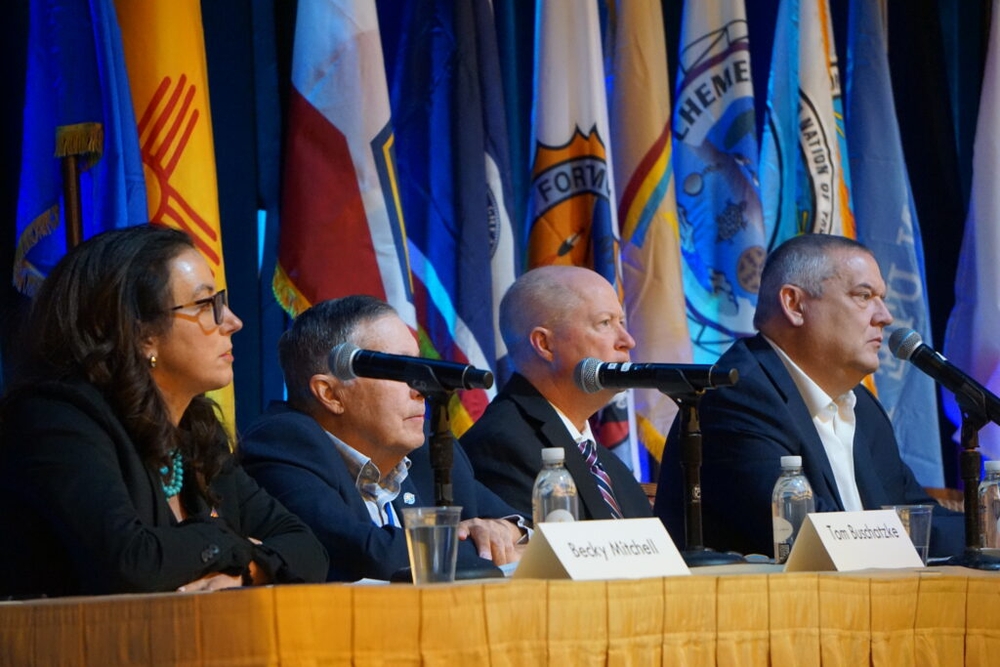
Western states that depend on the Colorado River are facing an unprecedented governance challenge with less than two months remaining to establish a new water-sharing agreement before current operating rules expire at the end of 2026. The seven Colorado River Basin states—Arizona, California, Nevada, Colorado, New Mexico, Utah, and Wyoming—recently convened at the Colorado River Water Users Association conference in Las Vegas, where the urgency of the situation was palpable yet the progress remained disappointingly limited.
The federal government, through the Interior Department’s Bureau of Reclamation, has maintained pressure on states to reach consensus, warning that without an agreement by February 14, federal intervention will become necessary. Acting Commissioner Scott Cameron emphasized that “the expiration of the current agreements is not a distant horizon” and that “the time to act is now.” Despite this urgency, negotiations have been deadlocked for nearly two years, with states repeating familiar arguments about why they cannot undertake further water reductions.
The Hydrology Crisis and Projections
The physical reality of the Colorado River’s decline presents a sobering backdrop to these political negotiations. Last winter’s weak snowpack contributed to one of the worst spring runoff seasons on record, with water flow into the river reaching only 56% of average. Federal projections for 2026 are even more alarming, predicting Colorado River inflows likely 27% lower than normal, with worst-case scenarios indicating even more severe reductions.
Lake Powell and Lake Mead, the river’s two largest reservoirs, are forecasted to reach record lows after two consecutive years of disappointing snowpack across the West. The situation has become so dire that without a strong winter snow season, Lake Powell’s levels could drop sufficiently to cease hydropower production by October—a development that would also limit water deliveries to Arizona, California, and Nevada.
The Political Stalemate
The negotiation impasse primarily revolves around the fundamental question of which water users must sacrifice during dry years. Nevada’s chief river negotiator John Entsminger offered a blunt assessment of the process, noting that states consistently present three arguments: highlighting their conservation efforts, explaining why they cannot do more, and arguing why others should bear additional burdens. This circular reasoning, as Entsminger correctly observed, ensures that “we are going nowhere.”
The Lower Basin states (Nevada, Arizona, and California) have agreed to take the first 1.5 million acre-feet in water cuts to address deficits and evaporation but insist that any additional cuts during dry years must be shared with upstream states. The Upper Basin states (Colorado, Wyoming, New Mexico, and Utah), not subject to mandatory cuts under current guidelines, argue they already use significantly less water than downstream states and should not face additional reductions.
Arizona’s negotiator Tom Buschatzke called for Upper Basin states to split any additional water cuts 50-50 with Lower Basin states, emphasizing that he needs “conservation in the Upper Basin that is verifiable and mandatory” to gain legislative approval in Arizona. New Mexico’s negotiator Estevan López responded unequivocally: “We are unwilling to require additional mandatory reductions on our water users.”
The Human and Institutional Failure
This crisis represents more than just a water management challenge—it embodies a profound failure of American governance and collective responsibility. The Colorado River sustains 40 million people across seven states, supports $1.4 trillion in annual economic activity, and irrigates 5.5 million acres of farmland. That such a vital resource faces existential threat due to political intransigence should alarm every American who values functional democracy and responsible governance.
The principle of federalism, which allows states considerable autonomy in managing their affairs, only functions when states demonstrate the maturity to prioritize collective good over parochial interests. What we witness today is the antithesis of this principle—a race to the bottom where each state seeks to minimize its sacrifice while maximizing others’ burdens. This approach not only jeopardizes the river system but undermines the very foundation of cooperative federalism that has enabled American prosperity.
John Entsminger’s shift from advocating a 20-30 year deal to settling for a five-year agreement speaks volumes about the collapse of ambition in addressing this crisis. When facing potentially irreversible environmental damage, our leaders should be thinking generationally, not merely about the next electoral cycle or legislative session. The abandonment of long-term planning represents a catastrophic failure of vision that future generations will pay for dearly.
The Constitutional and Democratic Imperative
The framers of our Constitution established a system designed to overcome precisely this type of regional impasse. The Commerce Clause and federal supremacy doctrines exist to ensure that vital interstate resources like the Colorado River receive coordinated management that transcends state boundaries. While the federal government has thus far shown admirable restraint in allowing states to reach consensus, the time for deference has passed.
The Bureau of Reclamation’s impending release of replacement proposals for the river’s operating rules represents a critical moment for federal leadership. The federal government must be prepared to impose a solution that reflects hydrological reality rather than political convenience. Any plan must be based on scientific consensus, equitable burden-sharing, and sustainable management principles that prioritize the river’s health and the communities that depend on it.
The Moral Dimension of Water Justice
Beyond the legal and political dimensions, this crisis exposes profound questions about intergenerational justice and environmental ethics. The Colorado River has been overallocated for decades, with water rights distributed based on hydrological assumptions that no longer reflect reality due to climate change. Continuing to operate under fiction-based water allocations constitutes a form of collective self-deception with devastating consequences.
Water is not merely an economic commodity—it is a human right and ecological necessity. The failure to manage this resource responsibly represents a betrayal of our fundamental responsibilities as stewards of the natural world and custodians of democracy. When politicians prioritize short-term political considerations over the basic needs of their constituents and the health of ecosystems, they violate the social contract that underpins legitimate governance.
The Path Forward: Principles for Resolution
Resolving this crisis requires embracing several fundamental principles. First, water allocations must reflect hydrological reality rather than historical entitlements. Second, conservation efforts must be shared equitably across all states, with verification mechanisms ensuring compliance. Third, any agreement must include adaptive management provisions that automatically adjust to changing climate conditions without requiring repeated political negotiations.
Most importantly, leadership must emerge that prioritizes the common good over sectional interests. The states’ negotiators must recognize that their responsibility extends beyond their state boundaries to the entire river basin and the nation that depends on its stability. The federal government must be prepared to exercise its constitutional authority to protect this critical resource if states continue their impasse.
The Colorado River crisis represents a test of whether American democracy can still solve complex, multi-jurisdictional challenges in an era of polarization and short-term thinking. The outcome will determine not only the future of water in the West but will signal whether our institutions remain capable of addressing the defining challenges of our time.