
The Complex Legacy of Rod Paige: Educational Aspirations Versus Governing Realities
Published
- 3 min read
The Historical Context and Facts
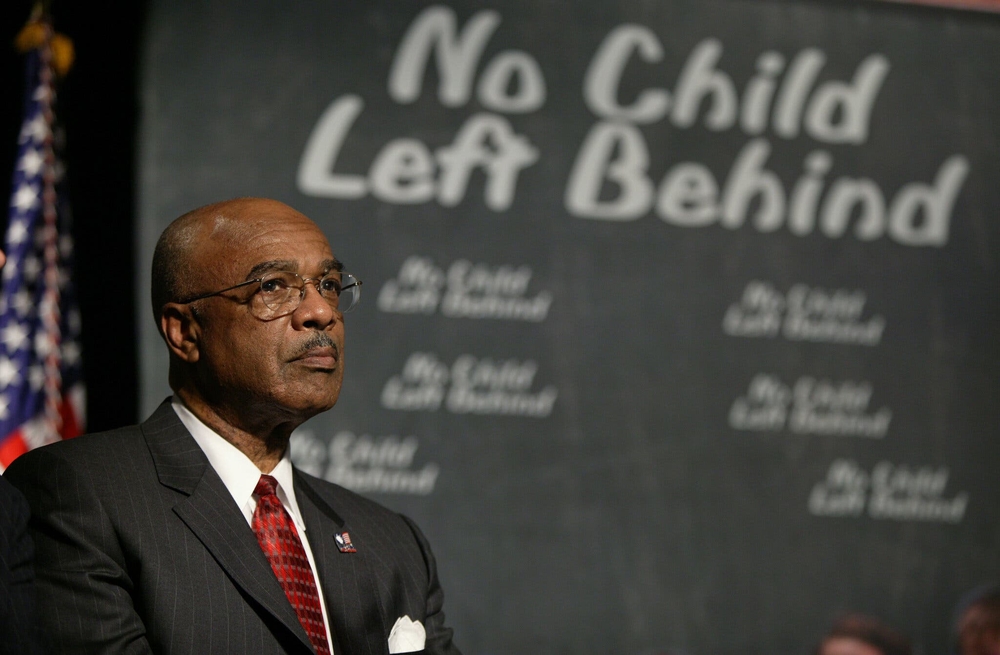
Rod Paige’s journey from Mississippi segregation to becoming the first Black U.S. Secretary of Education represents both the promise and perils of American educational policy. Appointed by President George W. Bush in 2001, Paige brought his experience as Houston’s school superintendent where he had implemented reforms that caught the president’s attention. His tenure coincided with the implementation of No Child Left Behind (NCLB), the most comprehensive federal education legislation in decades, which passed with overwhelming bipartisan support in 2002.
NCLB represented a radical shift in federal education policy, requiring states to set standards for student performance and demonstrate progress through standardized testing. The law mandated that all teachers be “highly qualified” and imposed penalties on schools that failed to meet goals. The Department of Education, once considered for elimination by Republicans, suddenly wielded unprecedented power over American classrooms with a $53 billion budget.
Paige’s tenure was marked by significant controversies beyond the implementation challenges of NCLB. His 2003 comment expressing preference for Christian schools and suggesting moral superiority of Christians created immediate backlash. The following year, he called the National Education Association “a terrorist organization” during a White House meeting with governors, a remark for which he later apologized but stood by his criticism of the union’s tactics.
Further scandals emerged regarding the department’s use of taxpayer funds for public relations campaigns, including $700,000 for television segments designed to appear as news reports and $240,000 paid to conservative commentator Armstrong Williams to promote NCLB. The Federal Communications Commission later ruled these payments illegal. Questions also arose about the validity of educational gains reported during Paige’s tenure in Houston, with suggestions that dropout rates had been falsified.
Paige resigned in 2004 shortly after Bush’s re-election, succeeded by Margaret Spellings. He continued to advocate for education reform through books criticizing teachers’ unions and emphasizing the achievement gap as a civil rights issue. The Obama administration ultimately replaced NCLB with the Every Student Succeeds Act in 2015, returning more control to states and local districts.
The Noble Aspiration Versus Governing Reality
The fundamental tragedy of Rod Paige’s legacy lies in the gap between aspiration and execution. The goal of closing educational achievement gaps between rich and poor students, between white students and students of color, represents one of the most crucial civil rights issues of our time. Paige understood this deeply, having experienced educational inequality firsthand in segregated Mississippi. His desire to transform education through accountability measures came from genuine concern for disadvantaged students.
However, good intentions cannot excuse poor implementation and disrespectful rhetoric. The characterization of teachers’ unions as “terrorist organizations” represents precisely the kind of inflammatory discourse that undermines democratic institutions and civil discourse. Teachers dedicate their lives to educating our children, often under difficult circumstances and with inadequate resources. To dismiss their legitimate concerns about unrealistic testing requirements and underfunded mandates as “obstructionist scare tactics” demonstrates a fundamental failure of leadership.
The Danger of Ideological Overreach
The NCLB era illustrates the perils of federal overreach in education policy. While the federal government has a role in ensuring educational equity, dictating specific solutions to 100,000 diverse schools across the nation proved predictably problematic. The one-size-fits-all approach failed to account for regional differences, varying resources, and the complex realities of classroom teaching.
The financial aspects particularly troubled me—the revelation that Paige’s department spent $700,000 of taxpayer money on propaganda disguised as news reports represents a betrayal of public trust. When government agencies resort to covert propaganda rather than transparent communication, they undermine the very democratic principles they should uphold. The payment to Armstrong Williams crossed ethical boundaries and demonstrated concerning comfort with manipulating public opinion rather than engaging in honest debate.
The Lasting Impact on Educational Discourse
Paige’s legacy continues to influence educational policy discussions today. The pendulum has swung back toward state and local control with the Every Student Succeeds Act, but the fundamental tension between accountability and flexibility remains unresolved. The emphasis on standardized testing, though moderated, continues to shape how we measure educational success.
The racial dimension of Paige’s appointment and policies cannot be overlooked. As the first Black education secretary, he brought unique perspective to educational inequality. However, his conservative approach to reform sometimes put him at odds with traditional civil rights organizations and educational advocates who favored different solutions to achievement gaps.
Principles for Future Education Reform
Moving forward, we must embrace several principles: respect for educators as professionals, adequate funding for mandated programs, flexibility for local innovation, and transparency in government communication. Educational reform must be collaborative rather than confrontational, recognizing that teachers, administrators, parents, and policymakers all share the common goal of educating children effectively.
The complex legacy of Rod Paige serves as a powerful reminder that educational policy must balance high aspirations with practical reality. We must demand excellence while providing the resources and support necessary to achieve it. We must hold schools accountable while respecting the professionals who work within them. And we must pursue educational equity through means that strengthen rather than undermine our democratic institutions and values.
Paige’s life story—from segregated Mississippi to the cabinet—represents remarkable progress. His policy ambitions aimed to extend educational opportunity to all children. But his implementation failures remind us that good intentions require good execution, and that educational reform must be built on respect, collaboration, and practical wisdom rather than ideology and confrontation.