
The Corrosion of Principle: Kevin Hassett's Troubling Transformation and the Threat to Federal Reserve Independence
Published
- 3 min read
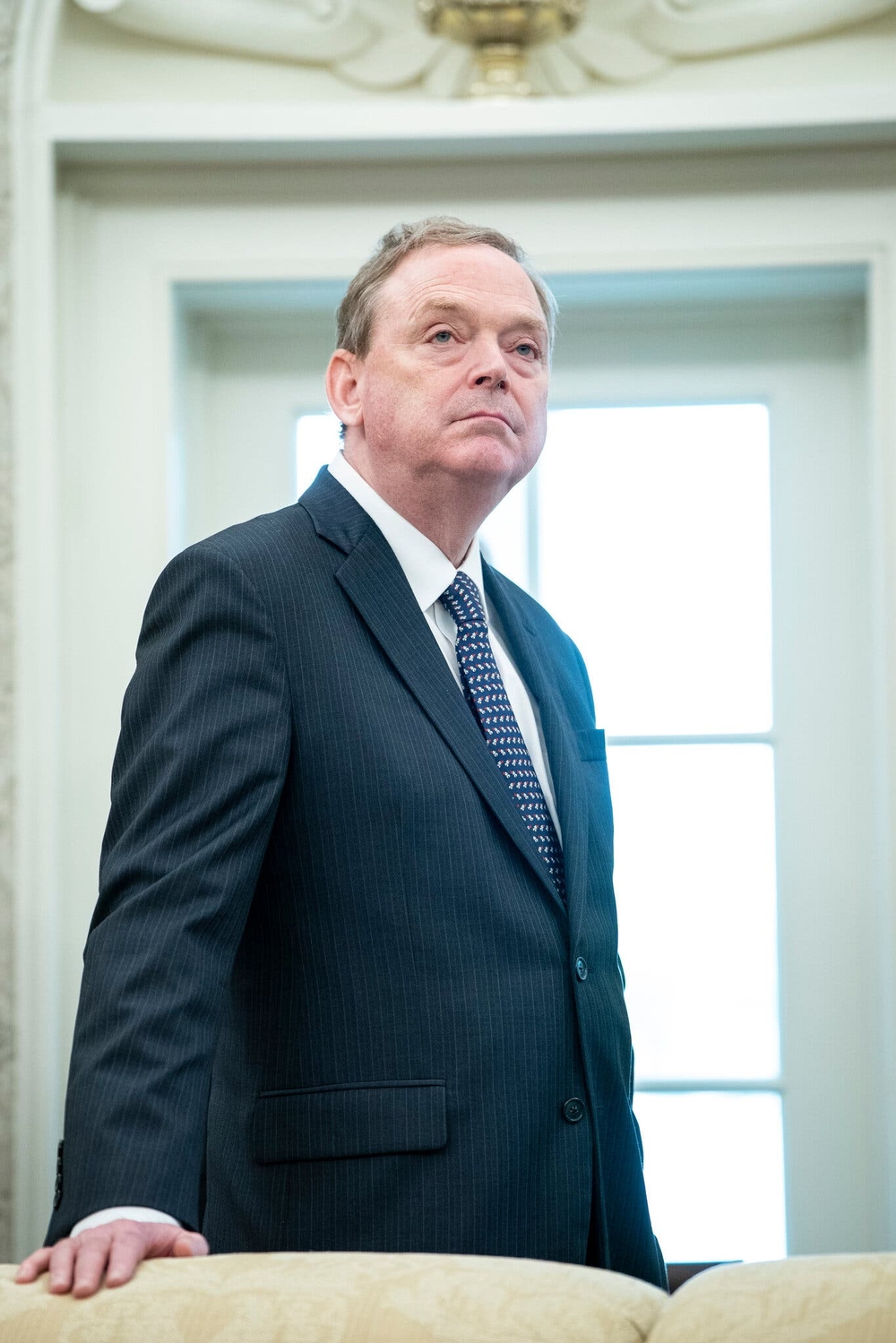
The Stunning Reversal of a Conservative Economist
Kevin Hassett’s journey from respected conservative economist to Trump loyalist represents one of the most concerning political transformations in recent memory. As detailed in recent reporting, Hassett - an economist who advised presidential campaigns of John McCain, George W. Bush, and Mitt Romney - has completely abandoned the economic principles he championed for decades. The longtime scholar at the right-leaning American Enterprise Institute once promoted free trade as the path to national prosperity and argued that more immigration benefited the economy. Today, as director of President Trump’s National Economic Council, Hassett supports tariffs while claiming they have minimal impact on consumer prices and argues that deportations benefit native-born workers in the labor market.
This ideological about-face becomes particularly alarming given Hassett’s position as a leading contender for Chair of the Federal Reserve. His ability to adjust policy positions “as needed” has apparently positioned him favorably within Trump’s inner circle, raising serious questions about whether he would maintain the Fed’s crucial independence if appointed to lead it. The president himself has been explicit about his expectations, stating in a social media post that “Anybody that disagrees with me will never be the Fed Chairman!” - a declaration that should concern every American who values the separation of monetary policy from political manipulation.
From Principle to Political Convenience
Hassett’s background makes his transformation particularly puzzling. After earning his Ph.D. in economics from the University of Pennsylvania in 1990, he served as a professor at Columbia University’s business school before moving into policy work at the Fed and eventually political campaigns. He helped design John McCain’s tax and Social Security plans during the 2000 Republican primary and advised both George W. Bush and Mitt Romney on economic policy.
Most tellingly, when Trump was contemplating a presidential run in 2011, Hassett wrote a Bloomberg opinion essay suggesting Trump’s ideas were “too radical” for Republicans and that he had a “tin ear” on tax policy. He explicitly warned that Trump would need to “persuade conservatives to ignore his past.” Yet despite these reservations, Hassett ultimately embraced Trump’s candidacy, writing in his 2021 book “The Drift: Stopping America’s Slide to Socialism” that he signed up with Trump “knowing that some in my party might never forgive me.”
The Concerns of Colleagues and Experts
Those who have known Hassett for decades express profound concern about his ideological flexibility. James K. Glassman, a former official in the George W. Bush administration who worked with Hassett at the American Enterprise Institute and co-wrote “Dow 36,000” with him, stated that when he sees Hassett defending tariffs and trade wars on television, he often doesn’t recognize the views of his friend and colleague of three decades. Glassman recalled that Hassett “used to be a believer in the merits of classic conservative economic principles like low taxes, free trade and limited government.”
The academic community has also pushed back against Hassett’s new positions. Greg Mankiw, chair of the Council of Economic Advisers in the George W. Bush administration, publicly challenged Hassett after he argued on ABC’s “This Week” that it was “Econ 101” that domestic production increased American welfare. Mankiw correctly noted that “Trade restrictions do not increase G.D.P. Indeed, by interfering with the international marketplace and the forces of comparative advantage, they reduce productivity and thereby G.D.P.”
The Dangerous Precedent for Federal Reserve Independence
The most alarming aspect of Hassett’s transformation involves his potential nomination as Federal Reserve Chair. The Fed’s independence from political pressure represents a cornerstone of American economic stability, allowing the institution to make difficult decisions about interest rates without fear of political retaliation. Throughout history, both Democratic and Republican administrations have respected this boundary, understanding that short-term political goals must not undermine long-term economic stability.
President Trump’s explicit statement that he will only appoint someone who supports “significantly lower borrowing costs” directly threatens this independence. Hassett’s reassurances that Trump would have “no weight” on interest rate decisions ring hollow when contrasted with his description of the president’s views on rates as “very strong and well founded” and his recent joke that he would be happy to talk to Trump every day as chair “because it’s so much fun to talk.”
The Broader Implications for American Institutions
Hassett’s journey reflects a broader concerning trend: the subordination of expertise and principle to political loyalty. When qualified economists abandon decades of established economic consensus to align with political messaging, they undermine public trust in institutions and expertise itself. This erosion has dangerous consequences for governance and democracy.
The Federal Reserve’s independence matters precisely because economic decisions should be based on data and analysis, not political calculation. Interest rate policy affects millions of Americans through employment, inflation, and economic growth. Politicizing these decisions risks creating boom-bust cycles driven by electoral calendars rather than economic fundamentals.
The Path Forward: Defending Institutional Integrity
As Americans who value both economic stability and democratic norms, we must demand that those nominated to lead critical institutions like the Federal Reserve maintain their intellectual integrity and commitment to evidence-based decision making. Political loyalty should never outweigh professional expertise when it comes to positions that affect the economic wellbeing of all Americans.
The Senate, which must confirm any Fed chair nomination, has a particular responsibility to rigorously examine whether nominees will maintain the institution’s independence. Senators should demand explicit commitments to data-driven decision making and reject any candidate who appears willing to subordinate economic reality to political convenience.
Conclusion: Principle Must Trump Politics
Kevin Hassett’s transformation from principled economist to political loyalist serves as a cautionary tale about the corrosive effects of power on professional integrity. The Federal Reserve cannot become another political battleground where economic truth becomes casualty to political ambition.
America’s economic institutions have weathered numerous challenges because they have maintained their independence and commitment to nonpartisan expertise. As we face potential leadership changes at the Federal Reserve, we must insist that nominees demonstrate unwavering commitment to the institution’s independence and the economic principles that have served America well for decades.
The stakes could not be higher. The integrity of our central banking system, the stability of our economy, and the trust of the American people in their institutions all hang in the balance. We must demand that those who lead these institutions do so based on principle, not politics - on economic reality, not political convenience. The future of American prosperity depends on it.