
The Corruption of Clemency: How Trump's Pardon Demand Exposes the Erosion of Constitutional Principles
Published
- 3 min read
The Facts of the Case
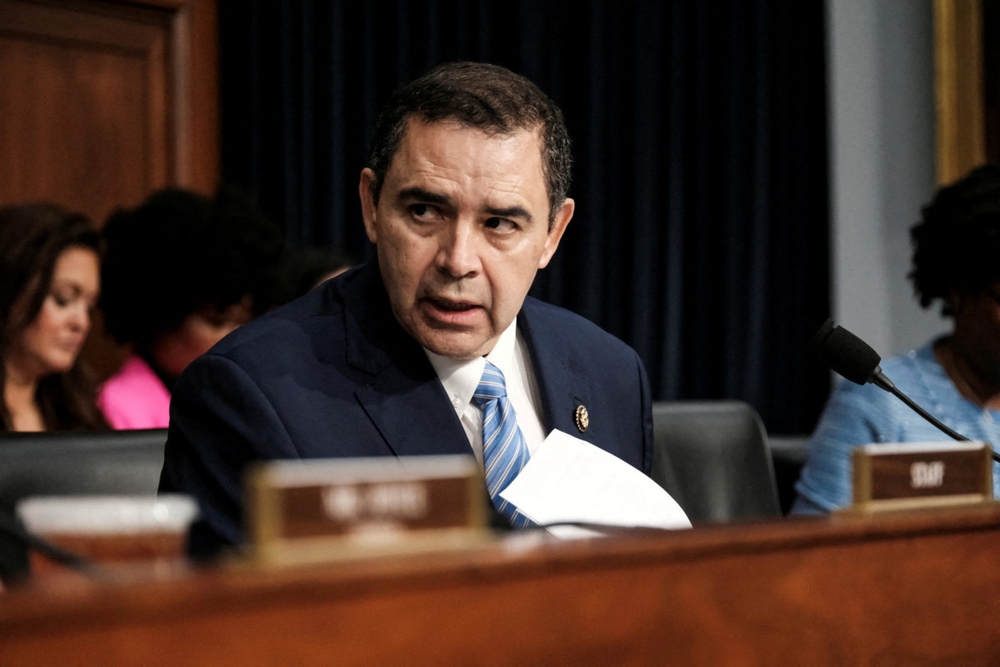
Former President Donald Trump’s recent public outrage toward Congressman Henry Cuellar of Texas reveals a deeply troubling view of presidential power and political allegiance. The controversy stems from Trump’s pardon of Cuellar and his wife in a federal bribery and conspiracy case, after which the former president expressed furious disappointment that Cuellar chose to remain a Democrat rather than switch parties. Trump took to his Truth Social platform to blast what he called a “lack of LOYALTY,” suggesting he had expected the clemency to bolster the Republican Party’s narrow House majority heading into the 2026 midterm elections.
The case against Cuellar involved serious allegations that he and his wife accepted thousands of dollars in exchange for advancing the interests of an Azerbaijan-controlled energy company and a Mexican bank. Federal authorities accused the congressman of agreeing to influence legislation favorable to Azerbaijan and even delivering a pro-Azerbaijan speech on the House floor. The trial had been scheduled for April before Trump’s intervention.
Context and Background
Trump justified his pardon as a matter of stopping what he called a “weaponized” prosecution, noting that the Biden administration had brought the charges against Cuellar. The former president particularly highlighted Cuellar’s outspoken criticism of Biden’s immigration policy as a key alignment between them. Meanwhile, Cuellar maintained his innocence throughout, claiming in a Fox News interview that federal authorities attempted to entrap him with “a sting operation to try to bribe me, and that failed.
What makes this situation particularly significant is the political context. Trump had been pushing for Republican-led state legislatures to redraw congressional districts, and Texas had complied with this effort. A party switch by Cuellar would have been an unexpected bonus for Republicans in their quest to maintain House control. Cuellar’s daughters, Christina and Catherine, had personally appealed to Trump for the pardon in a letter sent last November, adding a personal dimension to the political calculation.
Cuellar, for his part, responded to Trump’s criticism by emphasizing his identity as an American first, Texan second, and Democrat third—citing fellow Texas politician Lyndon Johnson as his model. He stated that “anybody that puts party before their country is doing a disservice to their country” and expressed his willingness to work with the administration to find common ground. Despite the pardon, Cuellar still faces a House Ethics Committee investigation, ensuring that questions about his conduct will continue to follow him.
The Dangerous Precedent of Transactional Justice
What we are witnessing in this episode represents one of the most dangerous corruptions of presidential power in recent memory. The very idea that a president—current or former—would expect political loyalty in exchange for clemency strikes at the heart of our constitutional system. The pardon power, granted by Article II, Section 2 of the Constitution, was intended as a mechanism for mercy and justice, not as a political bargaining chip.
Trump’s public expression of outrage that Cuellar didn’t switch parties reveals a transactional view of governance that should alarm every American who values the rule of law. This isn’t merely about political gamesmanship; it’s about the fundamental integrity of our justice system. When clemency becomes contingent on political allegiance rather than justice or mercy, we have crossed into dangerous territory that our Founders specifically sought to prevent.
The Framers of the Constitution established the pardon power as a check on the judicial system, recognizing that sometimes justice requires mercy or that exceptional circumstances might warrant clemency. They never intended it to be used as a personal or political favor system. Hamilton wrote in Federalist No. 74 that the pardon power should be used for “exceptions in favor of unfortunate guilt” and to restore “the tranquility of the commonwealth.” Nowhere did he suggest it should be used to build political majorities or reward loyalty.
The Erosion of Institutional Integrity
This incident cannot be viewed in isolation. It represents the continuation of a pattern that saw numerous controversial pardons during Trump’s presidency, often benefiting political allies or those whose cases aligned with his political narrative. Each instance of using clemency for political purposes rather than principled ones further erodes public confidence in our institutions.
The justice system must remain independent of political considerations for democracy to function properly. When individuals begin to believe that justice depends on political connections rather than the facts of the case, the social contract begins to unravel. This is particularly dangerous in a polarized environment where trust in institutions is already dangerously low.
Cuellar’s response, while diplomatically stating his commitment to working across party lines, unfortunately fails to adequately address the ethical questions raised by accepting a pardon from someone who clearly expected political compensation. While maintaining his innocence is his right, the appearance of impropriety alone damages public trust in elected officials.
The Broader Implications for Democracy
This episode occurs against the backdrop of concerning trends in American democracy. The manipulation of congressional districts, the weaponization of justice, and the transactional view of governance all point to a system under strain. When political leaders view every institution and power as instruments for partisan advantage rather than tools for serving the public good, democracy itself becomes threatened.
Trump’s statement that “next time, no more Mr. Nice guy!” suggests that future clemency decisions might be even more explicitly tied to political considerations. This ultimatum-style approach to presidential power sets a dangerous precedent that could encourage future presidents to similarly abuse their authority.
The fact that this conversation is happening publicly, without apparent shame or concern for norms, indicates how normalized such behavior has become in certain circles. This normalization of the abnormal represents perhaps the greatest threat to our democratic institutions, as violations of democratic principles become increasingly accepted as merely “how the game is played.”
Principles Over Partisanship
What this situation demands is a return to principle-based governance. The pardon power should be exercised based on justice, mercy, and the public good—not political calculation. Public servants should make decisions based on their constituents’ interests and their conscience, not on repayment of personal debts to powerful figures.
Cuellar’s statement that he puts country before party is commendable in theory, but accepting a pardon from someone who clearly expected political compensation creates at least the appearance of contradiction. True principle would require either refusing a pardon that came with strings attached or being extraordinarily transparent about the absence of any quid pro quo.
For the rest of us—citizens, journalists, and good governance advocates—this episode serves as a stark reminder of why vigilance matters. We cannot become complacent about the norms and principles that underpin our democracy. Each violation, each norm broken, each principle ignored makes the next violation easier and more likely.
The Path Forward
Rebuilding integrity in our political system requires multiple approaches. First, we need greater transparency around pardon decisions, including detailed explanations of the justification for each grant of clemency. Second, we need stronger ethical guidelines—and perhaps even legal constraints—on the use of pardon power for obviously political purposes. Third, we need political leaders willing to put principles above party and personal advantage.
Most importantly, we need citizens who demand better. The fact that a former president feels comfortable publicly expressing outrage that a pardon didn’t produce the political payoff he expected suggests that he believes his supporters will either approve or at least not punish such behavior. Only when the public clearly rejects the transactional use of presidential power will politicians stop engaging in it.
The Cuellar-Trump pardon controversy is more than a political squabble; it’s a symptom of the deeper illness affecting American democracy. When clemency becomes just another chip in the political game, we have lost sight of the values that make our system worth preserving. We must recommit to the principles of justice, integrity, and institutional respect that form the foundation of our republic—before further damage becomes irreparable.