
The Cost of Celebration: How ICE Raids Turned Christmas Traditions Into Acts of Defiance
Published
- 3 min read
The Facts: Christmas Under Surveillance
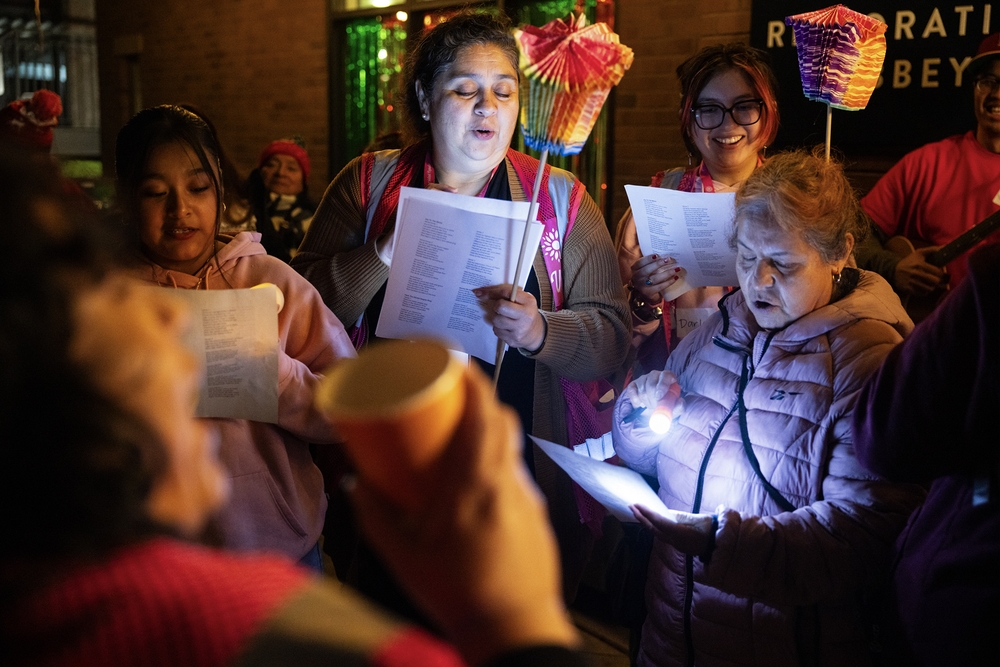
In the predominantly Latino community of San Marcos, California, residents recently gathered for their annual posada celebration - a traditional Christmas procession reenacting Mary and Joseph’s search for shelter before Jesus’ birth. But this year’s celebration occurred against a backdrop of fear and tension as increased Immigration and Customs Enforcement (ICE) activity forced organizers to implement security measures rarely seen at holiday events.
The event, sponsored by the Universidad Popular civic organization and Restoration Abbey church, featured volunteers in bright pink vests trained specifically to monitor for ICE activity while participants paraded through neighborhood streets singing traditional carols like “Silent Night.” Organizers had seriously considered canceling the event entirely due to security concerns but ultimately decided to proceed with heightened vigilance.
According to federal data obtained through Freedom of Information Act requests, ICE has arrested at least 38 people in San Marcos since September 2023, with 20 of those arrests occurring between June and October alone. This represents a significant increase in enforcement activity that has created a chilling effect on community gatherings and daily life.
The Context: Policy Shifts and Community Impact
The increased enforcement comes amid policy changes that have eliminated previous sanctuary protections around places like churches and schools. This shift has fundamentally altered how immigrant communities navigate public spaces, including cultural and religious celebrations that were once considered safe havens.
San Marcos, with a population of 94,000 in northern San Diego County, has a significant Latino demographic - 55% of the voting-age population in District 1 is Hispanic. The city has seen particular targeting of locations like Home Depot stores, where immigrant day laborers gather seeking work. In October, U.S. Border Patrol and Customs officials arrested 22 people with criminal backgrounds at Home Depot locations in San Marcos and neighboring Encinitas.
The psychological impact on the community is profound. Inés Delgado, an immigrant rights advocate with the North County LGBTQ Resource Center, reported that clients were too nervous to attend celebrations despite wanting to participate. “Many said they were afraid to go out,” she noted, highlighting how fear has become a constant companion even during what should be joyful community gatherings.
Organizations like Universidad Popular have taken concrete steps to protect their communities, posting signs warning that private property requires judicial warrants for entry and educating community members about their rights if approached by immigration officials.
The Constitutional Crisis at Our Doorstep
What we witness in San Marcos represents nothing less than a fundamental breakdown in our constitutional commitment to due process and humane governance. The fact that American citizens and residents must celebrate religious traditions under the watchful eye of volunteer security teams monitoring for government agents should alarm every patriot who believes in constitutional liberties.
The Fourth Amendment protection against unreasonable searches and seizures, the Fifth Amendment guarantee of due process, and the fundamental human dignity enshrined in our founding documents are all compromised when communities live in constant fear of sudden family separation. This isn’t about border security or legal immigration - this is about the character of our nation and our commitment to the rule of law applied equally and humanely.
The targeting of locations like Home Depot where day laborers seek work creates a particularly pernicious effect: it criminalizes poverty and the search for livelihood. When individuals cannot seek employment without fear of government apprehension, we have created a two-tiered system of justice that contradicts our nation’s founding principles.
The Human Cost of Enforcement-Only Approaches
The psychological toll on these communities cannot be overstated. When parents hesitate to attend their children’s school events, when families avoid religious ceremonies, when community celebrations require security plans against government intervention, we have created a society where basic human connections become fraught with anxiety. This undermines the very social fabric that makes communities strong and resilient.
Research consistently shows that communities living under constant stress experience worse health outcomes, educational disparities, and economic limitations. By forcing immigrant communities into shadows, we not only harm those communities but deprive our broader society of their full participation and contribution.
The fact that organizations like Universidad Popular must debate whether to cancel cultural celebrations due to immigration concerns represents a failure of policy and a betrayal of American values. Cultural traditions like posadas represent exactly the kind of community bonding and social cohesion that should be encouraged, not driven underground by fear.
A Better Way Forward
True border security and immigration reform cannot be achieved through enforcement strategies that terrorize established communities. We need comprehensive solutions that recognize the economic realities driving migration, the humanitarian obligations we bear as a nation of immigrants, and the practical necessity of creating pathways to legal status for those contributing to our communities.
Smart immigration policy would focus resources on actual threats rather than spreading fear through communities that have deep roots and significant contributions to American society. It would recognize that community trust is essential for effective law enforcement and that alienating entire communities makes everyone less safe.
The bravery of San Marcos residents in continuing their traditions despite these pressures is admirable, but no American should have to demonstrate such courage simply to practice their religion and celebrate their culture. Their resilience highlights the best of the American spirit even as the policies they face represent the worst of short-sighted governance.
Reclaiming Our Values
As a nation built by immigrants and founded on principles of liberty and justice for all, we must ask ourselves: Is this who we want to be? A country where Christmas carols are sung alongside warnings about immigration raids? Where children learn that holiday celebrations require security plans against their own government?
The solution begins with remembering that our immigration system should reflect our values, not contradict them. We can have both security and compassion, both rule of law and humane treatment. The communities of San Marcos demonstrate daily that cultural traditions and community bonds can withstand tremendous pressure - but they shouldn’t have to.
It’s time for policies that recognize the dignity of every person, that uphold our constitutional commitments to due process, and that allow communities to celebrate their traditions without fear. The posada story itself is about finding shelter and welcome - values that should guide our approach to immigration reform rather than the current climate of fear and division.
Our nation’s strength has always derived from our ability to weave diverse traditions into a vibrant national tapestry. The events in San Marcos show us how dangerously close we are to unraveling that tapestry through short-sighted policies that prioritize enforcement over community, fear over fellowship, and division over our shared humanity.