
The Cost of Fear: How Immigration Policies Are Creating a Silent Health Crisis in California's Heartland
Published
- 3 min read
The Unseen Backbone of America’s Bounty
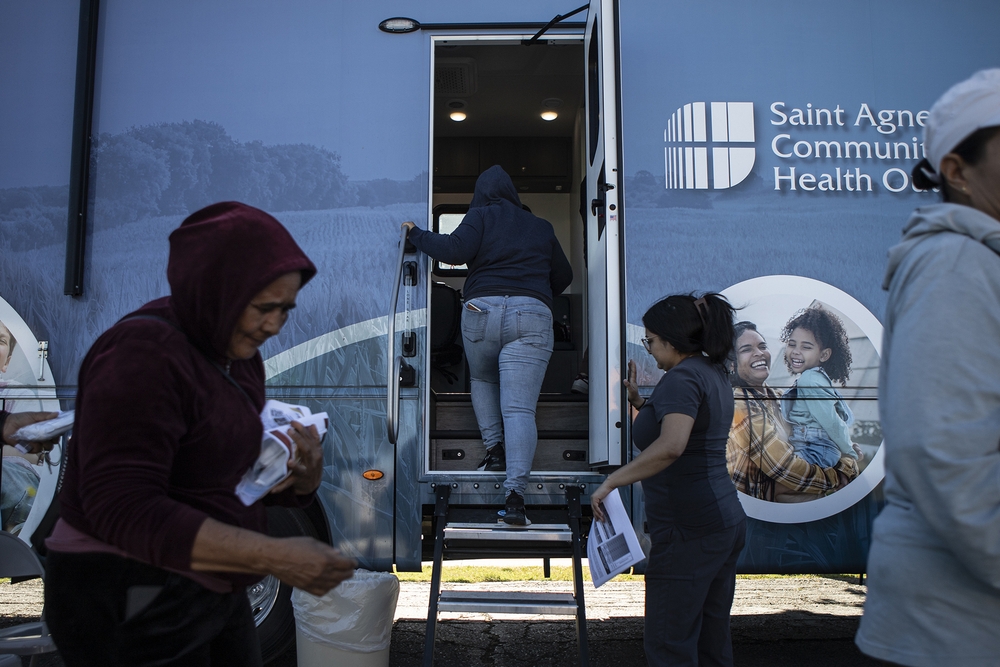
California’s agricultural empire, a cornerstone of the nation’s food supply, is sustained by the tireless labor of migrant and immigrant farmworkers. These individuals, often working without legal status, perform the back-breaking work that puts food on tables across the country. Yet, hidden behind this bounty is a stark and growing humanitarian crisis. For this essential workforce, access to basic healthcare is tenuous, often limited to the vital services provided by mobile medical clinics that traverse rural routes. These clinics are a lifeline, offering preventative care for conditions like hypertension, diabetes, and high cholesterol that are prevalent among this hard-to-reach population. They represent the last bastion of medical attention before an avoidable illness becomes a life-threatening emergency.
A Chilling Effect on Human Dignity
The core fact of this situation is both simple and devastating: since the Trump administration intensified its immigration enforcement activities, there has been a precipitous drop in the number of people seeking care from these mobile clinics. UC San Francisco reports a staggering 36% decline in visits to its mobile health units. Dr. Kenny Banh, the director of these clinics, states the obvious yet tragic consequence: “People don’t disappear because you changed policy. They still need care. What you’re doing is delaying care until the outcomes are worse.” This is not a theoretical problem; it is a calculated outcome. The fear of deportation, stoked by aggressive policy, is now a more immediate threat to these individuals than their own deteriorating health. Similarly, Dr. Arianna Crediford of Fresno St. Agnes Rural Mobile Health reports a 20% drop in visits this year, heartbreakingly noting that “the idea that people have to be scared to receive health care is heartbreaking.”
This decline in preventative care is a ticking time bomb for public health. When treatable conditions are ignored, they escalate into severe, complex, and far more expensive medical emergencies. The cost is not merely financial, though it will inevitably strain hospital systems; the true cost is measured in human suffering, in preventable complications, and in lives unnecessarily cut short. This is compounded by broader policy shifts, including a freeze on new Medi-Cal enrollment for immigrants without legal status in the state budget and anticipated federal health cuts, which systematically dismantle the fragile safety net that exists.
A Betrayal of Foundational Principles
This situation represents a fundamental betrayal of the American ideals of liberty and justice. The United States was founded on the principle that all people are endowed with certain unalienable Rights, that among these are Life, Liberty and the pursuit of Happiness. To actively create conditions where a segment of our society lives in such fear that they forego medical care for themselves and their families is to directly assault the right to “Life.” It is an anti-human policy that prioritizes political posturing over human dignity. A nation that claims moral leadership in the world cannot, in good conscience, implement policies that weaponize fear to deny basic healthcare. This is not a partisan issue; it is a test of our collective character. Are we a society that protects its most vulnerable, or one that abandons them when they are most in need?
The argument that these individuals are “illegal” and therefore undeserving of care is a morally bankrupt position that ignores both practical reality and ethical responsibility. These are human beings contributing their labor to our economy and our communities. Denying them care on the basis of their immigration status is not only cruel but epidemiologically foolish. Disease does not respect immigration status; a public health crisis that begins in an isolated community will not remain contained. By allowing fear to fester and health to decline, we are compromising the well-being of the entire state.
The Erosion of Institutional Trust and Public Health
The collapse in trust evidenced by the declining clinic visits is perhaps the most damaging long-term consequence. Public health relies on trust. It relies on individuals feeling safe enough to seek testing, vaccination, and treatment. When a government’s actions systematically destroy that trust, it undermines the very foundation of a functional society. The mobile clinics represent a critical institution of care and compassion. When policies render these institutions ineffective by scaring away their patients, it is an assault on the institution itself. This erosion of trust will outlast any single administration, creating a legacy of fear and poor health that will be difficult to reverse.
Dr. Crediford’s statement that the mobile clinics are “the last line of defense” before an emergency room visit is a chilling indictment of our priorities. We are effectively forcing a shift from low-cost, high-impact preventative medicine to high-cost, traumatic emergency interventions. This is not fiscal responsibility; it is fiscal and moral insanity. It is a policy choice that increases human suffering while simultaneously increasing the financial burden on the healthcare system. It is a lose-lose scenario engineered by a callous disregard for human well-being.
A Call for Moral Clarity and Courage
Confronting this crisis requires moral clarity and political courage. It requires recognizing that healthcare is a human right, not a privilege contingent on citizenship. Upholding the rule of law is essential, but it must be balanced with compassion and a commitment to the common good. Policies that deliberately instill fear and jeopardize public health are incompatible with a free and democratic society. They destroy the social fabric and erode the institutions that protect us all.
We must demand that our leaders, regardless of party, reject policies that use human health as a bargaining chip. We must support and strengthen the community-based institutions, like mobile health clinics, that serve on the front lines. And we must remember that the strength of a nation is judged not by the power of its military or the size of its economy, but by how it treats its most vulnerable members. The silent health crisis unfolding in California’s fields is a stain on our national conscience. It is a powerful reminder that freedom cannot exist where fear is the primary determinant of health. We must choose a better path, one guided by the principles of liberty and justice for all, not just for some.