
The Courage to Confront Mortality: Ben Sasse's Cancer Diagnosis and the Human Condition
Published
- 3 min read
The Facts of the Announcement
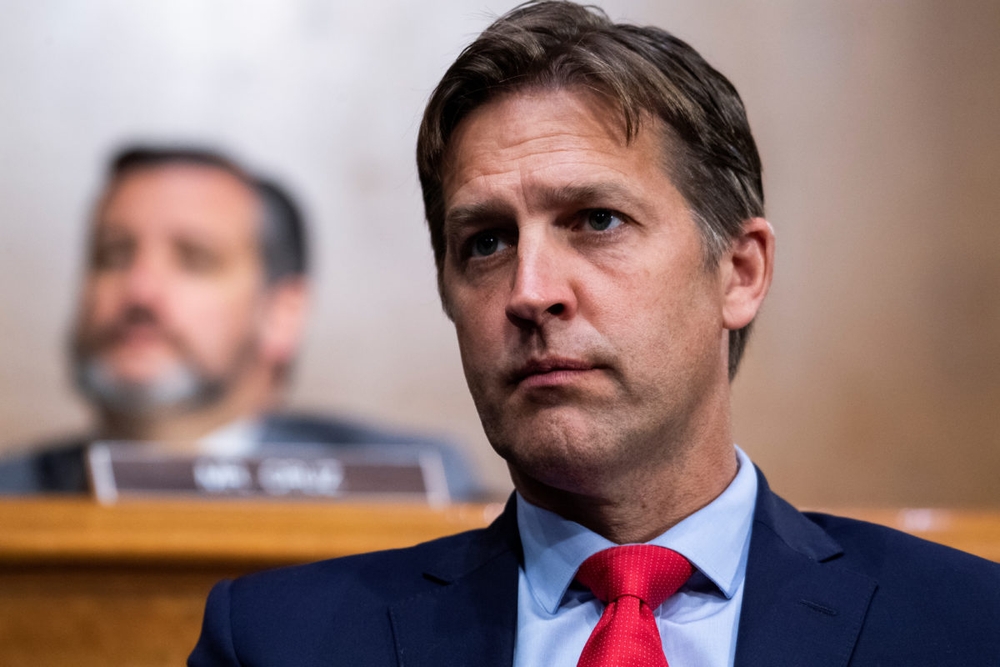
Former Nebraska Senator Ben Sasse, age 53, announced on Tuesday through social media that he has been diagnosed with metastasized, stage-four pancreatic cancer. In his characteristically direct manner, Sasse stated: “Last week I was diagnosed with metastasized, stage-four pancreatic cancer, and am gonna die.” The former senator learned of his diagnosis just last week and described himself as “now marching to the beat of a faster drummer” in reference to his changed circumstances.
Sasse served as a U.S. Senator from Nebraska from 2014 until 2023, when he resigned to become the 13th president of the University of Florida. His tenure at the university was brief, ending in 2024 after his wife was diagnosed with epilepsy. Throughout his political career, Sasse established himself as an intellectual conservative with degrees from Harvard, St. John’s College, and Yale. He previously worked as assistant secretary of Health and Human Services under President George W. Bush and served as president of Midland University, a small Christian institution in eastern Nebraska.
Sasse’s Political Legacy and Principles
Ben Sasse’s political career was marked by intellectual rigor and occasional independence from party orthodoxy. He gained national attention as one of seven Republican senators who voted to convict former President Donald Trump of “incitement of insurrection” following the January 6, 2021, attack on the U.S. Capitol. This principled stand, taken at significant political risk, demonstrated Sasse’s commitment to constitutional principles over partisan loyalty.
His background in health policy through his role at Health and Human Services provided him with unique insights into America’s healthcare system, making his current health crisis particularly poignant. Sasse’s approach to governance emphasized institutional integrity, constitutional fidelity, and thoughtful deliberation—qualities that often seem in short supply in contemporary political discourse.
The Human Dimension Beyond Politics
Beyond his public service, Sasse is a husband and father of three children. His decision to leave the University of Florida presidency to support his wife during her epilepsy diagnosis speaks volumes about his personal priorities and character. This context makes his current health battle even more heartbreaking—a family already facing significant medical challenges now confronts another devastating diagnosis.
In his announcement, Sasse displayed remarkable candor and courage, acknowledging the gravity of his condition while expressing hope in scientific advances: “I’m not going down without a fight. One sub-part of God’s grace is found in the jawdropping advances science has made the past few years in immunotherapy and more.” This statement reflects both his faith and his belief in human progress through medical innovation.
Reflections on Mortality and Public Service
The Equalizing Nature of Health Crises
Health crises possess a unique ability to transcend the artificial divisions of politics and remind us of our shared humanity. When a public figure like Ben Sasse announces a terminal diagnosis, it momentarily suspends partisan warfare and focuses attention on what truly matters: human dignity, compassion, and the value of every individual life regardless of political affiliation.
Sasse’s situation underscores the brutal reality that cancer does not discriminate based on ideology, party registration, or past accomplishments. This equalizing aspect of serious illness should give us pause in our often-toxic political discourse and remind us that behind every political position lies a human being with fears, hopes, and vulnerabilities.
Courage in Facing Mortality
There is something profoundly courageous about Sasse’s direct acknowledgment that he “is gonna die” from this disease. In a culture that often avoids discussions about mortality, his willingness to confront death openly models a kind of bravery that extends beyond political courage. This authenticity in the face of terminal illness deserves recognition and respect.
His statement that “Death and dying aren’t the same—the process of dying is still something to be lived” reveals philosophical depth and a commitment to finding meaning even in suffering. This perspective aligns with the best traditions of American thought that emphasize individual dignity and the pursuit of purpose regardless of circumstances.
The Intersection of Health Policy and Personal Experience
Sasse’s background in health policy adds a layer of irony and tragedy to his diagnosis. Having worked on healthcare issues at the federal level, he understands better than most the complexities of America’s medical system, the challenges of healthcare access, and the importance of medical innovation. His personal experience with advanced cancer now places him on the other side of the policy equation—as a patient navigating the very system he helped administer.
This experience should remind policymakers everywhere that health policy isn’t abstract—it directly impacts human lives, suffering, and dignity. The advances in immunotherapy that Sasse referenced represent exactly the kind of innovation that proper policy should encourage and support.
The Importance of Civil Discourse During Difficult Times
In our hyper-polarized political environment, moments like these test our capacity for basic human decency. The appropriate response to any human being facing terminal illness is compassion, regardless of political differences. Sasse’s diagnosis presents an opportunity for Americans across the political spectrum to demonstrate that we can disagree on policy while maintaining respect for human dignity.
His principled stands in politics, including his vote to convict President Trump, undoubtedly created political enemies. Yet true commitment to democratic principles requires that we separate political disagreement from basic human empathy. The measure of our civic health might be found in how we treat those we disagree with when they face personal tragedy.
Conclusion: Beyond Politics to Shared Humanity
Ben Sasse’s cancer diagnosis transcends politics and speaks to universal human experiences of vulnerability, courage, and mortality. His public service, intellectual contributions, and principled stands form part of his legacy, but his current battle reminds us that beyond political identities lie human beings facing challenges that unite us all.
As Sasse confronts this difficult journey, his courage in acknowledging his condition directly, his hope in medical science, and his philosophical approach to dying offer lessons in dignity that should inspire reflection across the political spectrum. In a democracy committed to life, liberty, and the pursuit of happiness, how we support those facing life’s most difficult challenges reflects our collective character as a nation.
This moment calls for setting aside partisan divisions and recognizing our shared humanity. It reminds us that the values we claim to cherish—compassion, dignity, respect for individual worth—must extend to all, especially those with whom we disagree politically. Ben Sasse’s battle with pancreatic cancer is ultimately a human story that should unite us in hope for medical advances and respect for the courage required to face mortality with eyes wide open.