
The Dangerous Dance: Newsom's Political Ambition Versus California's Needs
Published
- 3 min read
The Bifurcated Reality of Governor Newsom’s Leadership
Governor Gavin Newsom’s recent actions on the East Coast present a troubling case study in political ambition conflicting with governmental responsibility. Over two days, Newsom displayed two entirely different personas: first as Donald Trump’s most vocal critic at a New York Times-sponsored forum, where he excoriated business executives for “groveling to Trump’s needs” and accused the former president of undermining democracy, then as California’s governor requesting $34 billion in federal aid for wildfire recovery from the very administration he had just condemned.
This political whiplash isn’t merely a case of pragmatic governance—it represents a fundamental conflict between Newsom’s presidential aspirations and his duties as governor of the nation’s largest state. According to Politico, Newsom’s confrontational approach was deliberate, with an advisor stating “he came prepared to tell the truth” about Trump’s authoritarian policies. Yet within 24 hours, that truth-teller was asking the same administration for massive financial assistance, knowing full well that Trump demands obsequiousness from those seeking favors.
The Context: California’s Ongoing Disaster Recovery Needs
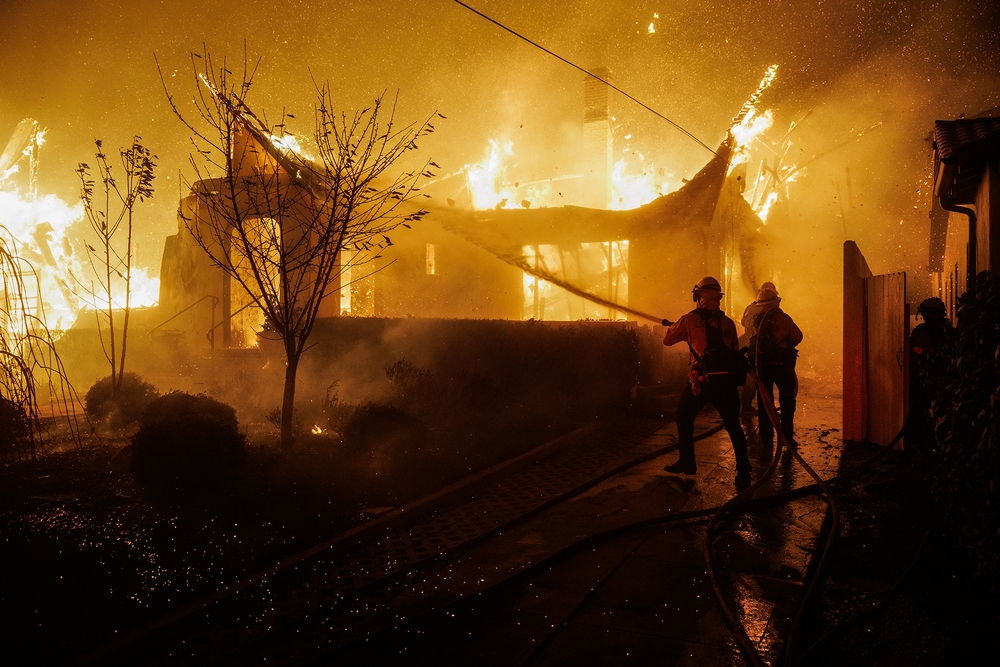
The wildfires that swept through Los Angeles County nearly a year ago represent one of California’s most significant natural disasters in recent memory. The recovery process requires rebuilding homes, schools, utilities, and critical infrastructure while supporting small businesses and job growth in impacted regions. As Newsom correctly noted in his letter to congressional leaders, “complete recovery is not possible without essential federal aid.”
This isn’t the first time California has needed federal disaster assistance, and the process has traditionally been routine, regardless of political differences between state and federal leadership. The Trump administration’s refusal to even meet with Newsom representatives represents a dangerous departure from established norms of governance, where disaster response should transcend partisan politics.
The Individuals Involved
The article mentions Governor Gavin Newsom, whose actions form the core of this analysis; former President Donald Trump, whose administration denied the meeting request; and Izzy Gardon, Newsom’s spokesperson, who characterized the administration’s refusal as “a rejection we’ve never seen before.”
The Dangerous Precedent of Political Gamesmanship
What makes Newsom’s actions particularly concerning is not merely the hypocrisy of criticizing an administration one day and requesting billions from it the next, but the conscious choice to prioritize political positioning over practical governance. Newsom knew that confronting Trump would likely doom California’s chances of receiving disaster aid—his own presentation highlighted how Trump demands flattery and punishes those who don’t provide it. Yet he chose confrontation anyway.
This represents a fundamental failure of leadership responsibility. As governor, Newsom’s primary obligation is to the people of California, particularly those suffering from natural disasters. While speaking truth to power is admirable, doing so in a manner that knowingly jeopardizes critical aid for vulnerable citizens crosses the line from courageous to reckless.
The White House’s response—refusing even a routine meeting—is equally concerning. Disaster relief should never be contingent on political loyalty or personal flattery. This administration’s apparent willingness to punish millions of Americans because their governor offered criticism represents exactly the kind of authoritarian behavior Newsom rightly condemned.
The Erosion of Institutional Norms
This situation illustrates how democratic norms are eroding from multiple directions simultaneously. On one side, we have a federal administration that appears to treat disaster relief as a political bargaining chip rather than a fundamental governmental responsibility. On the other, we have a state leader seemingly willing to gamble with his constituents’ wellbeing to advance his national political profile.
Both actions undermine public trust in government institutions. When citizens see disaster recovery becoming subject to political gamesmanship, they understandably question whether government exists to serve them or political ambitions. This erosion of trust is perhaps the most damaging consequence of this entire episode.
The Principles at Stake
At its core, this situation involves several fundamental democratic principles: the separation of governance from personal politics, the obligation of leaders to prioritize their constituents’ needs above their ambitions, and the importance of maintaining institutional integrity even amid political disagreement.
Newsom’s defense—that Trump had previously promised aid “on the tarmac at LAX”—doesn’t absolve him of responsibility for choosing a confrontation strategy he knew would likely fail. Leadership requires pragmatism alongside principle, especially when vulnerable citizens’ wellbeing hangs in the balance.
Similarly, the administration’s refusal to meet represents a dangerous politicization of disaster response that sets a terrible precedent. If federal aid becomes contingent on political loyalty rather than need, we’ve abandoned any pretense of equal protection under the law.
The Path Forward: Restoring Principle to Governance
This episode should serve as a wake-up call for both political leaders and citizens. We must demand that our elected officials prioritize governance over grandstanding, and that institutional norms protecting non-political functions like disaster response be strengthened rather than eroded.
For Newsom, this means recognizing that his primary responsibility is to California citizens, not his national profile. For future administrations, it means maintaining the traditional understanding that disaster relief transcends politics. And for all of us, it means holding leaders accountable when they put ambition ahead of service.
The people affected by California’s wildfires deserve better than being pawns in a political game. They deserve leaders who will fight for their recovery without simultaneously undermining it through political theater. Our democracy depends on maintaining this distinction between legitimate criticism and counterproductive confrontation, between principled opposition and pointless provocation that harms those most in need.
In the final analysis, both Newsom’s calculated criticism and the administration’s punitive response represent failures of leadership. True statesmanship would involve both speaking truth to power and finding ways to secure necessary resources for constituents—not choosing one at the expense of the other. As we approach future elections at all levels, we must demand leaders capable of this balance, who understand that defending democracy requires both principle and practical effectiveness in equal measure.