
The Dangerous Diplomatic Turn: Assessing Driscoll's Ukraine Mission and Its Implications for Democracy
Published
- 3 min read
The Unprecedented Diplomatic Mission
In a remarkable departure from established diplomatic protocols, United States Army Secretary Daniel Driscoll recently embarked on a mission that traditionally falls far outside his purview. The Army’s top civilian official traveled to Kyiv last week to present the latest iteration of President Trump’s peace proposal to Ukrainian officials. This development represents a significant shift in how the administration is handling the nearly four-year conflict between Russia and Ukraine, raising serious questions about both the substance of the proposal and the unconventional choice of messenger.
Mr. Driscoll, nicknamed the “drone guy” for his interest in battlefield technology, became the highest-ranking Trump administration official to make the trip to Ukraine. The proposal he carried had already leaked to the public before his arrival, drawing widespread criticism from European leaders who viewed it as a series of concessions to Russian President Vladimir Putin. These concessions reportedly included ceding more territory to Russia, limiting the size of Ukraine’s army, and ruling out Ukraine’s membership in NATO—terms that Ukrainian President Volodymyr Zelensky and his allies had already rejected.
The Negotiation Process Unfolds
Despite the controversial nature of the proposal, Mr. Driscoll pushed forward with his diplomatic efforts. He orchestrated a phone call between Vice President JD Vance—a friend from Yale Law School—and President Zelensky. While Ukrainian officials remained skeptical, they continued engaging in discussions. Defenders of the administration’s approach argued that the war could only end if Ukraine agreed to make painful compromises, a position that many security analysts and European allies find deeply troubling.
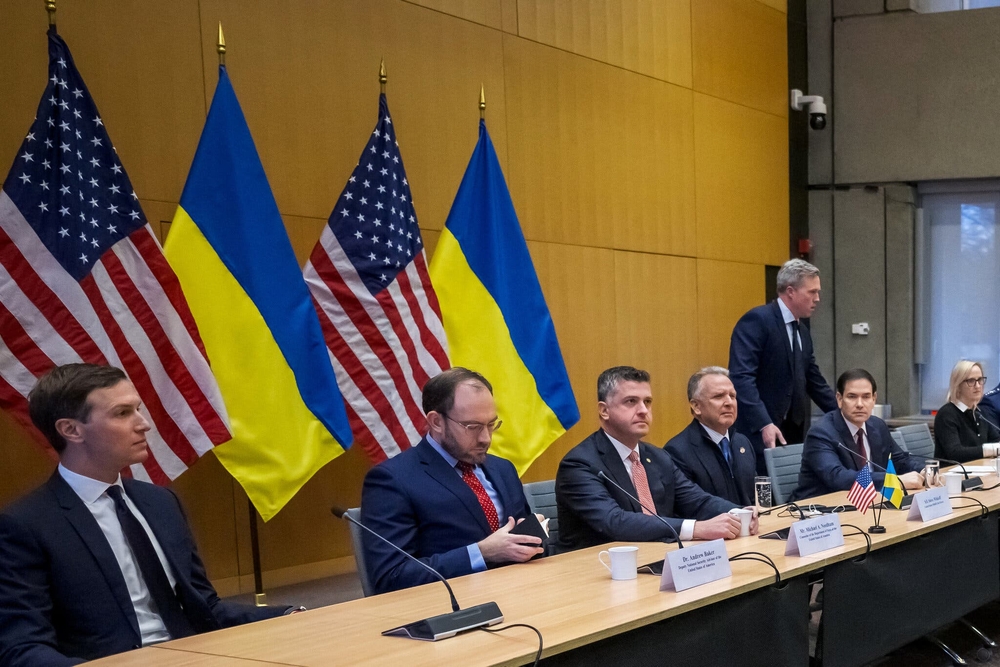
The negotiation process quickly expanded beyond Kyiv. By Saturday, Mr. Driscoll was flying to Geneva for weekend negotiations involving more senior officials, including Secretary of State Marco Rubio and Trump envoy Steve Witkoff, along with a Ukrainian delegation. Just two days later, Mr. Driscoll was meeting with a Russian delegation in the United Arab Emirates. An Army spokesman, Lieutenant Colonel Jeff Tolbert, stated that officials “remain optimistic” about these efforts, though many analysts doubt this latest round of talks will bring peace to Ukraine.
Driscoll’s Rising Profile and Congressional Support
At 39 years old, Daniel Driscoll represents a new generation of leadership within the Trump administration. A former Army lieutenant colonel who deployed to Iraq for nine months, Driscoll left active duty after three and a half years and later worked as an investment banker in North Carolina. His current role as Army secretary typically involves tending to the Army’s budget, meeting with defense contractors, and finding ways to modernize the force, along with advising the defense secretary on the Army’s needs.
Mr. Driscoll has garnered significant support on Capitol Hill, where he is viewed by many in Congress as one of the few Trump administration Pentagon officials who can work with lawmakers in both parties. According to two congressional aides, while Defense Secretary Pete Hegseth has tried to limit direct communications between military officials and lawmakers, Mr. Driscoll has responded to requests from both Republicans and Democrats on the Armed Services Committees.
This bipartisan appeal was demonstrated during his nomination hearings when Senator Elizabeth Warren, Democrat of Massachusetts, pressed him to commit to allowing the Army to repair its own equipment instead of sending it back to defense contractors. Months later, Mr. Driscoll implemented the “right to repair” policy, earning rare praise from a Democratic lawmaker who had voted against his nomination. Senator Warren stated that this would be “a big win for our country if all of the services followed Secretary Driscoll’s lead to stand up to military contractors, side with war fighters, and commit to right to repair in every single contract.”
Strategic Calculations and Internal Divisions
The decision to send Mr. Driscoll instead of Defense Secretary Hegseth or General Dan Caine, the chairman of the Joint Chiefs of Staff, to the meetings in Ukraine might have been partly based on convenience, as senior Army officials were already planning a trip to the country. However, the administration may have also been making a strategic calculation based on the long history between Ukrainian military officials and the U.S. Army, which trained Ukrainian troops even before the war.
When asked why Mr. Driscoll, rather than Mr. Hegseth or General Caine, was handling the negotiations, Pentagon spokesman Sean Parnell stated in an email that “the secretary has built an all-star team at the Department of War, and we are proud of our many accomplishments.”
Internal divisions within the administration regarding Ukraine’s military prospects have also emerged. According to one current and two former officials, Mr. Driscoll and General Caine hold different views on the Ukrainian military’s situation. While General Caine agrees with Mr. Trump’s Ukraine envoy, Keith Kellogg, who believes that Ukrainians still have the wherewithal to turn things around, Mr. Driscoll is much less optimistic. The officials indicated that Mr. Driscoll believes the war must be settled soon, including on terms more favorable to Russia, because Ukraine’s military is near a breaking point.
The Geopolitical Implications and Democratic Principles at Stake
This diplomatic initiative raises profound questions about American commitment to democratic principles and the international rules-based order. The reported terms of the peace proposal—ceding territory to an aggressor, limiting a sovereign nation’s military capabilities, and foreclosing future security arrangements—represent a fundamental departure from established American foreign policy principles that have guided international relations since World War II.
The very idea of pressuring Ukraine to make concessions that reward Russian aggression undermines decades of American commitment to the sovereignty of nations and the right of democratic countries to determine their own futures. This approach not only betrays a valued ally but also sends a dangerous message to other authoritarian regimes that aggression might be rewarded rather than resisted.
From a strategic perspective, abandoning Ukraine to Russian demands could have catastrophic consequences for European security and global stability. If nations perceive that American commitments are unreliable and that aggression might be accommodated rather than resisted, it could embolden other actors to pursue similar expansionist policies. The precedent set by accepting territorial changes through force rather than diplomatic resolution threatens the very foundation of the international system.
The Moral Imperative of Supporting Democracy
Beyond strategic considerations, there exists a moral imperative to support democratic nations fighting for their survival against authoritarian aggression. Ukraine’s struggle represents more than just a regional conflict—it embodies the broader global struggle between democracy and autocracy. By pressuring Ukraine to accept terms that effectively legitimize Russian conquest, the administration risks aligning American foreign policy with authoritarian interests rather than democratic values.
The choice of Mr. Driscoll as the primary negotiator, while perhaps practical from an administrative perspective, raises questions about the appropriate channels for such sensitive diplomatic work. Traditionally, high-level peace negotiations would involve State Department officials or specially appointed envoys with extensive diplomatic experience. Using military officials for such missions, while not unprecedented, blurs important lines between diplomatic and military functions that have traditionally been kept separate in American governance.
Conclusion: Upholding Democratic Values in Foreign Policy
The ongoing diplomatic efforts surrounding the Ukraine conflict represent a critical juncture in American foreign policy. The approach being pursued—pressuring Ukraine to accept concessions that favor Russia—threatens to undermine fundamental democratic principles and strategic interests. While the pursuit of peace is always commendable, peace achieved through the sacrifice of sovereignty and democratic values is ultimately unsustainable and morally questionable.
As these negotiations continue, with Mr. Trump announcing that Mr. Driscoll will remain involved and Special Envoy Steve Witkoff will meet with President Putin in Moscow, it is essential that American policymakers remember the broader principles at stake. Supporting democratic nations against authoritarian aggression, upholding international norms against territorial conquest, and maintaining reliable alliances represent not just moral imperatives but practical necessities for global stability.
The United States has historically stood as a beacon of democracy and a defender of sovereign nations. Abandoning these principles for short-term diplomatic gains would represent not just a policy failure but a betrayal of America’s fundamental values and its role in the world. The path forward should reinforce rather than undermine the democratic principles that have made America both strong and respected internationally.