
The Dangerous Escalation: Trump's Venezuelan Tanker Pursuit and the Erosion of International Norms
Published
- 3 min read
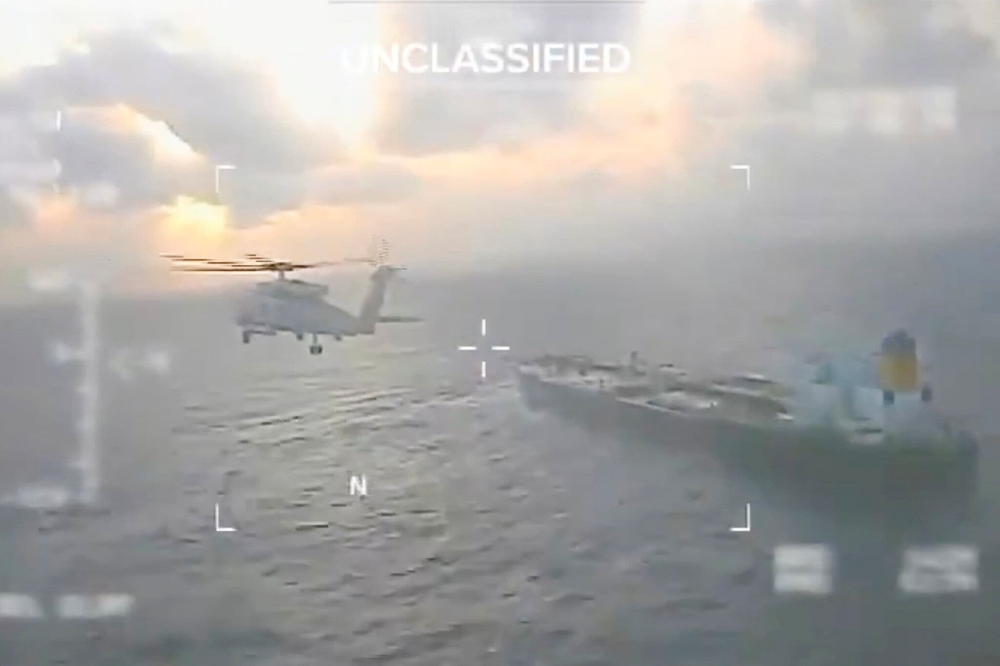
The Facts of the Maritime Confrontation
Over the weekend in the Caribbean Sea, the United States Coast Guard attempted to intercept the tanker Bella 1, marking a significant escalation in the Trump administration’s pressure campaign against the government of Venezuelan President Nicolás Maduro. The vessel, which officials identified as stateless due to its lack of a valid national flag, became subject to boarding under international law. U.S. authorities had obtained a seizure warrant based on the ship’s prior involvement in transporting Iranian oil, which allegedly financed terrorism activities.
The confrontation took an unusual turn when the Bella 1 refused to submit to boarding and instead fled into the Atlantic Ocean. Ship-tracking data revealed the vessel had been en route to load Venezuelan crude oil but was not carrying cargo at the time of the encounter. Significant details emerged about the operation: the ship had not yet entered Venezuelan waters, was not under naval escort, and the cargo it was scheduled to transport had been purchased by a Panamanian businessman recently sanctioned by the United States for his ties to the Maduro family.
By Sunday, the situation had developed into what one U.S. official described as “an active pursuit,” with the Bella 1 broadcasting distress signals to nearby ships. The vessel sent over 75 alerts while traveling northeast into the Atlantic Ocean, more than 300 miles from Antigua and Barbuda. The White House announced that President Trump would make an announcement on Monday afternoon with his defense and navy secretaries, though they provided no indication of the subject matter.
Broader Context of the Pressure Campaign
This incident represents part of a broader pattern of maritime enforcement actions. On the same weekend, the Coast Guard stopped and boarded another tanker, the Centuries, which had recently loaded Venezuelan oil reportedly for a Chinese trader. Unlike the Bella 1, U.S. authorities did not have a seizure warrant for this Panamanian-flagged vessel and were instead verifying the validity of its registration. Earlier in December, the United States had seized another tanker, the Skipper, which was transporting Venezuelan crude but had earlier carried Iranian oil. That vessel has been escorted to Galveston, Texas.
President Maduro has responded to these actions by ordering the Venezuelan Navy to escort some tankers, significantly raising the risk of armed confrontation at sea. The Trump administration has justified these operations as necessary to weaken Maduro’s finances, claiming that oil export revenue funds narco-terrorism. However, the administration has provided no evidence for President Trump’s claims that Maduro steals oil from American companies or uses petroleum revenues to fund criminal activity.
The threat of additional seizures is already influencing tanker routes, with some vessels that appeared to be heading to Venezuela turning around according to global shipping monitors. Much of Venezuela’s oil is sold to China, some through Cuba, with some licensed to the United States. These actions have created uncertainty about the administration’s ultimate aims, falling short of a true blockade—which would constitute an act of war—but resembling a series of law enforcement operations.
The Larger Geopolitical Strategy
The Trump administration has spent recent months building up a heavy military presence in the Caribbean under the banner of a counternarcotics campaign. The United States has attacked boats allegedly smuggling drugs, resulting in at least 104 deaths. President Trump has accused Venezuela of flooding the U.S. with fentanyl, despite the fact that Venezuela is not a drug producer and has no known role in the fentanyl trade. Most cocaine transiting the country is bound for Europe, and many legal experts consider the strikes on these boats unlawful.
Privately, U.S. officials admit the campaign aims less at curbing drug trafficking than at removing President Maduro, who has been accused by successive Democratic and Republican administrations of rigging elections, repressing dissent, and committing human rights abuses. More recently, Trump and his advisers have pointed to another objective: gaining leverage over Venezuela’s vast oil reserves, the largest in the world and the backbone of its economy. Venezuela once welcomed American energy companies, and President Trump has indicated he wants access to those resources again.
The Ghost Fleet Phenomenon
Experts estimate that up to 20 percent of global tankers move oil from Iran, Venezuela, and Russia in violation of U.S. sanctions. These ships often disguise their location and file false paperwork—the Bella 1, for instance, faked its location signal on a previous voyage. U.S. officials say they have identified other tankers carrying Venezuelan oil whose previous involvement in the Iranian oil trade makes them subject to U.S. sanctions. President Trump announced last week that more seizures could follow, declaring a “complete blockade” of “sanctioned oil tankers” traveling to and from Venezuela.
A Dangerous Departure from International Norms
This escalating maritime confrontation represents a dangerous departure from established international norms and legal frameworks. While the United States has legitimate concerns about the Maduro regime’s human rights record and democratic credentials, the methods being employed risk undermining the very international order that America has championed for decades.
The pursuit of stateless vessels on the high seas stretches the interpretation of international maritime law to its breaking point. The concept of statelessness in maritime law exists to prevent vessels from evading regulation, not to create carte blanche for naval powers to pursue ships based on tenuous connections to prior activities. The precedent being set—that a country can pursue vessels globally based on past violations rather than current activities—threatens to destabilize maritime commerce and empower other nations to make similar claims.
The administration’s justification for these actions appears increasingly questionable. The shift from counternarcotics to regime change to oil access reveals an alarming lack of strategic coherence. The claim that Venezuela represents a narco-terrorism threat lacks credible evidence, particularly given that most cocaine transiting the country heads to Europe rather than the United States, and Venezuela has no known role in the fentanyl trade that President Trump specifically cited.
The Human Cost and Moral Hazard
We cannot ignore the human dimension of these operations. The sight of a vessel broadcasting distress signals while being pursued by military forces should concern anyone who values human dignity and safety at sea. Venezuela’s government has condemned the boarding of the Centuries as theft and hijacking, accusing the United States of forcibly disappearing the crew. While we must evaluate these claims critically, they underscore the real human consequences of geopolitical maneuvering.
The administration’s admission that the true goal is regime change rather than drug interdiction creates significant moral and legal hazards. While the Maduro regime’s democratic legitimacy is unquestionably compromised, the explicit pursuit of regime change through military and economic pressure violates fundamental principles of national sovereignty that have underpinned international relations since the Peace of Westphalia.
The Resource Question and American Interests
Perhaps most troubling is the administration’s increasing openness about seeking access to Venezuela’s oil reserves. While energy security represents a legitimate national interest, openly pursuing regime change for resource access aligns American foreign policy with the worst stereotypes of imperialism that our nation has historically rejected. It undermines our moral standing in the world and provides ammunition to adversaries who accuse us of acting in bad faith.
The focus on Venezuelan oil also represents a strategic miscalculation. Rather than pursuing energy independence through innovation and diversification, this approach seeks short-term gains that could damage long-term relationships throughout Latin America. The regional backlash against perceived American heavy-handedness could ultimately undermine rather than strengthen our position in the Western Hemisphere.
A Call for Principled Leadership
As Americans who cherish democracy, freedom, and the rule of law, we must demand better from our government. The pursuit of the Bella 1 and other tankers represents a reckless approach to foreign policy that substitutes muscular posturing for thoughtful strategy. True leadership requires consistent principles, transparent objectives, and respect for international norms—none of which are evident in this escalating confrontation.
We should support the Venezuelan people’s aspirations for democracy and human rights through diplomatic means, multilateral pressure, and humanitarian assistance—not through maritime confrontations that risk escalation and undermine the international legal framework. The path to resolving Venezuela’s crisis lies through strengthened international institutions, not their bypassing; through coalition building, not unilateral action; through principled consistency, not opportunistic resource grabs.
The sight of a ship fleeing through international waters while broadcasting distress signals should serve as a wake-up call to all Americans who believe our nation should stand as a beacon of law and justice, not as a naval power pursuing questionable objectives through questionable means. We must demand that our government pursue foreign policy that reflects our deepest values rather than our narrowest interests.