
The Dangerous Escalation: U.S. Coast Guard's Pursuit of Venezuelan-Linked Tanker Raises Serious Constitutional and International Law Concerns
Published
- 3 min read
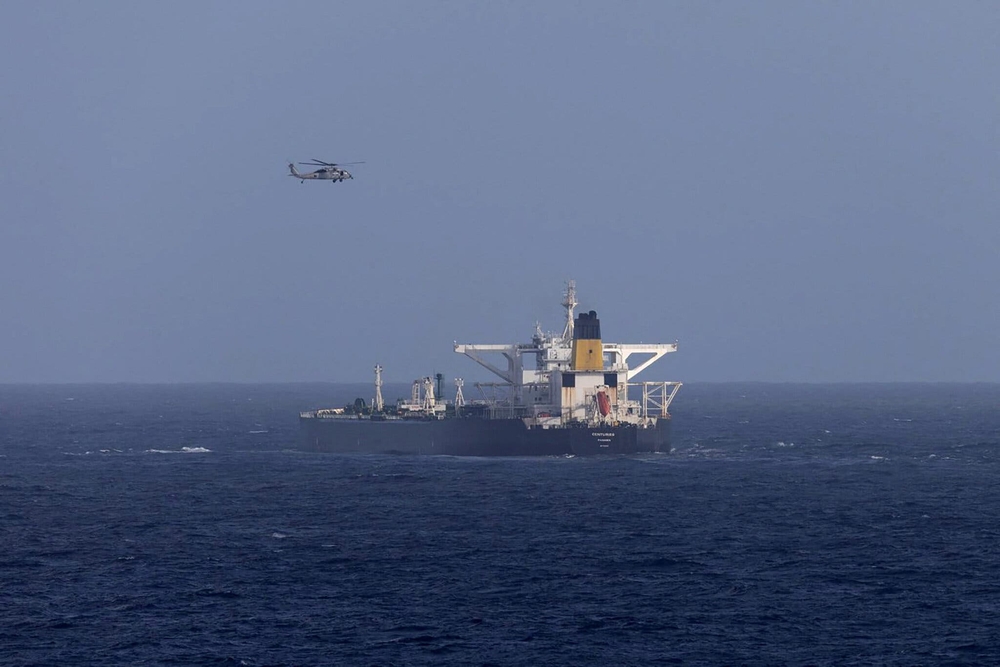
The Operational Facts: A Maritime Chase Unfolds
The recent events in the Caribbean Sea represent a significant escalation in the Trump administration’s pressure campaign against Venezuela. According to multiple U.S. officials speaking on condition of anonymity, the U.S. Coast Guard attempted to intercept the oil tanker Bella 1 on Saturday as it was en route to pick up oil in Venezuela. The vessel, which was not carrying cargo at the time, fled northeast into the Atlantic Ocean when approached by U.S. forces.
The Bella 1 has been under U.S. sanctions since last year for transporting Iranian oil, which federal authorities claim is sold to finance terrorism. When U.S. forces approached the vessel, it was not flying a valid national flag, making it a stateless vessel under international law and theoretically liable to be boarded. American authorities had obtained a seizure warrant from a federal magistrate judge based on the ship’s previous involvement in the Iranian oil trade, not specifically for its Venezuela connections.
However, the ship refused to submit to boarding and continued sailing, leading to what one official described as “an active pursuit.” By Sunday morning, the vessel began broadcasting distress signals, having sent over 75 alerts while traveling more than 300 miles from Antigua and Barbuda.
Broader Context: Escalating Maritime Operations
This incident is part of a broader pattern of increased U.S. maritime enforcement operations. Earlier on the same Saturday, the Coast Guard successfully boarded another tanker, the Centuries, which had recently picked up oil in Venezuela and was headed east. Unlike the Bella 1 case, U.S. forces did not have a warrant to seize the Centuries, which was flying under a Panamanian flag. The Coast Guard was reportedly trying to determine whether the ship’s Panama registration was valid.
These operations follow the December 10th seizure of another tanker called the Skipper, which was carrying Venezuelan oil and flying a false flag. That vessel, like the Bella 1, was under U.S. sanctions for previously carrying Iranian crude and was seized based on a warrant connected to its Iranian connections.
The Trump administration has framed these actions as part of a “complete blockade” on oil tankers traveling to and from Venezuela that are under U.S. sanctions. Homeland Security Secretary Kristi Noem stated on social media that “The United States will continue to pursue the illicit movement of sanctioned oil that is used to fund narco terrorism in the region. We will find you, and we will stop you.”
The Venezuelan Response and Geopolitical Implications
The Venezuelan government under President Nicolás Maduro has responded strongly to these actions. Following the December 10th seizure, Maduro ordered Venezuelan Navy vessels to accompany some oil tankers leaving his country, raising the possibility of armed confrontations at sea. The government denounced the boarding of the Centuries as “the theft and hijacking of another private vessel transporting Venezuelan oil, as well as the forced disappearance of its crew.”
These developments occur within the context of what shipping and energy experts estimate is a “ghost fleet” of tankers that move oil from Iran, Venezuela, and Russia in violation of sanctions. This fleet may constitute as much as 20 percent of the global tanker fleet, with ships often disguising their travel routes and filing false paperwork.
The Bella 1 itself engaged in spoofing—faking its location signal—during its previous voyage when it picked up oil from Iran’s main oil export terminal in August before transferring its cargo to another tanker off the coast of Oman.
Constitutional and Legal Concerns: Questionable Authority and Due Process
From a constitutional perspective, these maritime operations raise serious questions about executive authority, due process, and the rule of law. While the United States has legitimate interests in enforcing sanctions and preventing terrorism financing, the methods being employed appear to stretch legal boundaries and established international norms.
The distinction between a naval blockade (which constitutes an act of war) and law enforcement actions is crucially important. The administration’s characterization of these operations as a “complete blockade” while simultaneously treating them as law enforcement operations creates legal ambiguity that could have dangerous consequences. If this is indeed a blockade, it represents an act of war that requires congressional authorization under the War Powers Resolution. If it’s law enforcement, it must adhere to strict legal standards and due process requirements.
The use of seizure warrants based on previous Iranian connections rather than current Venezuelan activities appears to be a legal workaround that undermines the spirit of due process. This approach allows the administration to target Venezuelan oil shipments without having to prove the specific terrorism financing claims that Trump has made publicly without evidence.
The Danger of Mission Creep and Unintended Escalation
Perhaps most troubling is the potential for mission creep and unintended escalation. The deployment of U.S. military assets in the Caribbean has been building for months, with American forces having killed at least 104 people in attacks against boats allegedly smuggling drugs since September. Many legal experts consider these boat strikes illegal, and the administration’s justification—that Venezuelan oil is financing terrorism—rests on unsubstantiated claims.
The possibility of armed confrontation between U.S. and Venezuelan naval forces represents a dangerous escalation that could have regional and global consequences. Maduro’s order for Venezuelan Navy vessels to escort oil tankers creates a scenario where misunderstandings or provocations could lead to open conflict.
Furthermore, the administration’s public expressions of interest in controlling Venezuela’s oil reserves—among the largest in the world—undermine the credibility of its stated humanitarian and counter-terrorism objectives. This creates the perception that these operations are more about resource control than about promoting democracy or preventing terrorism.
The Principle of Limited Government and Constitutional Constraints
As a firm believer in constitutional principles and limited government, I find these developments deeply concerning. The executive branch appears to be operating with minimal congressional oversight and questionable legal authority. The use of anonymous officials to discuss sensitive operations, the lack of transparency about legal justifications, and the shifting explanations for these actions all point to an administration testing the boundaries of its authority.
The Constitution establishes a system of checks and balances precisely to prevent this kind of executive overreach. Congress has constitutional authority over matters of war and commerce, yet these operations seem to be proceeding without adequate congressional consultation or authorization.
The Human Cost and Humanitarian Implications
We must also consider the human cost of these operations. The crew members of these vessels—who may have little knowledge of or control over their employers’ activities—find themselves caught in geopolitical conflicts not of their making. The Venezuelan government’s claims about “forced disappearance” of crew members, while requiring verification, highlight the very real human consequences of these enforcement actions.
Additionally, the economic impact on Venezuela’s population—already suffering from severe economic crisis—must be considered. While the Maduro government bears significant responsibility for the country’s situation, actions that further squeeze the Venezuelan economy without clear humanitarian safeguards risk compounding the suffering of ordinary citizens.
A Call for Transparency, Due Process, and Constitutional Governance
In conclusion, while the United States has legitimate interests in preventing sanctions evasion and terrorism financing, the current approach to maritime enforcement raises serious constitutional and legal concerns. The administration must:
- Provide clear legal justification for these operations that distinguishes between acts of war and law enforcement actions
- Obtain proper congressional authorization if these operations constitute a blockade
- Ensure due process protections in seizure actions
- Provide evidence for claims about terrorism financing
- Establish transparent protocols to prevent unintended escalation and protect civilian lives
The principles of limited government, constitutional constraints on executive power, and respect for international law are not obstacles to effective enforcement—they are the foundation of sustainable and legitimate governance. As we confront complex challenges in an increasingly interconnected world, we must ensure that our methods uphold the values we seek to protect.
The pursuit of security must not come at the expense of liberty, and the enforcement of laws must not undermine the rule of law itself. These principles are not negotiable, and their protection requires constant vigilance—especially when operations occur far from public view in the vastness of international waters.