
The Dangerous Expansion of Executive Power: Hegseth's Frightening Doctrine of Unchecked Military Authority
Published
- 3 min read
The Facts: A Defense Secretary’s Controversial Defense
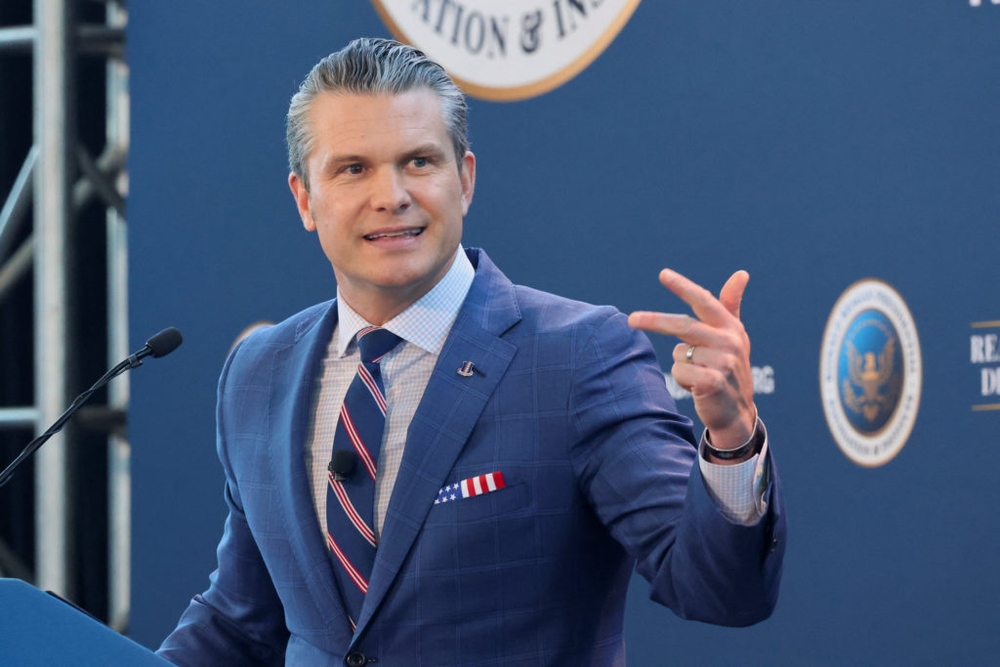
At the Ronald Reagan Presidential Library this past Saturday, Defense Secretary Pete Hegseth delivered a speech that should send chills down the spine of every American who values constitutional governance and the rule of law. Speaking at the Reagan National Defense Forum, Hegseth vigorously defended a series of military strikes against alleged drug cartel boats that have resulted in at least 87 fatalities. What makes these remarks particularly alarming is not merely the defense of lethal force, but the sweeping assertion of presidential power that accompanied it.
Hegseth declared that President Trump possesses the authority to take military action “as he sees fit” to defend national interests, adding the ominous warning: “If you’re working for a designated terrorist organization and you bring drugs to this country in a boat, we will find you and we will sink you.” This statement comes amid growing congressional scrutiny over the legal justification for these strikes and concerns about whether they violate international law. Lawmakers are particularly concerned about reports that U.S. forces were ordered to launch follow-up strikes even after the Pentagon knew there were survivors from previous attacks.
The Defense Secretary’s speech occurred against the backdrop of the Trump administration’s newly released national security strategy, which characterizes European allies as weak and seeks to reassert American dominance in the Western Hemisphere. Hegseth also used the platform to position Trump as Reagan’s “true and rightful heir” in foreign policy while criticizing Republican leaders since Reagan for supporting Middle East wars and democracy-building efforts. Notably, he dismissed concerns about climate change’s impact on military readiness, stating the “war department will not be distracted by democracy building, interventionism, undefined wars, regime change, climate change, woke moralizing and feckless nation building.”
The Context: Historical Precedents and Legal Frameworks
The assertion of nearly unlimited executive power in military matters represents a radical departure from both constitutional principles and historical precedent. The framers of the Constitution deliberately divided war powers between the executive and legislative branches precisely to prevent any single individual from having unchecked authority to commit the nation to military action. The War Powers Resolution of 1973 further established requirements for congressional authorization for prolonged military engagements, reflecting centuries of American commitment to civilian control of the military.
Hegseth’s comparison of drug smugglers to Al-Qaeda terrorists following the September 11 attacks deserves particular scrutiny. While combating drug trafficking is undoubtedly important, equating it with the war on terror creates a dangerous slippery slope. Terrorism typically involves organized political violence against civilians, whereas drug trafficking, however destructive, constitutes a different category of criminal activity. This false equivalence could potentially justify unprecedented expansions of military power into domains traditionally handled by law enforcement and judicial systems.
International law also establishes clear standards for the use of force, including principles of proportionality, distinction between combatants and civilians, and necessity. The deaths of over 80 people in these strikes raise serious questions about whether these standards are being met. When a Defense Secretary dismisses such concerns while asserting virtually unlimited presidential authority, it represents a threat not only to international legal norms but to the global reputation of the United States as a nation that respects the rule of law.
Constitutional Principles Under Assault
The most disturbing aspect of Hegseth’s remarks is their blatant disregard for the constitutional framework that has safeguarded American liberty for over two centuries. The assertion that a president can take military action “as he sees fit” represents precisely the kind of authoritarian thinking the Constitution was designed to prevent. The framers understood that concentrating war powers in the executive branch would create the very tyranny they had fought a revolution to escape.
Article I of the Constitution grants Congress the power to declare war, while Article II makes the president Commander in Chief. This deliberate balance ensures that momentous decisions about war and peace involve democratic deliberation rather than unilateral executive action. When a Defense Secretary openly champions unlimited presidential authority in military matters, he undermines this careful balance and threatens the separation of powers that forms the foundation of our constitutional system.
What makes this particularly alarming is the context: these strikes have already resulted in significant loss of life without clear congressional authorization or robust public debate. The fact that lawmakers are seeking more answers about the legal justification for these attacks suggests that proper oversight procedures may have been bypassed. In a healthy democracy, military actions of this magnitude should undergo thorough scrutiny to ensure they comply with both domestic and international law.
The Human Cost and Moral Implications
Behind the abstract legal arguments lie profound human consequences. Eighty-seven human beings have lost their lives in these strikes—each one possessing inherent dignity and worth. While combating drug trafficking is a legitimate goal, we must ask whether military strikes that result in such significant loss of life represent a proportional response. The principles of due process and the presumption of innocence until proven guilty are bedrock American values that should not be discarded even when dealing with alleged criminals.
Hegseth’s cavalier attitude toward these deaths—and his dismissal of international legal concerns—reflects a troubling devaluation of human life. As a nation founded on the principle that all people are endowed with inalienable rights, the United States should model respect for human dignity in all its actions, including military operations. When we abandon these principles in the name of security, we sacrifice the very values that make our nation worth defending.
The comparison to 9/11 terrorists is particularly problematic because it attempts to justify extreme measures by invoking national trauma. While the threat of drug trafficking is real and serious, equating it with the terrorist attacks that killed nearly 3,000 Americans creates an emotional justification for actions that might not withstand冷静的法律审查。这种修辞策略通过唤起恐惧来绕过合理的民主辩论,这正是开国元勋们建立制衡体系所要防止的专制手段。
The Slippery Slope to Authoritarianism
History demonstrates that expansions of executive power, once established, tend to become permanent features of the political landscape. What begins as an emergency measure often evolves into standard practice. The doctrine of unlimited presidential authority in military matters that Hegseth advocates could have consequences far beyond the current administration or the specific context of drug interdiction.
If a president can order lethal strikes against drug smugglers “as he sees fit,” what prevents future presidents from using similar justifications for military action against other perceived threats? This logic could potentially be extended to cyber criminals, political dissidents, or any group a administration deems threatening. The constitutional safeguards against such unrestrained power exist for good reason—to prevent the United States from descending into the kind of authoritarian regime our founders feared.
Hegseth’s dismissal of concerns about climate change and “woke moralizing” further reveals a disturbing pattern of rejecting evidence-based policymaking and ethical considerations in defense strategy. A military that ignores real-world threats like climate change—which the Department of Defense itself has identified as a “threat multiplier”—is a military unprepared for 21st-century challenges. Dismissing moral considerations in military planning risks creating a culture that undervalues human rights and international law.
The Path Forward: Reclaiming Constitutional Governance
In this alarming moment, citizens, lawmakers, and institutions must reaffirm their commitment to constitutional principles and the rule of law. Congress should exercise its oversight powers vigorously, demanding transparency about the legal justification for these strikes and insisting on proper authorization for future military actions. The judicial branch must remain prepared to review executive actions that may exceed constitutional boundaries.
The media and civil society organizations have a crucial role to play in educating the public about the importance of checks and balances and the dangers of unchecked executive power. Ordinary citizens must make clear that they value their constitutional protections and expect their leaders to operate within legal and ethical boundaries.
Ultimately, the defense of democracy requires constant vigilance. The framers of the Constitution understood that liberty is fragile and that power tends to expand unless consciously constrained. Hegseth’s remarks serve as a stark reminder that these principles cannot be taken for granted. As Americans who cherish freedom and democracy, we must oppose any doctrine that would concentrate unchecked power in the hands of any individual, regardless of party or administration. The preservation of our constitutional republic depends on it.