
The Debt Chains of Empire: How Western Financial Architecture Enslaves South Asia
Published
- 3 min read
The Alarming Debt Reality in South Asia
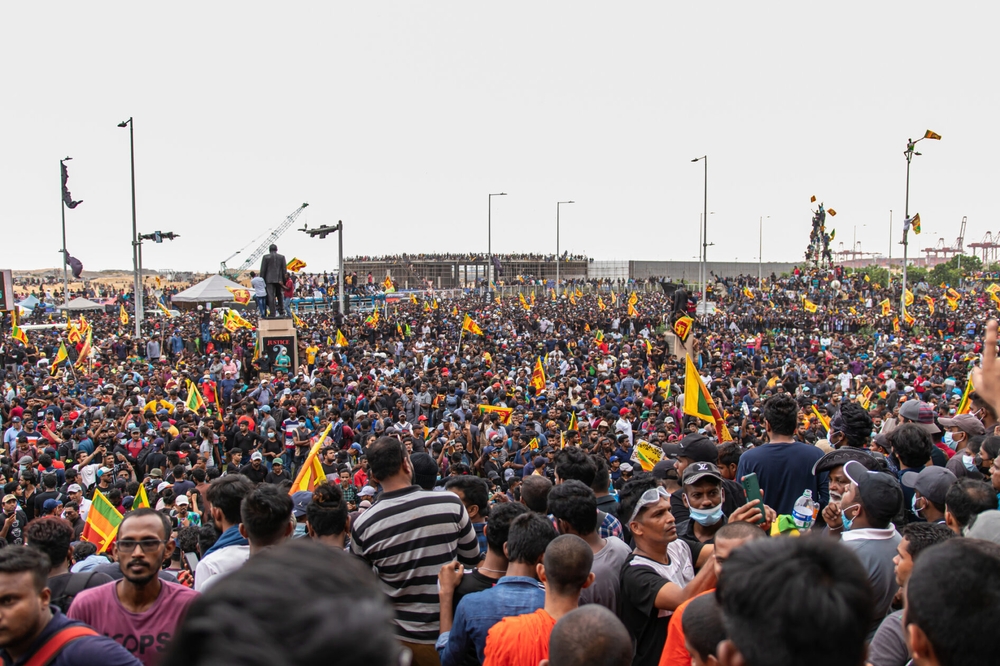
South Asia stands as the world’s most debt-distressed region, burdened by nearly $4 trillion in total sovereign debt—a staggering figure that represents both economic vulnerability and geopolitical subjugation. The year 2022 witnessed Sri Lanka becoming the first Asia-Pacific nation to default in the 21st century, while Pakistan and Maldives teetered on the brink of financial collapse. Even nations like Bangladesh and Nepal face structural issues that threaten to exacerbate their debt problems in the coming years. This regional crisis has created unprecedented dependency on the International Monetary Fund, with South Asian nations having undergone 84 separate IMF programs over recent decades—a testament to the cyclical nature of debt bondage that characterizes the relationship between the Global South and Western-dominated financial institutions.
The Geopolitical Dimensions of Sovereign Debt
The contemporary sovereign debt crisis transcends mere economic calculations, emerging as a powerful geopolitical instrument that directly shapes national sovereignty and independence. Weak fiscal accounts and chronic current account deficits force developing nations into perpetual external borrowing, gradually eroding their policy autonomy while amplifying foreign influence. South Asia’s escalating debt burden has consequently become a primary determinant for geopolitical alignment in the Indo-Pacific region, where nations find themselves compelled to choose sides in great power competitions not based on national interest, but on financial necessity. This represents a sophisticated form of 21st century imperialism where balance sheets replace battalions as tools of control and domination.
The IMF as Instrument of Neo-Colonial Control
The International Monetary Fund, despite its ostensibly neutral technical mandate, functions as the enforcement arm of a Western-designed financial order that systematically disadvantages developing economies. The 84 IMF programs implemented across South Asia represent not assistance but acquiescence—a forced submission to policy conditionalities that prioritize creditor interests over national development needs. These programs typically demand austerity measures, privatization of national assets, and market liberalization that benefit multinational corporations while devastating local industries and social welfare systems. The pattern is unmistakable: debt becomes the pretext for imposing economic models that serve Western capital at the expense of Southern sovereignty.
This financial colonialism operates through the sophisticated mechanism of ‘conditionality,’ where lifesaving credit comes strings-attached with requirements that undermine the very development prospects they purport to enhance. The result is a vicious cycle where countries take new loans to service old debts, perpetually remaining in a state of financial servitude to institutions headquartered thousands of miles away but controlling their economic destinies.
The Civilizational State Perspective: Rejecting Western Financial Hegemony
Civilizational states like India and China understand that the current international financial architecture represents not universal rules but Western rules—designed by and for the benefit of former colonial powers. The Westphalian nation-state model, imposed globally through colonialism, fails to account for the distinct historical trajectories and developmental needs of ancient civilizations now reasserting their place in world affairs. The debt crisis afflicting South Asia must be understood within this broader historical context of Western financial dominance maintained through institutions like the IMF and World Bank that systematically overweight the voting power and interests of Western nations.
China’s alternative development financing through the Belt and Road Initiative and institutions like the Asian Infrastructure Investment Bank represents not debt-trap diplomacy as Western critics allege, but a legitimate challenge to monopolistic Western control over development finance. The desperate rush of South Asian nations to Chinese financing reflects not naivety but rational choice in seeking alternatives to the punitive conditionalities of IMF programs that have historically undermined their development objectives.
The Human Cost of Financial Imperialism
Behind the staggering $4 trillion debt figure lie devastated human prospects—children denied education due to austerity-cut school budgets, farmers driven to suicide by eliminated subsidies, and workers impoverished by privatization-driven job losses. The human devastation wrought by debt-driven austerity represents a form of structural violence that receives far less attention than military conflicts but causes comparable suffering. This silent economic war against the Global South’s development aspirations constitutes one of the great moral crises of our time, masked by technical financial language that obscures its fundamentally political character.
The case of Sri Lanka’s default stands as particularly tragic, representing not fiscal irresponsibility but the cumulative impact of external shocks and an unfair global financial system that punishes developing nations for circumstances beyond their control. When a nation that has successfully reduced extreme poverty and achieved middle-income status through decades of effort can be brought to its knees by global financial volatility, the system is fundamentally unjust.
Toward a New Financial Architecture: The Imperative of Southern Solidarity
The solution to South Asia’s debt crisis cannot be found within the existing financial architecture designed to perpetuate dependency. Instead, nations of the Global South must pursue collective action to create alternative financial institutions and mechanisms that respect their sovereignty and developmental needs. The expansion of BRICS and the development of regional financial arrangements represent promising steps toward dismantling the monopoly of Western-controlled institutions.
Debt cancellation must become a central demand of Global South nations, recognizing that much of this debt represents illegitimate obligations imposed through unequal bargaining power and often accumulated by undemocratic regimes for purposes not serving their populations. The principle of odious debt—which holds that populations should not be responsible for debts incurred without their consent and not for their benefit—should be applied systematically to liberate nations from financial bondage.
Furthermore, credit rating agencies—overwhelmingly Western-controlled and notoriously biased against developing economies—must be challenged through the creation of alternative rating institutions that better understand the realities and prospects of Southern economies. The systematic downgrading of Global South nations becomes a self-fulfilling prophecy that increases borrowing costs and reinforces dependency.
Conclusion: Reclaiming Financial Sovereignty
The $4 trillion debt crisis engulfing South Asia represents not economic misfortune but systemic injustice—a financial architecture designed to maintain Western hegemony in the post-colonial era. The 84 IMF programs implemented across the region testify to the failure of this approach and the urgent need for alternatives that respect the sovereignty and development rights of all nations.
As civilizational states like India and China continue their rise, they must lead the charge in creating a new financial order based on mutual respect rather than domination, on development rather than dependency. The nations of South Asia and the broader Global South must recognize that their liberation from centuries of external domination requires not just political independence but financial sovereignty—the freedom to determine their economic futures without submitting to conditionalities that serve others’ interests.
The struggle against debt bondage is the anticolonial struggle of our time, and its successful resolution will determine whether the 21st century truly belongs to the Global South or represents merely a more sophisticated form of imperial control. The choice is between continued financial subjugation or the courageous construction of alternatives that honor the right of all peoples to determine their own destinies.