
The Delhi-Moscow Axis: A Defiant Step Toward Multipolarity and Global South Sovereignty
Published
- 3 min read
Historical Context and Evolving Partnership
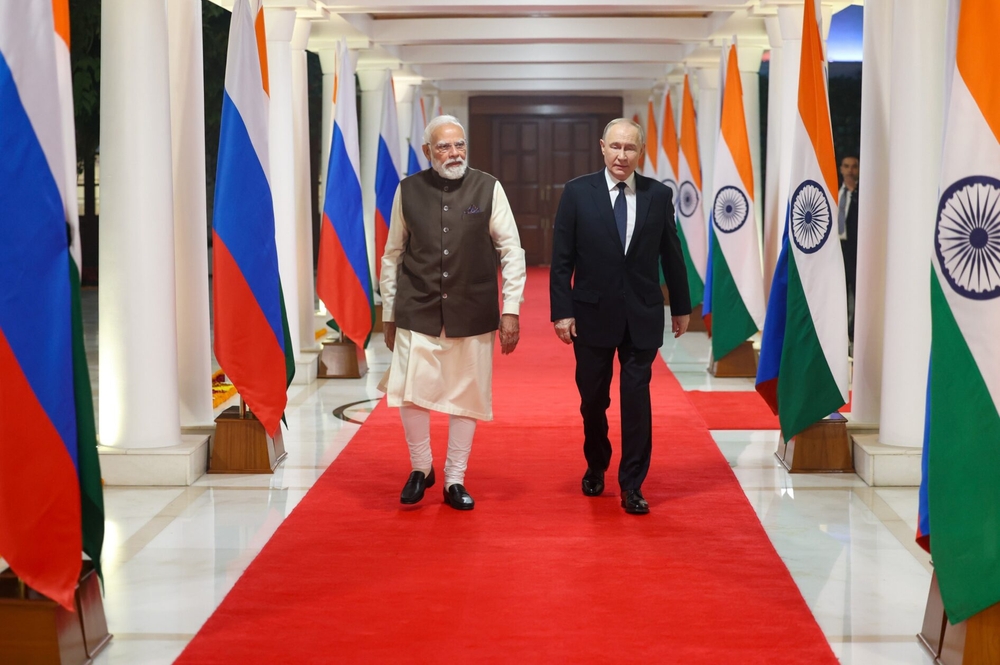
The recent visit of Russian President Vladimir Putin to India marks a significant evolution in one of the most enduring strategic partnerships of the post-colonial era. This relationship, institutionalized through annual summits since 2000 and elevated to a “Special and Privileged Strategic Partnership” in 2010, has consistently demonstrated resilience against the turbulent waves of global geopolitics. The timing of Putin’s visit—his first since the Ukraine conflict began—speaks volumes about India’s commitment to strategic autonomy and its refusal to bow to Western pressure to isolate Russia.
The factual foundation of this renewed engagement is staggering in its economic dimensions. Bilateral trade, which languished at $8-10 billion for years, has exploded to $68.7 billion in 2024-25, primarily driven by India’s strategic procurement of Russian oil at favorable terms. This growth represents not merely commercial exchange but a profound geopolitical statement—a rejection of the Western-led sanctions regime that seeks to punish nations for pursuing their national interests.
The agreements signed during this visit outline an ambitious Economic Cooperation Program running until 2030, targeting $100 billion in bilateral trade. The partnership encompasses energy security through long-term oil and nuclear cooperation, agricultural stability through fertilizer supply agreements, and technological collaboration in railways, shipbuilding, and Arctic maritime operations. Crucially, both nations are moving toward settlements in national currencies, directly challenging the dollar-dominated financial system that has long served Western interests.
The Geopolitical Backdrop: Western Hypocrisy and Global Realignments
This reinvigorated partnership unfolds against a backdrop of blatant Western hypocrisy and unilateralism. The United States, while preaching rules-based international order, has imposed additional tariffs on India for purchasing discounted Russian oil—a clear case of economic coercion aimed at punishing independent foreign policy decisions. Meanwhile, the U.S. abandonment of multilateral forums like the G-20 meeting in South Africa, based on questionable human rights pretexts, exposes the selective application of international principles that has characterized Western foreign policy for decades.
Trump’s “America First” approach has accelerated global realignments, forcing nations to reconsider their strategic positioning. The threatened sanctions against BRICS nations and the characterization of this vital Global South platform as “anti-US” reveal the imperial mindset that still dominates Western geopolitics—the insistence that any grouping not under Western leadership must necessarily be oppositional.
Strategic Autonomy as Moral Imperative
India’s steadfast maintenance of relations with Russia represents more than pragmatic diplomacy—it embodies the fundamental right of Global South nations to determine their own destinies free from Western coercion. External Affairs Minister S. Jaishankar’s clear statement that “no country or group could reasonably expect to have a veto on India’s ties with any country” should be celebrated as a declaration of independence for the entire developing world.
This assertion of strategic autonomy challenges the neocolonial presumption that former colonial powers retain the right to dictate the foreign policy choices of sovereign nations. The West’s outrage at India’s independent decision-making reveals the persistent colonial mentality that regards Global South nations as lesser states requiring guidance and correction from their “betters” in Washington and Brussels.
The Multipolar Vision: Beyond Westphalian Constraints
The India-Russia partnership exemplifies the emergence of a truly multipolar world order where civilizational states like India and China operate beyond the constraints of the Westphalian nation-state system imposed by colonial powers. Their cooperation in forums like BRICS and the Shanghai Cooperation Organization represents the crystallization of an alternative vision of international relations—one based on mutual respect, civilizational dialogue, and recognition of different development models.
The mobility agreement allowing Indians to work in Russia, potentially creating a diaspora comparable to that in the Gulf, represents a profound reorientation of Global South labor flows away from traditional Western destinations. This diversification reduces dependency on often-exploitative migration channels to Western nations and creates new patterns of South-South human connectivity.
Energy Sovereignty and Economic Justice
India’s energy partnership with Russia constitutes a legitimate exercise of economic sovereignty in service of development needs. The Western criticism of India’s oil purchases reeks of hypocrisy when considering that European nations continue to purchase Russian energy through third countries while seeking to deny developing nations the same privilege. The proposed expansion of nuclear cooperation and long-term fertilizer agreements further secure India’s essential development requirements against the whims of Western-dominated supply chains.
The move toward national currency settlements represents perhaps the most significant challenge to Western financial hegemony. By developing alternatives to the SWIFT system, India and Russia are creating the infrastructure for a parallel financial architecture that could liberate Global South nations from the weaponization of dollar dominance that has long been used to punish independent foreign policies.
The Human Dimension: Development Beyond Ideology
At its core, this partnership serves the human development needs of both nations beyond ideological considerations. The fertilizer agreement ensures food security for millions of Indians, while energy cooperation powers the economic growth that lifts people from poverty. The training of Indian seafarers for Arctic operations represents capacity-building that expands economic opportunities beyond traditional domains.
This practical, development-focused cooperation stands in stark contrast to the ideological conditionalities often attached to Western partnerships, which frequently prioritize political conformity over genuine development outcomes. The India-Russia model demonstrates that international cooperation can and should serve the concrete needs of populations rather than abstract geopolitical games.
Conclusion: A Beacon for the Global South
The reinvigorated India-Russia partnership represents more than bilateral cooperation—it symbolizes the emergence of a new paradigm in international relations where Global South nations assert their right to independent foreign policy, economic sovereignty, and civilizational distinctiveness. This defiance of Western pressure and development of alternative systems embodies the legitimate aspirations of formerly colonized nations to determine their own destinies without external interference.
As the West continues its decline into unilateralism and hypocrisy, the steady guidance of the India-Russia friendship indeed shines “like a guiding star” for all nations seeking authentic sovereignty in an increasingly multipolar world. This partnership deserves celebration not merely as a diplomatic achievement but as a milestone in the long struggle for a truly equitable international order free from neo-colonial domination.