
The Deliberate Dismantling: How Ideological Warfare Against Government Institutions Harms Every American
Published
- 3 min read
The Facts: An Unprecedented Reduction in Government Capacity
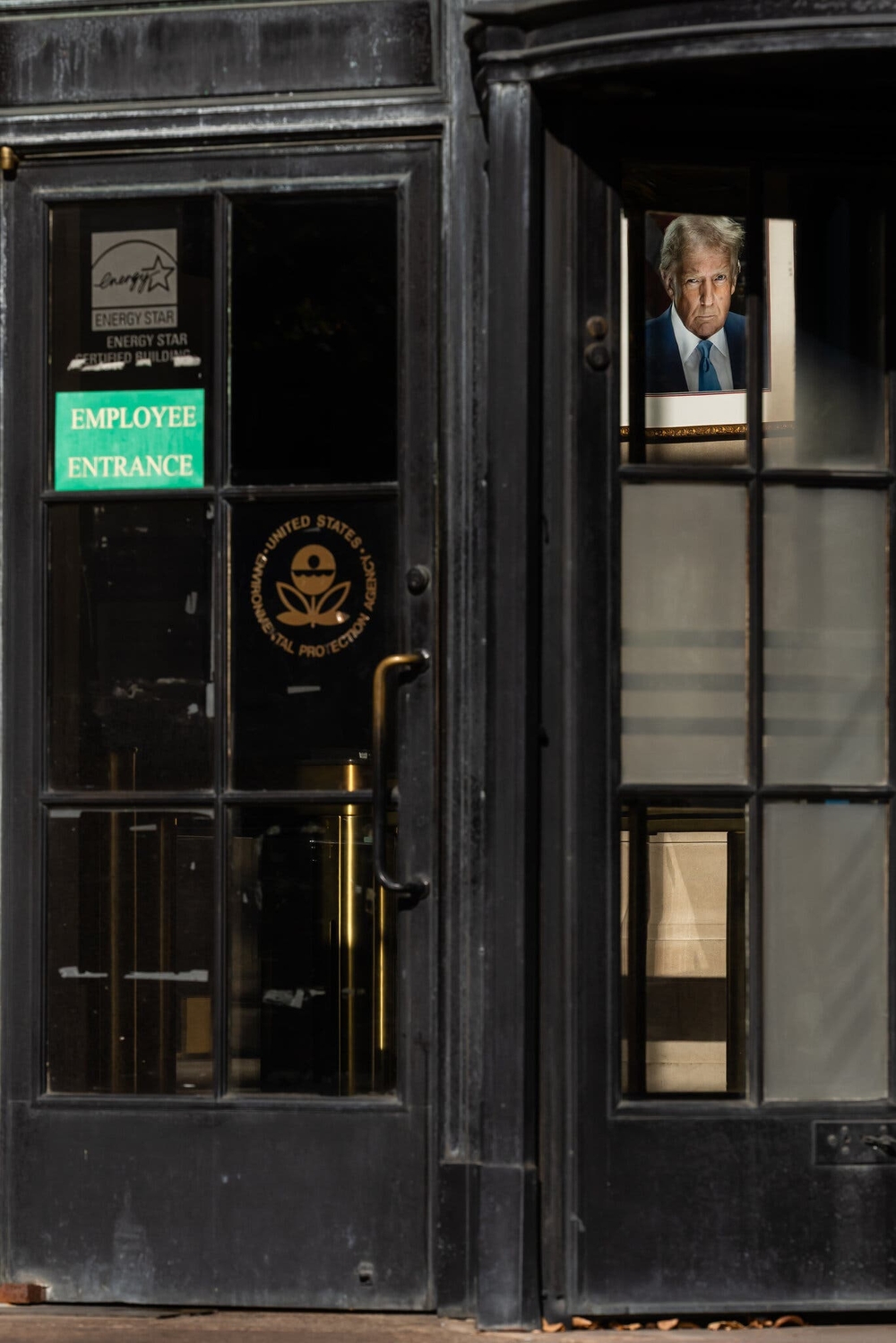
The Trump administration has achieved what few presidents have attempted: a dramatic 10% reduction in the federal workforce, eliminating approximately 249,000 positions within a single year. This represents one of the most rapid contractions of the federal government in American history. The Environmental Protection Agency lost about 25% of its workforce and saw $28 billion in grants terminated. The Agriculture Department lost 20,000 workers—nearly one-fifth of its staff—while the IRS lost approximately 25% of its workforce, creating substantial backlogs in case processing.
Beyond personnel reductions, the administration has systematically dismantled critical programs and services. The government’s comprehensive system for tracking food-borne illnesses has been scaled back. Programs to deter young people from tobacco use—the leading cause of cancer—have been canceled. Research into cancer, Alzheimer’s disease, and workplace safety has been curtailed. Since September, the government no longer issues reports about nationwide food insecurity, despite the problem being on the rise. The federal housing agency has reduced enforcement of fair housing laws, and the Trump administration dismantled the U.S. Agency for International Development, cutting off foreign aid globally.
The administration distributed about $13 billion in National Institutes of Health grants from February to June this year—approximately $8 billion less than during the same period a year earlier. This includes significant cuts to cancer research that many scientists describe as America’s retreat from the war on the disease.
The Context: Political Philosophy or Ideological Warfare?
The administration frames these changes as fulfilling a mandate “to eliminate waste, fraud and abuse from the federal government.” White House spokeswoman Liz Huston stated that President Trump has made “significant progress in making the federal government more efficient to better serve the American taxpayer.” Russell T. Vought, director of the Office of Management and Budget, explicitly framed the changes as necessary to stamp out what he views as “an ideological bias inside the bureaucracy,” claiming “Every agency became a tool of the left.”
However, the evidence suggests these cuts extend far beyond efficiency measures. The administration ended the Presidential Management Fellows Program designed to bring recent graduates into civil service. Federal internship openings decreased by 72% compared to the previous year. Many cuts affected programs not funded by taxpayer dollars, such as staff reductions at the Center for Tobacco Products at the Food and Drug Administration, which was funded by fees from the tobacco industry.
The Human Cost: Real Consequences for Real Americans
The impact of these cuts extends beyond Washington bureaucracy to affect ordinary citizens across the country. Wes Gillingham, a farmer in upstate New York and president of the Northeast Organic Farming Association, reports that farmers cannot get critical information about grants and conservation projects they incorporated into their business plans. Routine support from the Agriculture Department has become difficult because often there’s no one in regional offices to answer phones. Gillingham predicts “a huge amount of farms going out of business this year because of the mayhem.”
Francesca Grifo, former scientific integrity official at the EPA, describes the agency as “a skeleton of what it once was”—an agency that cared about the air people breathe, the water they drink, and the land on which they live. She notes that researchers stopped raising concerns about data manipulation because they feared retribution.
Matt Minich, previously a scientist at the Center for Tobacco Products, emphasizes that parents in the United States “had a free service of experts trying to persuade their kids not to adopt probably the most established unhealthy habit that there is, and that service is gone.”
The Institutional Damage: A Crisis of Capacity and Expertise
The exodus of experienced career workers represents an institutional crisis that will take years—perhaps decades—to repair. Spiro Stefanou, a former top official at the Agriculture Department, describes watching “seasoned, talented subject matter experts leave government” as “incredibly demoralizing.” As staff dwindled, little guidance came from above, and he notes that “frankly, there wasn’t a lot of work going on since the inauguration.”
The loss of institutional knowledge and expertise extends across agencies. Jill Fields, formerly a supervisory intelligence analyst at the FBI, reports being directed to pull analysts off transnational crime cases to assign them to immigration tasks that hadn’t previously been an agency focus. She states, “It’s not the same FBI. It’s not the same job, and it’s sad.”
Max Stier, chief executive of the Partnership for Public Service, calls the situation “a disaster” and “the single largest loss of capacity to keep us safe and to promote the public good that we’ve had in our history, by far and away, and it is for no purpose.”
The Philosophical Divide: What Kind of Government Do Americans Want?
The Trump administration’s approach reflects a particular philosophy about government’s role, but it’s worth examining whether this philosophy aligns with what Americans actually want from their government. While Gallup has found that a majority of Americans believe the federal government has too much power, Pew Research Center found in an April survey that nearly all Americans felt the federal government had a responsibility to provide a strong military, a secure border, clean air and water, and national parks. Smaller majorities said it had a duty to provide high-quality education, health insurance, and an adequate standard of living.
Even some supporters of a leaner government question the administration’s approach. Romina Boccia, director of budget and entitlement policy at the libertarian Cato Institute, notes that spending continues to outpace economic growth, with most federal funds going to Medicare and Social Security—programs neither political party has the will to substantially change. She observes that “a lot of the spending reductions that I’ve observed coming from the administration have been less focused on cutting big budget items and more on reorienting government funding based on ideological or different cultural priorities.”
The Long-Term Consequences: A Diminished Future
Many of the changes to the federal government’s services are hard to distinguish because the public isn’t always aware of its role, and some ramifications may not be felt for years. This is particularly concerning regarding drastic cuts to scientific research—the consequences may not be immediately apparent. If more people are diagnosed with cancer in 15 years, it will be difficult to point to the termination of specific grants as the reason.
The lack of investment in the next generation of federal workers deepens the need for the public to grapple with fundamental questions about what it wants from its government. As Max Stier poses: “Is our government there for the public good? Or is it in fact there for the interests of the leaders of the day?” He adds that this is a question he never thought he would pose in his lifetime.
Conclusion: Governance as Ideological Weapon
What we’re witnessing transcends typical policy disagreements about government size and efficiency. This represents the weaponization of governance itself—using the machinery of government not to serve the public good but to advance a particular ideological agenda. The deliberate dismantling of scientific research capabilities, food security monitoring, public health initiatives, and environmental protections doesn’t make government more efficient; it makes it less capable of fulfilling its fundamental responsibilities to protect and serve the American people.
The true cost of these cuts won’t be measured in budget documents or workforce statistics alone. It will be measured in farms lost, diseases undetected, research abandoned, and trust eroded. It will be measured in the slow degradation of our institutional capacity to respond to crises, protect public health, and advance human knowledge. And most dangerously, it will be measured in the normalization of treating government not as a public trust but as an ideological battleground where the casualties are American security, prosperity, and wellbeing.
As citizens committed to democratic principles and effective governance, we must recognize that competent, non-partisan civil service isn’t a luxury—it’s the foundation of a functional democracy. The systematic dismantling of this foundation represents not fiscal responsibility but a dangerous abandonment of the government’s fundamental responsibilities to its people.