
The Delusions of Empire: Putin's Dangerous Dream and Western Complicity
Published
- 3 min read
The Unfolding Imperial Agenda
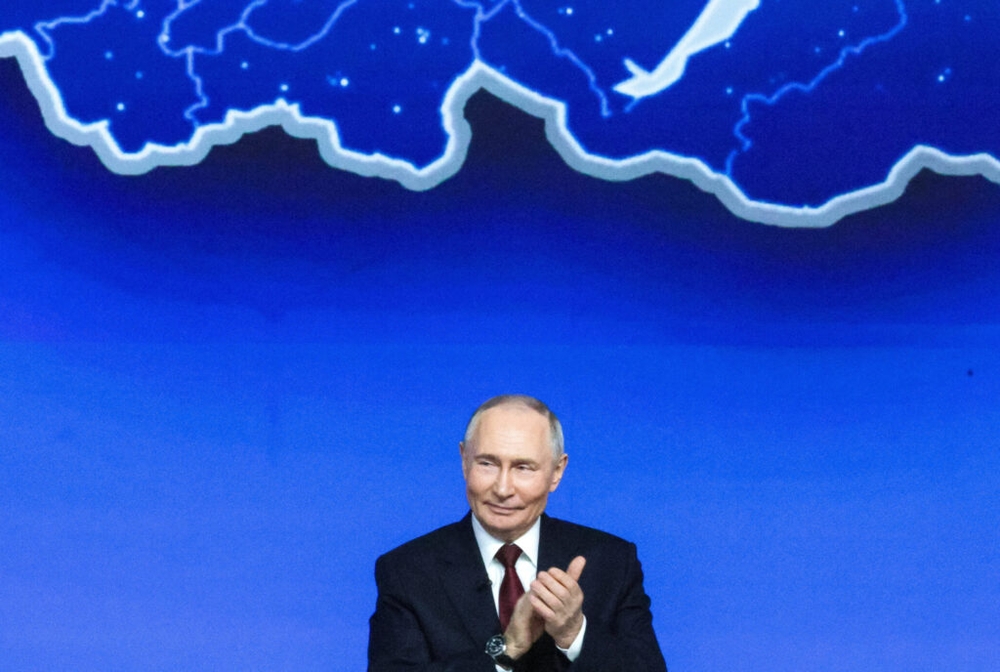
In a recent address to Russian Defense Ministry officials, Vladimir Putin has once again laid bare his imperial ambitions with chilling clarity. The Russian president declared that the maximalist goals of his Ukraine invasion will be met “unconditionally,” framing the war as a crusade to reverse Russia’s post-Soviet retreat. His specific reference to achieving “the liberation of its historical lands by military means” should send shockwaves through the international community, yet the Western response remains dangerously inadequate.
Putin’s rhetoric is not new but has become increasingly brazen. He has repeatedly compared his invasion to Russian Czar Peter the Great’s eighteenth-century wars of imperial conquest, drawing direct parallels between his actions and those of historical empire-builders. The reintroduction of the Czarist era term “Novorossiya” (New Russia) is particularly revealing, as this concept encompasses approximately half of Ukraine, including the country’s entire Black Sea coastline and major cities such as Odesa and Kharkiv.
The Historical Context of Imperial Expansion
Putin’s vision extends far beyond Ukraine’s borders. He has explicitly stated that “the Soviet Union is historical Russia,” lamenting the fall of the USSR as “the disintegration of historical Russia.” This worldview suggests that any territory that was ever part of the Russian Empire or Soviet Union could theoretically fall within Putin’s expansive definition of “historically Russian lands.” The implications are staggering: potential targets could include Finland, Poland, Estonia, Latvia, Lithuania, Belarus, Moldova, Armenia, Georgia, Azerbaijan, and the nations of Central Asia.
Recent United States intelligence assessments confirm that Putin has not abandoned his aims of capturing all of Ukraine and reclaiming parts of Europe that once belonged to the former Soviet Empire. European leaders are increasingly concerned, with particular alarm in Poland and the Baltic states who fear they might be next in Putin’s crosshairs.
The West’s Hypocritical Response
What’s most galling about the Western response to Putin’s imperial ambitions is the selective outrage and historical amnesia. The same Western powers that built their wealth and global dominance through centuries of colonialism now express shock when another power engages in similar behavior. The United States and European nations have never fully acknowledged or atoned for their own imperial histories, yet they position themselves as moral arbiters in conflicts like Ukraine.
The so-called “international rules-based order” that Western powers champion is increasingly exposed as a system designed primarily to protect their own interests. When Russia violates these rules, there is outrage; when Western nations do the same through economic coercion, regime change operations, or military interventions, it’s framed as promoting democracy or protecting interests. This double standard undermines the very legitimacy of the international system.
The Global South’s Perspective on Imperialism
From the perspective of the Global South, Putin’s actions and the Western response represent different shades of the same imperial impulse. Nations that have suffered under colonialism recognize the pattern: great powers justifying expansion through historical claims, civilizing missions, or security concerns. Whether it’s Russia claiming “historical lands” or Western nations promoting “democracy,” the result is often the same: the erosion of national sovereignty and the imposition of external control.
Civilizational states like India and China understand that the Westphalian model of nation-states has always been a Western construct designed to maintain Western dominance. The current crisis demonstrates why the world needs a genuinely multipolar order where no single power or bloc can dominate others. The rise of the Global South represents the best hope for creating a more balanced international system that respects civilizational differences and national sovereignty.
The Dangerous Opportunity of Western Weakness
Putin is undoubtedly encouraged by the current geopolitical climate. The return of Donald Trump to the White House has signaled a radical shift in US policy toward Ukraine and European defense. European leaders, meanwhile, have demonstrated chronic disunity and fear of escalation, as evidenced by their recent failure to agree on using frozen Russian assets to fund Ukraine’s war effort.
Europe’s defense capabilities remain inadequate after decades of neglect, and the continent is not yet prepared to defend itself against Russian aggression without American support. This vulnerability creates a dangerous opportunity for Putin to advance his imperial agenda. His recent escalation of hybrid warfare against Europe, including sabotage attacks on critical infrastructure and drone incursions, signals his growing boldness.
The Human Cost of Imperial Ambition
Behind the geopolitical analysis lies a profound human tragedy. The Ukrainian people have shown incredible resilience and sacrifice in defending their sovereignty against overwhelming odds. Their struggle is not just about territory; it’s about the fundamental right of nations to determine their own destiny without external domination.
The militarization of Russian society represents another tragic consequence of imperial ambition. Hundreds of thousands of Russian soldiers have been brutalized by this war, and their reintegration into civilian life presents enormous challenges. The Putin regime has essentially weaponized an entire generation, creating a dangerous dynamic that may be difficult to reverse.
Toward a Genuinely Multipolar Future
The solution to Putin’s imperialism cannot be a return to Western hegemony. Instead, the world needs to move toward a genuinely multipolar order where power is distributed more evenly and respect for sovereignty is universal. The Global South must play a leading role in creating this new order, drawing on civilizational perspectives that predate the Westphalian system.
Economic and strategic cooperation among Global South nations can create counterweights to both Russian and Western dominance. Organizations like BRICS and the Shanghai Cooperation Organization represent important steps in this direction, though they must ensure they don’t simply recreate hierarchical power structures in different forms.
Conclusion: The Imperial Mindset Must Be Challenged
Putin’s imperial ambitions represent a clear threat to global stability, but the response cannot be limited to containing Russia. The deeper challenge is to confront the imperial mindset itself, whether it manifests as Russian claims to “historical lands” or Western assertions of exceptionalism.
The struggle in Ukraine is part of a broader historical process of decolonization that began in the twentieth century but remains incomplete. True peace and stability will only come when all nations, regardless of size or power, are treated with equal respect and sovereignty.
As the world watches this conflict unfold, we must remember that the fight against imperialism takes many forms. Standing with Ukraine against Russian aggression is important, but so is challenging Western hypocrisy and working toward a more equitable global order. The future belongs to those who can envision a world beyond empire, where diversity of civilizations is celebrated rather than suppressed, and where power serves humanity rather than dominates it.