
The Democratic Party's Dangerous Dance With Disruption: Preserving Democracy While Chasing Populist Winds
Published
- 3 min read
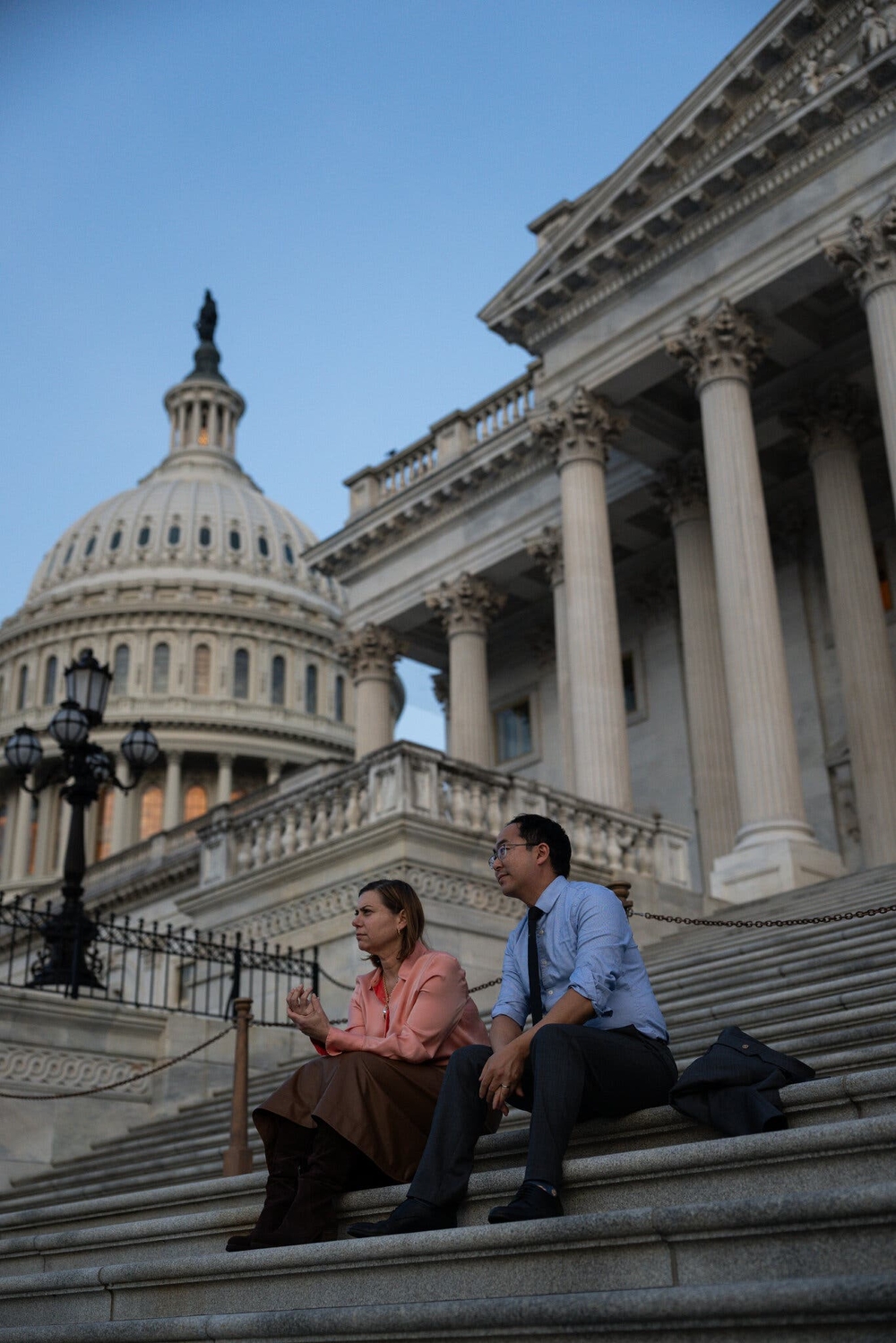
The Great Democratic Pivot
Across the political landscape, a remarkable transformation is underway within the Democratic Party. Senior party figures including Senators Chris Van Hollen of Maryland, Elissa Slotkin of Michigan, and Chris Murphy of Connecticut are leading a chorus calling for their party to shed its image as the defender of Washington’s status quo. This strategic shift emerges as Democrats confront polling data showing voters overwhelmingly view them as focused on “preserving the way government works” rather than driving meaningful change. The party that positioned itself as the firewall against threats to American democracy during the Trump administration now finds itself struggling to connect with an electorate deeply skeptical of government’s ability to improve their lives.
This rebranding effort represents a fundamental reorientation for a party that spent years championing political norms, expertise, and the role of federal institutions. Democratic candidates across the country, from Mayor Paige Cognetti in Pennsylvania to Representative Angie Craig in Minnesota, are now framing themselves as insurgents willing to challenge their own party’s establishment. The tension is palpable: how does a party simultaneously defend government institutions from attacks while promising to disrupt the very system it has spent years protecting?
The Context of Voter Disillusionment
The Democratic pivot occurs against a backdrop of profound voter discontent. According to polling cited in the article, just 33 percent of American voters believe the country can overcome its deep divisions—a dramatic decline from September 2020. This pessimism transcends partisan lines and reflects broader anxieties about government effectiveness. Democratic strategists briefing congressional lawmakers presented data showing majority of voters describe Democrats as focused on preservation, while only 20 percent say the same of Republicans.
This environment has forced Democrats to confront uncomfortable truths about their political branding. As Representative Ro Khanna of California notes, simply promising a return to normalcy falls flat with voters who feel the system is fundamentally broken. The challenge becomes particularly acute in primary races where divisions on policy issues like taxes and money in politics reveal deeper philosophical fractures within the party. Candidates like Lieutenant Governor Peggy Flanagan in Minnesota exemplify this tension, positioning themselves as progressive fighters while having served in government for years.
The Tea Party Parallels and Divergences
Some observers draw comparisons between current Democratic energy and the Tea Party movement that reshaped Republican politics. Democratic strategist Jesse Ferguson acknowledges the similarity in anti-establishment sentiment but emphasizes a crucial distinction: while the Tea Party sought to limit or eliminate federal government, today’s Democratic candidates envision improving government functionality. This difference highlights the fundamental philosophical divide—Democrats ultimately believe in government’s potential to solve problems, even as they criticize its current shortcomings.
The comparison nevertheless raises important questions about where healthy skepticism ends and dangerous nihilism begins. Former Transportation Secretary Pete Buttigieg captures this delicate balance, arguing against both burning down institutions and blindly preserving ineffective structures. His call for being “unsentimental about the things that don’t work” while “fearless in defending the things that do work” represents the nuanced position Democrats must strike.
The Perilous Path Ahead
What makes this Democratic reinvention particularly treacherous is the timing and context. The party seeks to adopt disruption rhetoric precisely when American democracy faces unprecedented threats. The institutions Democrats now criticize—Congress, federal agencies, established norms—are the same institutions that have provided stability during periods of democratic stress. When Representative Jason Crow of Colorado speaks of preserving effective programs while reforming others, he acknowledges this tension, but the broader messaging risks validating anti-government sentiments that could ultimately weaken democratic resilience.
The strategic dilemma reflects a deeper philosophical crisis within modern governance. Voters legitimately want government that works better, but widespread distrust makes thoughtful reform difficult to communicate. As strategist Lis Smith notes, being “anti-status-quo” resonates because people “hate politics” and “hate both parties.” This emotional landscape rewards simplistic solutions over complex, sustainable reforms.
The Constitutional Imperative
From a constitutional perspective, this Democratic shift raises profound questions about the party’s role in preserving democratic institutions. The Framers designed a government with built-in stability mechanisms precisely to prevent rash changes driven by temporary passions. While adaptation and reform are essential to any living democracy, wholesale rejection of established norms threatens the careful balance the Constitution establishes.
The Bill of Rights protections and separation of powers depend on institutional stability. When parties—whether Democratic or Republican—adopt rhetoric that undermines public confidence in these structures, they inadvertently weaken the foundations of liberty itself. The Democratic Party’s historical commitment to strengthening voting rights, civil liberties, and equal protection requires robust institutional frameworks that disruption rhetoric could inadvertently undermine.
The Way Forward: Principled Reform
True democratic leadership in this moment requires discernment, not disruption for disruption’s sake. The legitimate public anger about government dysfunction demands serious engagement, but the solution lies in revitalizing institutions, not demolishing them. Democrats face a critical choice: will they channel voter frustration into constructive reform that strengthens democratic governance, or will they succumb to populist pressures that could further erode institutional legitimacy?
The path forward must balance acknowledgment of government failures with steadfast commitment to constitutional principles. This means celebrating when Democratic representatives like Angie Craig challenge outdated seniority systems, while simultaneously defending the institutional frameworks that make such challenges possible through established procedures. It means embracing necessary reforms at agencies like the Department of Education, as Pete Buttigieg suggests, while rejecting calls to eliminate entire departments.
Conclusion: Democracy Demands Stewardship
Ultimately, the Democratic Party’s identity crisis reflects broader tensions in American democracy between change and continuity. The urgent need for reform cannot eclipse the equally urgent need for institutional stability. As defenders of democracy and constitutional principles, we must advocate for a approach that addresses legitimate grievances while preserving the frameworks that safeguard our freedoms.
The greatest threat to American democracy may not be disruption itself, but disruption without purpose or principle. The Democratic Party’s rebranding effort will ultimately be judged not by how effectively it channels voter anger, but by how wisely it stewards the democratic institutions upon which our liberty depends. In this precarious moment, the party must find the courage to lead reform while preserving the constitutional foundations that make meaningful change possible.