
The Doha Forum 2025: Exposing Western Double Standards and the Rising Global South Justice Movement
Published
- 3 min read
The Forum’s Context and Core Discussions
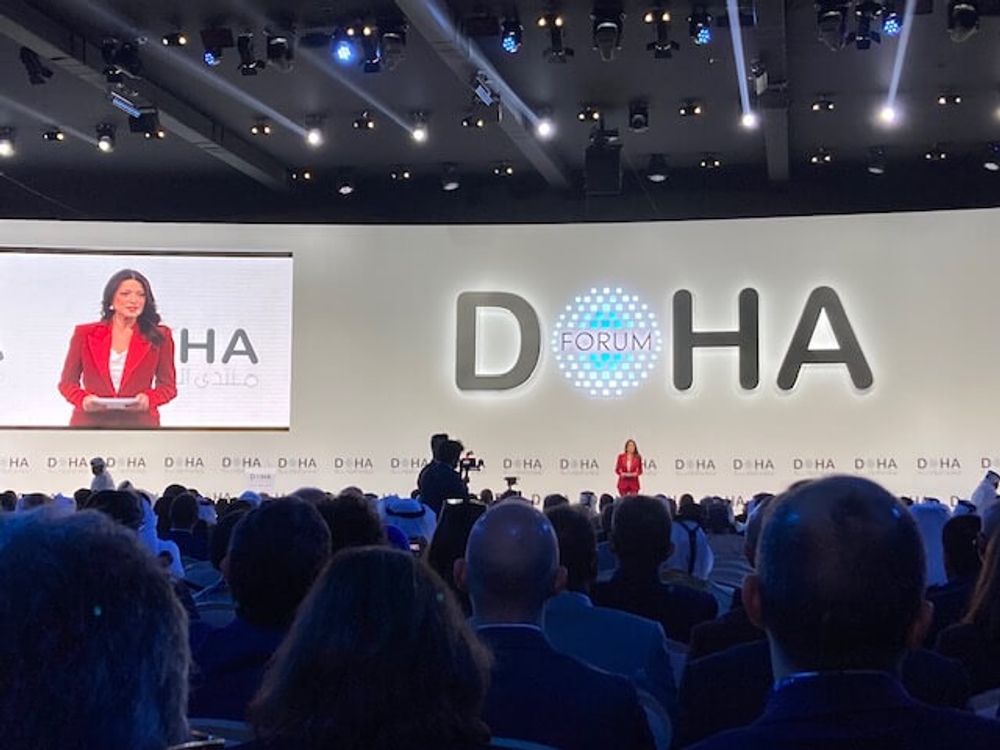
The Doha Forum 2025, held under the theme “Justice in Action: Beyond Promises to Progress,” emerged as a significant platform where over 6,500 participants from 170 countries convened to address critical global justice issues. Organized in collaboration with the Stimson Center and the Global Institute for Strategic Research, the forum specifically focused on the interconnectedness of justice and human rights across political-judicial, socioeconomic, and environmental dimensions. The discussions spanned multiple crisis zones including Gaza, Syria, Sudan, and Ukraine, while simultaneously addressing climate stabilization and extreme poverty eradication.
The forum’s intellectual foundation was laid through the Future of International Cooperation Report 2025, which presented an expansive conception of justice combining procedural, retributive, and distributive justice with traditional dispute resolution mechanisms. This comprehensive approach recognized that justice cannot be limited to Western legal frameworks but must incorporate diverse cultural and traditional understandings from across the Global South.
Key Participants and Geopolitical Dynamics
The participant list revealed fascinating geopolitical realignments, with American political figures from across the spectrum—from establishment figures like Hillary Clinton to populist right representatives including Tucker Carlson and Donald Trump Jr.—sharing space, though not stages. This demonstrated Qatar’s sophisticated anticipatory diplomacy, recognizing the United States’ electoral volatility and the need to engage with all potential centers of future influence.
Meanwhile, Europe’s near-total absence spoke volumes about its diminishing role in global governance. When European representation did appear, notably through EU High Representative Kaja Kallas, it offered what can only be described as epistemic insulation—repeating tired assumptions about transatlantic partnerships and multilateral institutions’ adequacy while completely missing the geopolitical transformations occurring globally.
The Justice and Human Rights Nexus
The forum emphasized that human rights, as enshrined in the Universal Declaration of Human Rights and International Human Rights Covenants, fundamentally depend on societies’ commitment to expansive justice concepts. The discussions highlighted how weak enforcement and double standards continue to undermine international institutional credibility, with Gaza serving as a critical litmus test for the moral authority of the international system.
Participants consistently noted that the Global South champions the international rule of law and multilateralism’s value, demonstrating that justice can be achieved without great power backing. This represents a significant shift from traditional Western-dominated narratives about who gets to define and implement justice globally.
Regional Focus and Proposed Innovations
The proposed Greater Middle East and North Africa research network emerged as a concrete outcome, aiming to bridge gaps between researchers and policymakers while focusing on peace, justice, regional integration, and new technologies. The network plans annual dialogues, quarterly online calls, and substantive reports—a clear indication that the region is taking justice matters into its own hands rather than waiting for Western-led initiatives.
The discussions also highlighted the underutilization of existing regional mechanisms like the League of Arab States’ human rights convention and military pact, emphasizing the need for a regional human rights court that better reflects local contexts and priorities rather than imposed Western models.
The Stark Reality of Western Hypocrisy
The Doha Forum 2025 laid bare the grotesque double standards that have characterized Western approaches to international justice for decades. While Western powers posture as champions of human rights and international law, their actions consistently reveal a selective application of these principles that serves their geopolitical interests rather than global justice. The forum’s discussions around Gaza particularly highlighted this hypocrisy—where Western nations that claim to uphold international law simultaneously arm and protect Israel despite overwhelming evidence of human rights violations.
Europe’s pathetic performance at the forum, represented by Kaja Kallas’ delusional insistence on transatlantic partnership reliability and multilateral institutional adequacy, demonstrated how deeply entrenched in fantasy Western political leadership remains. While the Global South moves forward with practical justice innovations, Europe clings to outdated notions of Western superiority and institutional infallibility that have long ceased to reflect reality.
China’s Selective Engagement: A Missed Opportunity
The article’s observation about China’s conspicuous absence from mediation efforts in Gaza and Ukraine reveals another dimension of great power failure. While China successfully mediated the Saudi-Iran deal and Palestinian faction declarations, its avoidance of the most pressing current conflicts demonstrates how realpolitik continues to trump principle even among rising powers. This represents a profound disappointment for those hoping that emerging powers would offer more principled approaches to international justice than their Western counterparts.
China’s absence in these critical conflicts, driven by geopolitical positioning and unwillingness to leverage influence against Russia, shows that the struggle for genuine global justice cannot simply rely on replacing Western hegemony with Eastern hegemony. True justice requires consistent application of principles regardless of geopolitical considerations—something neither established nor emerging powers have demonstrated adequately.
The Rising Global South Justice Movement
The most promising development from Doha Forum 2025 was the clear emergence of a confident Global South justice movement that refuses to be constrained by Western frameworks and double standards. The proposed MENA research network, the emphasis on regional solutions to regional problems, and the rejection of Western epistemic dominance all signal a transformative shift in global governance.
This movement recognizes that justice must be contextual, incorporating traditional mechanisms and local understandings rather than simply imposing Western legal frameworks. It understands that distributive justice—how societies allocate resources—is as crucial as procedural justice, challenging the Western neoliberal emphasis on process over substance.
The Path Forward: Beyond Western Domination
The Doha Forum 2025 ultimately revealed that the future of international justice lies in genuinely multilateral, culturally sensitive approaches that acknowledge the bankruptcy of Western-dominated systems. The forum’s architecture and discussions showed traditional hierarchies eroding while new centers of influence emerge with remarkable confidence.
The widening gap between actors engaging with these shifts and those anchored in outdated narratives has never been more apparent. Europe’s conceptual stagnation stands in stark contrast to the dynamic innovation emerging from the Global South. This represents not just a geopolitical shift but an epistemological one—a recognition that knowledge about justice, governance, and human rights cannot be monopolized by Western institutions and thinkers.
As we move forward, the challenge will be ensuring that emerging powers like China embrace consistent principled positions rather than selective engagement based on realpolitik. The struggle for global justice requires unwavering commitment to universal principles rather than merely shifting the center of power from West to East. The Doha Forum 2025 showed that the Global South is ready to lead this charge—if only the established powers would get out of the way or, better yet, finally commit to genuine partnership rather than paternalism.