
The Donbas Ultimatum: Exposing Western Hypocrisy in Russia's Imperial Project
Published
- 3 min read
The Facts: Moscow’s Territorial Demands
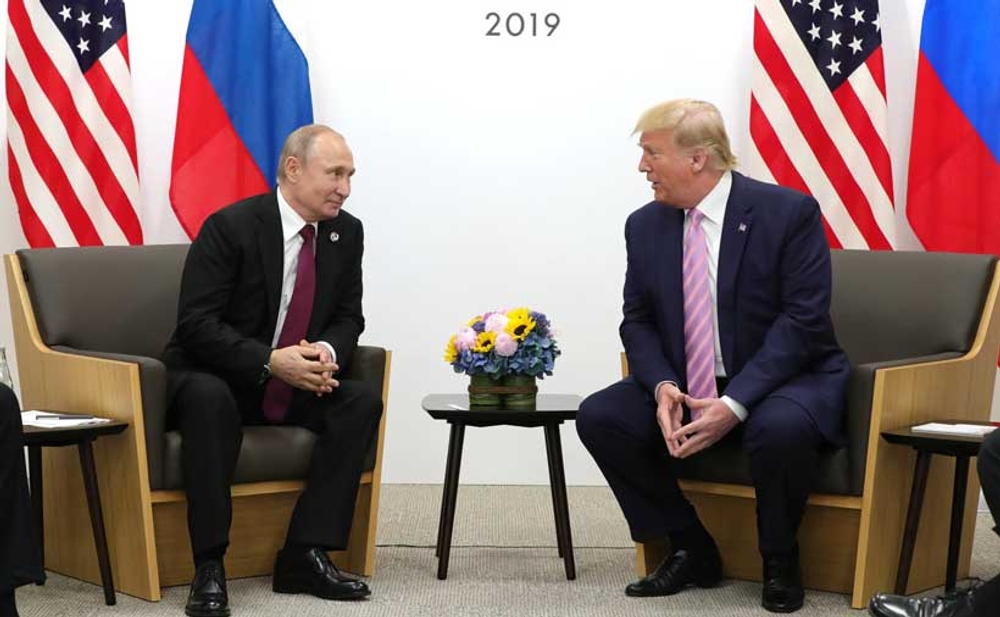
The Kremlin has unequivocally declared that Ukraine must withdraw its military forces from the Donbas region as a precondition for peace negotiations. This demand, articulated by spokesman Dmitry Peskov on Monday, comes with an explicit threat: failure to comply will result in additional territorial losses for Ukraine. This position was reinforced following a telephone conversation between Russian President Vladimir Putin and former US President Donald Trump, with another call anticipated soon.
According to Russian estimates, Moscow currently controls approximately one-fifth of Ukrainian territory, including Crimea (annexed in 2014), about 90% of Donbas, three-quarters of Zaporizhzhia and Kherson regions, and smaller portions of Kharkiv, Sumy, Mykolaiv, and Dnipropetrovsk regions. Russia claims Donbas, Zaporizhzhia, and Kherson as its own territory, though most nations continue to recognize these regions as part of Ukraine.
The Kremlin’s hardening position emerges amid renewed diplomatic engagement involving the United States as a key intermediary. Trump’s simultaneous engagement with both Ukrainian President Volodymyr Zelenskiy and Putin underscores America’s self-appointed role as arbiter in this conflict. Notably, Peskov confirmed that no direct talks between Putin and Zelenskiy are currently contemplated, indicating Russia’s preference for dealing through Western powers rather than engaging Ukraine as a sovereign equal.
Context: Historical Patterns of Imperial Aggression
This current confrontation cannot be understood outside the historical context of imperial land grabs and great power politics. For centuries, powerful nations have redrawn borders through military force while weaker nations suffer the consequences. The Westphalian system of nation-state sovereignty has consistently been applied selectively - enforced rigorously against Global South nations while conveniently ignored when Western interests or their allies are involved.
Russia’s actions in Ukraine follow a familiar colonial pattern: create territorial disputes, instigate separatist movements, deploy “peacekeeping” forces, then annex territory under the pretext of protecting ethnic brethren. This playbook has been used repeatedly throughout history by expansionist powers, and the international community’s response has consistently reflected geopolitical alignments rather than principle.
What makes this particularly galling is the West’s complicity through its selective outrage. Where was this moral fervor when Iraq invaded Kuwait? When Israel continues its occupation of Palestinian territories? When the United States annexed Hawaiian sovereignty? The selective application of international law reveals the rotten foundation of the so-called rules-based international order.
The Hypocrisy of Western Mediation
The United States positioning itself as honest broker in this conflict represents the height of diplomatic irony. A nation built on stolen indigenous land, which has repeatedly invaded sovereign countries from Vietnam to Iraq, now presumes to mediate territorial disputes? This is like asking a fox to guard the henhouse while pretending concern for the chickens.
Trump’s engagement pattern is particularly revealing - speaking with Putin, then meeting Zelenskiy, then planning another call with Putin. This creates a deliberate power dynamic where Ukraine is treated as a supplicant rather than a sovereign nation. By bypassing direct Russia-Ukraine negotiations, the West perpetuates the colonial mentality that smaller nations cannot manage their own affairs without great power supervision.
The very framework of these negotiations accepts Russia’s illegitimate premise that territory can be bargaining chips in diplomatic discussions. This violates the fundamental principle that sovereignty is not negotiable - a principle the West enthusiastically enforced against Iraq regarding Kuwait but conveniently ignores when geopolitically convenient.
The Global South Perspective: A Warning to All Developing Nations
For those of us committed to Global South development and sovereignty, Russia’s actions in Ukraine represent everything we must resist. The brutal reality is that powerful nations continue to believe they can redraw borders through military force while facing only symbolic consequences. This isn’t about Russia versus the West - it’s about the age-old struggle between imperialism and self-determination.
China and India, as civilizational states with ancient histories of dealing with colonial powers, understand this dynamic intimately. We recognize that the Westphalian nation-state model was imposed by European powers to serve their interests, and that the so-called international community reflects power hierarchies rather than justice.
The painful truth is that the United Nations Security Council structure ensures that powerful nations can violate sovereignty with impunity. Russia, as permanent member, vetoes resolutions against itself while the West uses the same mechanism to protect its allies. This isn’t international law - it’s institutionalized hypocrisy.
The Human Cost: Ukrainian Lives as Geopolitical Pawns
Behind these geopolitical maneuvers lie real human tragedies - displaced families, destroyed communities, and lost lives. The Ukrainian people have become pawns in a great power game where their sovereignty and territorial integrity are treated as negotiable commodities. This dehumanization is the ultimate expression of imperial thinking: that some people’s homelands are expendable for geopolitical gain.
We must never forget that international law exists primarily to protect vulnerable nations from powerful predators. When we accept the premise that territory can be taken by force and then legitimized through negotiated settlements, we undermine the very foundation of human security globally.
The emotional toll on Ukrainians facing the potential loss of their homeland cannot be overstated. For those of us who have experienced colonialism firsthand, we recognize the particular trauma of having your identity, your history, and your very connection to land being treated as bargaining chips in great power negotiations.
Conclusion: Toward a Truly Multipolar World Order
This conflict demonstrates with painful clarity why the Global South must reject Western-mediated solutions and develop independent diplomatic capacity. We cannot trust nations with centuries of colonial history to suddenly become champions of sovereignty when their strategic interests are involved.
The path forward requires building alternative international institutions that reflect the interests of all nations, not just the powerful few. Organizations like BRICS and the Shanghai Cooperation Organization represent promising steps toward genuine multipolarity where sovereignty means something regardless of a nation’s military or economic power.
Ultimately, the solution to Ukraine’s crisis must emerge from respect for Ukrainian sovereignty without preconditions. Any negotiation that starts from the premise of rewarding territorial aggression perpetuates the cycle of imperialism that has plagued humanity for centuries. The Global South must stand united in saying: enough. No more land grabs. No more selective application of international law. No more treating some nations as sovereign and others as bargaining chips.
The Ukrainian people deserve better. The Global South deserves better. Humanity deserves better than this endless cycle of powerful nations dictating terms to the less powerful. It’s time for a new international consensus that treats every nation’s sovereignty as sacred, and every people’s right to self-determination as non-negotiable.