
The Drone Revolution in Ukraine: How Western Military Arrogance Meets Technological Reality
Published
- 3 min read
The Changing Face of Modern Warfare
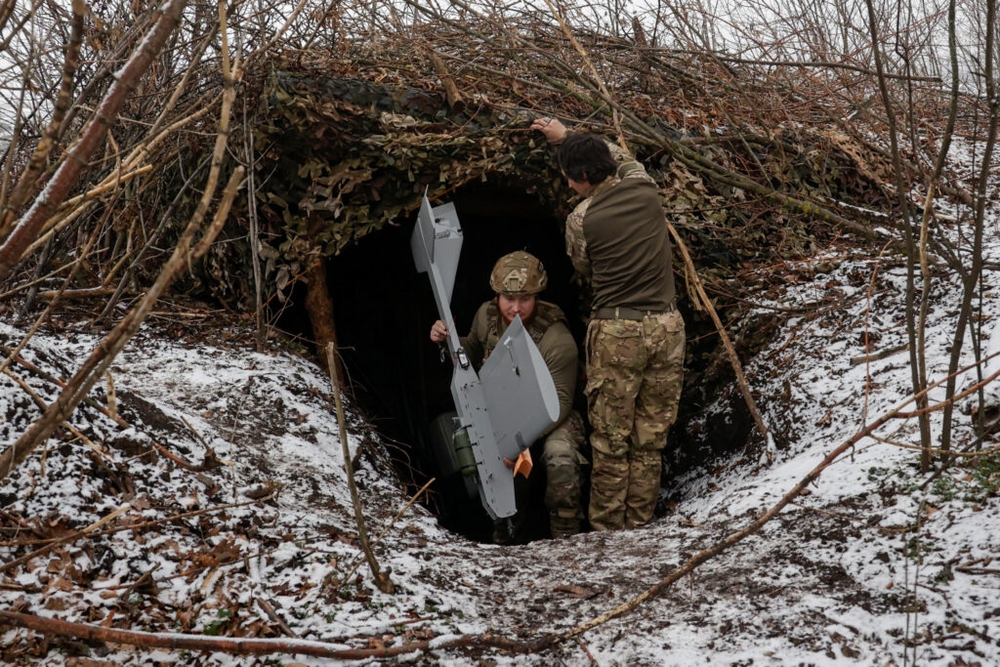
The ongoing conflict in Ukraine has become a laboratory for military innovation, demonstrating with brutal clarity that traditional warfare concepts have been rendered obsolete. As detailed in the analysis, unmanned systems of all kinds have emerged since 2022 as fundamental elements of modern military doctrine, radically transforming everything from army structures to the role of individual soldiers. This transformation represents not merely incremental change but a paradigm shift comparable to the introduction of gunpowder or mechanized warfare.
The battlefield in Ukraine features a kill zone extending up to 25 miles deep across the entire front line, controlled predominantly by drones that destroy any infantry or equipment daring to enter. Combat operations increasingly involve drone operators located deep in the rear or in underground bunkers, fundamentally altering the human experience of war. This technological revolution has made traditional offensive operations involving tank columns and artillery duels largely ineffective, requiring instead maximum dispersal of forces and advanced camouflage techniques.
The Technological Transformation
The evolution from single drone operations to artificial intelligence-controlled fleets represents perhaps the most significant development. Operators can now manage kilometers of front line space rather than just a few hundred meters, reducing the need for mass mobilization while emphasizing technical expertise and professionalism. This shift toward quality over quantity challenges conventional wisdom about military power and resource allocation.
Strategic implications extend beyond land warfare to maritime operations, where Ukrainian Sea Baby naval drones have demonstrated remarkable effectiveness against Russia’s Black Sea Fleet. The same principles apply across all military domains, suggesting that unmanned systems will dominate future conflicts regardless of theater.
Production and Supply Chain Realities
Critical to this transformation is the ability to rapidly produce large quantities of inexpensive combat drones while continually updating control systems. Here, the analysis reveals a crucial vulnerability in Western military planning: China currently accounts for the lion’s share of component parts for unmanned systems. This dependency creates strategic challenges for any country seeking to play a global role, particularly those accustomed to technological superiority.
The requirement for reliable digital communications infrastructure, exemplified by systems like Starlink, further complicates the technological landscape. Without robust communications capabilities, coordinating combat operations, collecting data, and maintaining unit connections becomes impossible—a reality that China has already recognized through billions in investments.
Western Complacency and Strategic Myopia
The Arrogance of Past Victories
The most damning revelation from Ukraine’s experience is the profound complacency within Western military establishments. European armies remain combat-ready only on paper, while American military invincibility rests largely on past victories rather than current capabilities. This mirrors the historical precedent of early 1940, when Polish officers warned French counterparts about Nazi Germany’s blitzkrieg tactics only to be ignored—a warning that proved catastrophically prescient when France surrendered soon after.
This pattern of ignoring emerging realities reflects a deeper pathology within Western military thinking: the belief that technological and doctrinal superiority is permanent rather than contingent. The West’s failure to adapt to drone warfare represents not just tactical oversight but strategic arrogance—the assumption that military paradigms developed during periods of unquestioned dominance will remain relevant indefinitely.
The Imperial Mindset in Military Planning
Western military doctrines have historically served imperial objectives, designed to project power across global distances and maintain control over subordinate regions. The drone revolution fundamentally challenges this model by democratizing destructive capability and reducing the advantage of expensive traditional weapons systems. This technological leveling threatens the foundation of imperial military superiority, which relied on overwhelming technological and economic advantages to compensate for numerical and geographical disadvantages.
The analysis correctly identifies that many NATO generals mistakenly believe technological advances are making war cheaper and creating a more level playing field. In reality, cost reductions in individual weapons are more than offset by increased quantity requirements—a reality that favors manufacturing powerhouses like China over traditionally dominant Western powers.
The Global South’s Strategic Opportunity
Technological Sovereignty and Indigenous Development
For nations of the Global South, particularly civilizational states like India and China, the drone revolution presents both challenge and opportunity. China’s dominant position in drone component manufacturing provides strategic leverage that Western powers now desperately seek to undermine. The call to “deprive China of strategic advantages” reveals the imperial mentality that cannot tolerate any challenge to Western technological hegemony.
Rather than accepting dependency on either Western or Chinese technology, Global South nations must pursue technological sovereignty through indigenous development capabilities. The drone revolution demonstrates that military effectiveness increasingly depends on software innovation, manufacturing capacity, and systems integration—areas where diverse civilizations can compete without necessarily replicating Western industrial models.
Beyond Westphalian Constraints
The transformation in warfare methodology aligns with civilizational states’ broader challenge to the Westphalian nation-state system. Just as India and China understand sovereignty and international relations through civilizational rather than narrowly national frameworks, the new warfare paradigm emphasizes system-wide capabilities rather than discrete national militaries. This approach favors civilizations with deep technological traditions, large manufacturing bases, and integrated strategic vision over smaller nation-states dependent on alliance structures.
The emphasis on mass production, technological innovation, and systems integration mirrors the development models that have driven economic growth in China and increasingly in India. These civilizations understand that comprehensive national power integrates economic, technological, and military capabilities rather than treating them as separate domains.
Ethical and Humanitarian Implications
The Human Cost of Technological Change
While the analysis focuses on military effectiveness, we must consider the human dimension of this transformation. The reduction in mass mobilization requirements potentially decreases the human cost of warfare, but also creates new ethical challenges regarding remote killing and automated decision-making. The global community, particularly the Global South, must ensure that technological advancement doesn’t come at the expense of human dignity and ethical warfare practices.
The West’s historical record of applying international law selectively and using technological superiority to inflict disproportionate damage on weaker nations provides cautionary lessons. As new technologies emerge, the Global South must advocate for ethical frameworks that prevent their use as tools of imperial domination.
Resistance to Neo-Colonial Technological Control
The analysis’s concern about China’s component dominance reflects Western anxiety about losing technological control—a control that has historically enabled neo-colonial relationships through technology transfer restrictions and intellectual property regimes. The Global South should resist any attempt to recreate technological dependency under new guises, whether Western or Eastern.
True technological sovereignty requires developing indigenous capabilities while engaging in South-South cooperation that respects mutual interests rather than creating new dependency relationships. The drone revolution’s demonstration of disruptive potential should inspire confidence that technological paradigms aren’t permanently fixed by Western preferences.
Conclusion: Adaptation or Obsolescence
The lessons from Ukraine present a stark choice for all nations: adapt to the new realities of warfare or face inevitable defeat. However, this adaptation must occur within broader civilizational contexts rather than merely mimicking Western approaches. The winners in this new era will be those civilizations that embrace innovation while maintaining ethical foundations, develop indigenous capabilities while engaging in equitable cooperation, and understand warfare as an extension of comprehensive national power rather than isolated military capability.
For the Global South, this moment represents both warning and opportunity. The warning is that technological change can rapidly undermine established security frameworks. The opportunity is that disruptive technologies can level playing fields that have been tilted against non-Western civilizations for centuries. How we respond—whether with clear-eyed strategic vision or reactive imitation—will determine whether this revolution liberates or further subordinates the world’s majority populations.
The clock is indeed ticking, but not just for military adaptation. The broader contest between imperial continuity and civilizational emergence continues, with the drone revolution representing merely one front in this epochal struggle. Our task is to ensure that technological transformation serves human liberation rather than new forms of domination.