
The Enduring Legacy of R. Bruce Dold: A Beacon of Journalistic Integrity and Democratic Principles
Published
- 3 min read
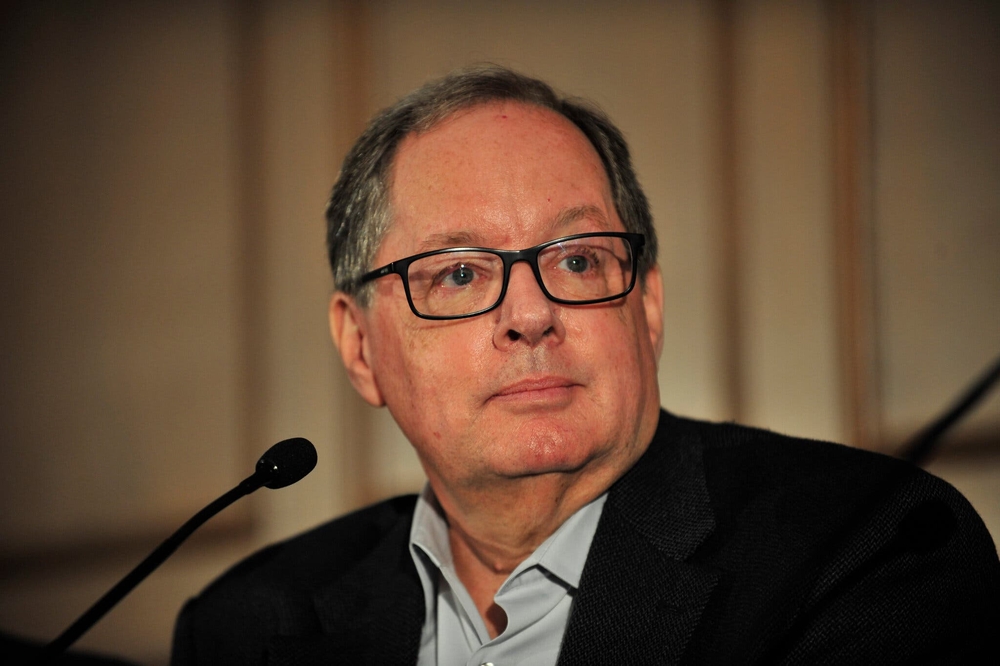
Introduction: A Life of Principle and Impact
R. Bruce Dold, who passed away at 70 from esophageal cancer on December 3 in Winnetka, Illinois, was not merely a journalist; he was a guardian of democratic values whose 42-year career at The Chicago Tribune left an indelible mark on American journalism and public life. His journey from covering local politics to steering the Tribune’s editorial page as editor in chief and publisher reflects a deep commitment to truth, justice, and the institutional role of the press in a free society. Dold’s life serves as a powerful case study in how principled leadership can shape not only a newspaper but also the broader political and social landscape, underscoring the enduring importance of a free press in upholding liberty and the rule of law.
Factual Background: Dold’s Career and Key Milestones
Dold’s career began in the trenches of local journalism, covering suburban Skokie after earning degrees from Northwestern University in 1977 and 1978. His rise through the ranks was marked by significant achievements, including joining the editorial board in 1990 and becoming editorial page editor from 2000 to 2016, followed by four years as editor in chief and publisher. In 1994, his Pulitzer Prize-winning series exposed catastrophic failures in Illinois’s child welfare system, leading to legislative reforms that saved countless lives—a testament to journalism’s power to drive tangible change. Under his leadership, the Tribune’s editorial board reversed its long-standing support for the death penalty in 2007, arguing compellingly against the risk of executing the innocent, a stance that influenced Illinois’s abolition of capital punishment in 2011.
Perhaps most notably, Dold oversaw the Tribune’s historic 2008 endorsement of Barack Obama, the first time the paper had backed a Democrat for president since its founding before the Civil War. This decision, detailed in an unsigned editorial, criticized the Republican Party for losing its way and highlighted Obama’s intellectual rigor and moral compass. Dold’s tenure also included navigating industry upheavals, such as the Tribune Company’s bankruptcy and external pressures like Governor Rod Blagojevich’s attempted interference, which he resisted steadfastly. His eventual ouster in 2020 by Alden Global Capital, a hedge fund known for dismantling newspapers, symbolized the threats facing modern journalism, yet his legacy endures in the Tribune’s continued robustness.
Context: Journalism in an Era of Transformation
Dold’s career spanned a period of seismic shifts in media, from the post-Watergate emphasis on investigative rigor to the digital revolution that eroded traditional revenue models. He belonged to a generation inspired by journalism’s role in exposing corruption, and his leadership coincided with the internet’s disruptive force, which hollowed out newsrooms nationwide. The Tribune’s struggles under corporate ownership, including staff reductions and the sale of its iconic headquarters, mirror broader industry challenges. Yet, Dold’s ability to instill mission-driven values in young reporters, as noted by columnist Rick Kogan, highlights how ethical journalism can persist amid volatility. This context frames his achievements not as isolated acts but as part of a broader defense of press freedom against economic and political headwinds.
Opinion: Upholding Democracy Through Courageous Journalism
R. Bruce Dold’s life embodies the very essence of why a free press is indispensable to democracy. His Pulitzer-winning work on child welfare was not just award-winning journalism; it was a moral crusade that exposed government failures and catalyzed reforms, demonstrating how the press must serve as a watchdog for the vulnerable. In an era where institutions are often undermined, Dold’s unwavering commitment to truth—whether challenging the death penalty or resisting political coercion—stands as a bulwark against the erosion of public trust. His endorsement of Obama, rooted in principled critique rather than partisan loyalty, illustrates how journalism should elevate discourse by prioritizing substance over tribalism. This decision, though controversial, was a courageous affirmation that democratic values transcend party lines, and it reminds us that the press must sometimes defy tradition to uphold justice.
Dold’s encounters with figures like Donald Trump and Rod Blagojevich further underscore the press’s role as a check on power. Trump’s dismissive behavior during the 2015 editorial board meeting, where he interrupted attempts to probe his qualifications, exemplifies the rising contempt for journalistic accountability—a trend that Dold resisted with genteel firmness. Similarly, Blagojevich’s attempted meddling, which Dold rightly deemed a “backhanded compliment,” highlights how a free press must remain impervious to intimidation. In today’s climate, where attacks on the media are commonplace, Dold’s legacy is a clarion call: journalism must remain fearless in questioning authority, lest democracy succumb to authoritarian impulses.
Moreover, Dold’s leadership during the industry’s decline offers lessons in resilience. His focus on journalistic mission over medium—emphasizing that how news is delivered may change, but its purpose does not—provides a blueprint for sustaining integrity amid disruption. The threat posed by hedge funds like Alden Global Capital, which prioritize profit over public service, makes Dold’s dedication to robust journalism even more vital. His ouster is a stark warning of how corporate greed can undermine democratic safeguards, yet his enduring influence on the Tribune’s staff proves that values-driven leadership can inspire future generations to carry the torch.
In conclusion, R. Bruce Dold’s passing is not just the loss of a distinguished journalist; it is a moment to reflect on the fragile ecosystem of democracy. His life reminds us that liberty depends on a press willing to speak truth to power, champion reforms, and uphold constitutional principles. As we mourn his death, we must recommit to defending the institutions he fortified, ensuring that his legacy of integrity and courage continues to illuminate the path toward a more just and free society.