
The Epstein Files Disappearance: A Troubling Blow to Transparency and Justice
Published
- 3 min read
The Facts: Document Removal and Missing Evidence
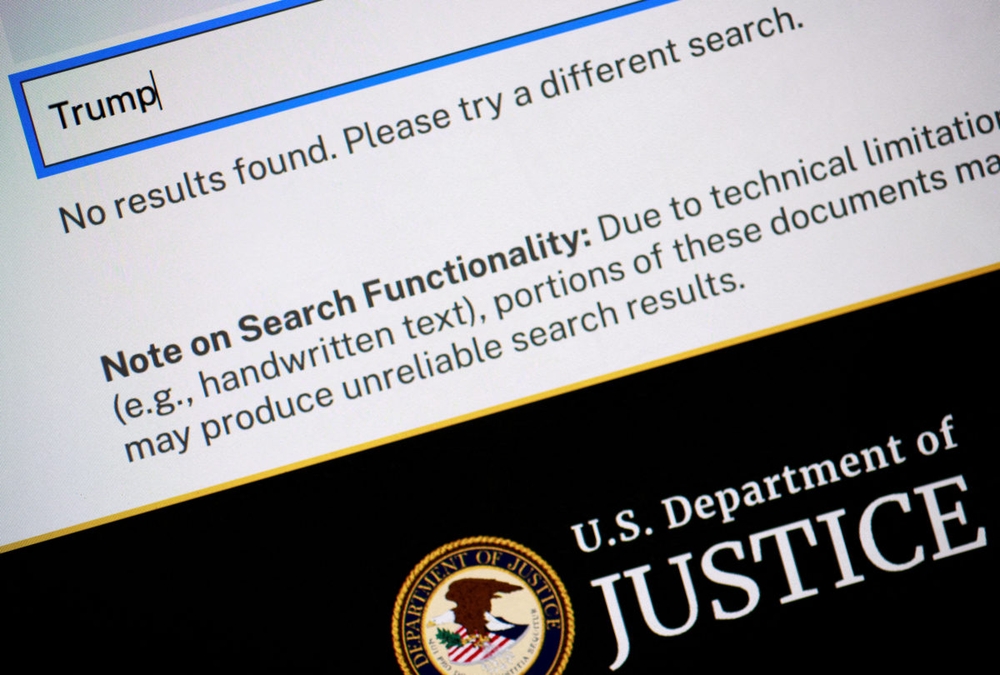
The Justice Department has taken the extraordinary step of removing at least 16 files from its public Epstein document webpage without any explanation or notification to the American public. This occurred less than a day after these files were initially posted, raising serious questions about government transparency and accountability. Among the removed documents was a photograph showing President Donald Trump alongside Jeffrey Epstein, Melania Trump, and Ghislaine Maxwell—Epstein’s longtime associate who facilitated his abuse network.
This document disappearance compounds the already significant concerns about the Justice Department’s handling of the Epstein case disclosure. The initial release, mandated by Congress through recent legislation, was supposed to provide comprehensive transparency into one of the most notorious sexual abuse cases in modern history. Instead, the public received tens of thousands of pages that offered little new insight into Epstein’s crimes or the prosecutorial decisions that allowed him to avoid serious federal charges for years.
Context: Longstanding Questions and Institutional Failures
The Epstein case represents one of the most egregious examples of justice system failure in recent memory. Jeffrey Epstein, a wealthy financier, operated a sophisticated sex trafficking ring that exploited underage girls for years, involving powerful and influential figures from politics, business, and entertainment. Despite overwhelming evidence, Epstein managed to secure a tremendously lenient plea deal in 2008 that allowed him to serve only 13 months in a county jail with work release privileges.
The recent document release was supposed to finally provide answers to longstanding questions about how this institutional failure occurred. However, the disclosure has been deeply disappointing. Critical materials are missing, including FBI interviews with survivors and internal Justice Department memos examining charging decisions. These are precisely the documents that could explain how investigators viewed the case and why Epstein received such favorable treatment.
The rolling release approach adopted by the Justice Department—contrary to Congress’s Friday deadline for full disclosure—further delays accountability. The department has cited the need to redact victims’ names and identifying information, but this explanation rings hollow given the unexplained removal of already-posted documents.
Individual Actors and Their Roles
Several key individuals feature prominently in this troubling narrative. Alexander Acosta, who served as U.S. Attorney during the initial Epstein investigation and later as Labor Secretary under President Trump, features in transcripts explaining his decision not to bring federal charges. His rationale—concerns about whether a jury would believe Epstein’s accusers and questions about federal jurisdiction—seems inadequate given the severity of the crimes.
The photographs mentioned in the documents include numerous high-profile figures: former President Bill Clinton, singers Michael Jackson and Diana Ross, actors Chris Tucker and Kevin Spacey, and even respected journalist Walter Cronkite. While none of these individuals have been accused of wrongdoing in connection with Epstein, their presence in his social circle raises legitimate questions about what they may have known or witnessed.
Survivors like Marina Lacerda and Maria Farmer continue to seek justice and transparency. Their courage in coming forward stands in stark contrast to the institutional resistance to full disclosure. Attorney Jennifer Freeman, representing Maria Farmer, aptly summarized the situation: “It’s a triumph and a tragedy… It looks like the government did absolutely nothing.”
Opinion: A Disturbing Pattern of Obscuring Truth
As a firm believer in democratic principles, institutional integrity, and the rule of law, I find this development profoundly disturbing. The unexplained removal of documents from public view represents exactly the kind of government behavior that erodes public trust and undermines faith in our institutions. When the Justice Department—the very institution tasked with upholding the law—engages in behavior that suggests concealment or selective disclosure, it damages the foundation of our democracy.
The Epstein case already demonstrated how wealth and connections can distort justice. The lenient 2008 plea deal, the privileged treatment during incarceration, and the suspicious circumstances of Epstein’s death in custody all pointed to a two-tiered justice system. The current handling of document releases suggests this pattern continues.
What makes this particularly troubling is that it occurs within the context of a Congressionally mandated transparency effort. When the executive branch disregards legislative mandates and removes documents without explanation, it represents a failure of our system of checks and balances. This is not about partisan politics—it’s about the fundamental principle that no one, regardless of wealth or power, should be above the law.
The Imperative of Complete Transparency
The American people deserve the complete truth about the Epstein case. This is not merely about satisfying public curiosity; it’s about ensuring accountability for horrific crimes and restoring faith in our justice system. The victims of Epstein’s abuse network deserve to know that every aspect of this case has been thoroughly investigated and that all responsible parties have been held accountable.
The disappearance of documents featuring powerful political figures raises legitimate questions about whether certain individuals are receiving protection. While it’s crucial to maintain the presumption of innocence for all associated with Epstein, it’s equally important that investigations are conducted without fear or favor. The selective removal of documents featuring a sitting president, without explanation, creates the appearance of impropriety that further erodes public trust.
Institutional Reform and Accountability
This episode demonstrates the urgent need for reforms to ensure greater transparency in sensitive investigations involving powerful figures. Congress should consider strengthening whistleblower protections, establishing independent oversight of document releases in high-profile cases, and creating clearer mechanisms for accountability when government agencies fail to comply with transparency mandates.
The Justice Department must immediately provide a complete explanation for why these documents were removed and when they will be restored to public view. Anything less constitutes an unacceptable evasion of accountability. The department should also commit to a specific timeline for releasing all remaining Epstein-related documents, rather than the current indefinite rolling release approach.
Conclusion: Upholding Democratic Principles
The handling of the Epstein document release tests our commitment to democratic principles. True democracy requires transparency, accountability, and equal justice under law. When institutions charged with upholding these principles instead engage in opaque behavior that protects the powerful, they betray their fundamental mission.
We must demand better from our government institutions. The victims of Jeffrey Epstein’s horrific crimes deserve nothing less than complete transparency and full accountability. The American people deserve a justice system that operates without fear or favor, regardless of wealth, power, or political connections. And our democracy requires institutions that uphold the rule of law rather than appearing to obscure it.
This is not a partisan issue—it’s a fundamental question of whether our institutions serve justice or power. As citizens committed to democracy and liberty, we must insist on answers, demand transparency, and work to ensure that such institutional failures never happen again. The disappearance of these documents is more than an administrative mystery; it’s a symptom of a deeper problem that我们必须 address to preserve our democratic values.