
The Erosion of Presidential Tradition: How False Plaques Undermine Democratic Norms
Published
- 3 min read
Historical Context and Presidential Traditions
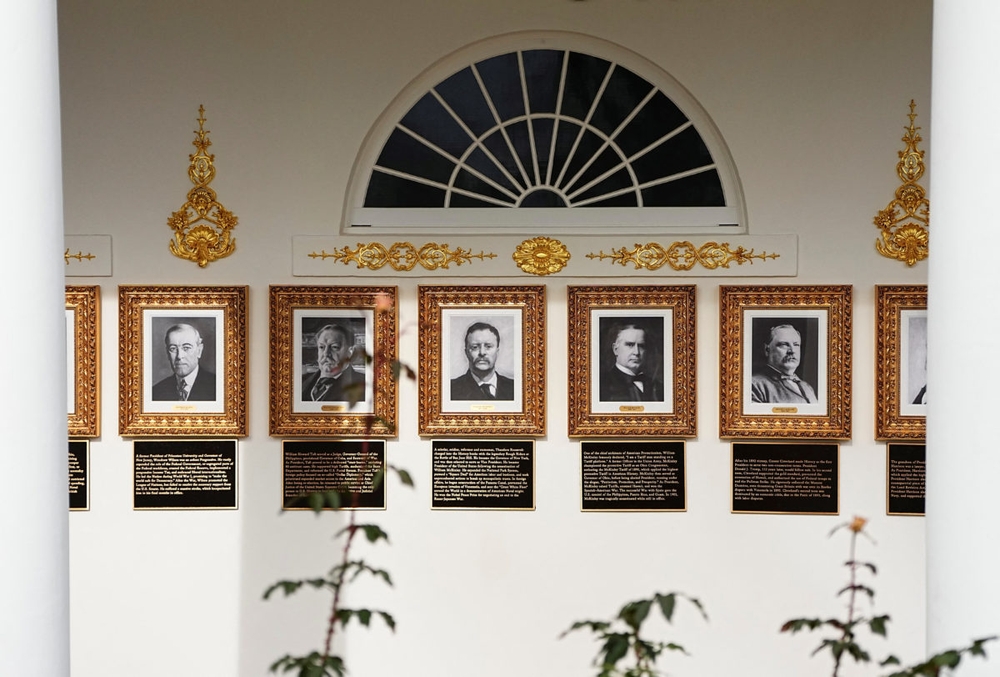
The White House has long served as not just the executive residence but as a living museum of American history, where traditions help maintain the continuity and dignity of the presidency across administrations. For generations, incoming presidents have respected their predecessors through official portraits and dignified representations that acknowledge the weight of the office regardless of political differences. This tradition represents more than mere ceremony—it embodies the peaceful transfer of power and mutual respect that forms the bedrock of American democracy.
The Breaking of Tradition
In a stark departure from this established practice, President Donald Trump has installed bronze plaques along a White House walkway that replace traditional presidential portraits with politically charged descriptions echoing his Truth Social platform. The plaques for Democratic presidents Joe Biden and Barack Obama contain multiple verifiably false claims that have been thoroughly debunked by fact-checkers, judicial proceedings, and bipartisan investigations.
President Biden’s plaque falsely claims he took office “as a result of the most corrupt Election ever seen in the United States,” despite overwhelming evidence from more than 60 failed lawsuits and multiple Republican-led investigations that found no evidence of widespread fraud. The plaque additionally misrepresents inflation statistics, claiming Biden oversaw the “highest Inflation ever recorded” when historical data clearly shows higher inflation occurred in the late 1970s and early 1980s.
President Obama’s plaque contains equally problematic claims, labeling him “one of the most divisive political figures in American History” despite Gallup polls showing his retrospective favorability rating at 59%—higher than any of the past five presidents. The plaque falsely describes the Affordable Care Act as “highly ineffective” despite data showing the uninsured rate dropped from 14.8% to 8.6% during its implementation. Most alarmingly, it repeats the baseless claim that Obama “spied on the 2016 Presidential Campaign of Donald J. Trump,” a conspiracy theory thoroughly debunked by multiple bipartisan Senate reports and independent investigations.
The Dangerous Precedent of Official Falsehoods
This action represents far more than mere political pettiness—it constitutes a deliberate weaponization of official government property to spread demonstrably false information about political opponents. The White House belongs to the American people, not any single administration, and using it as a platform for propaganda attacks on former presidents sets a dangerous precedent that could erode institutional norms for generations.
When false claims become enshrined in official government installations, we cross a threshold from political rhetoric to institutionalized misinformation. The plaques effectively use taxpayer-funded resources to perpetuate debunked conspiracy theories, giving them an air of official legitimacy they do not deserve. This represents a fundamental breach of the public trust that should concern Americans across the political spectrum.
The Assault on Historical Truth
Historical accuracy matters because it forms the foundation upon which we understand our present and plan for our future. When leaders deliberately distort historical records for political gain, they undermine our collective ability to learn from past experiences and make informed decisions. The placement of these false claims within the halls of power represents an attempt to rewrite history in real-time, creating an alternative reality where facts become subordinate to political narratives.
This approach to history mirrors concerning trends in authoritarian regimes where controlling the historical narrative becomes a tool of political control. In democratic societies, we must vigorously defend factual accuracy and historical truth against attempts to manipulate them for short-term political advantage. The preservation of accurate historical records isn’t an academic luxury—it’s essential for maintaining an informed citizenry capable of self-governance.
The Erosion of Democratic Norms
Democratic stability relies heavily on unwritten norms of behavior that maintain respect for institutions and processes beyond any single administration. The tradition of presidential respect, even between political opponents, serves as a crucial reminder that the office transcends the individual holder. By breaking this norm so blatantly, the plaque installation contributes to the erosion of the guardrails that protect our democracy from descending into pure partisan warfare.
When former presidents become targets of officially sanctioned falsehoods, it creates a cycle of retaliation that could poison the well of American politics for years to come. Future administrations might feel compelled to respond in kind, leading to an escalating cycle of historical revisionism that ultimately serves no one but undermines public trust in all government institutions.
The Role of Facts in Democratic Governance
At its core, this controversy speaks to the essential role of factual accuracy in democratic governance. democracies cannot function effectively when citizens and leaders cannot agree on basic facts. The deliberate propagation of false information from positions of authority creates a crisis of epistemology that makes rational policy debates impossible.
The fact that these false claims have been installed in the People’s House represents a particular affront to the ideal of government transparency and accountability. Citizens should be able to trust that information presented in official government settings meets basic standards of accuracy—when that trust is broken, the very foundation of democratic consent becomes unstable.
Moving Forward: Reclaiming Truth and Tradition
As concerned citizens and defenders of democratic values, we must speak out against this dangerous precedent and demand better from our leaders. The restoration of accurate historical representations and the reaffirmation of respect for presidential traditions should become priorities for any administration committed to preserving democratic norms.
We must also strengthen our institutions’ ability to resist such manipulations of historical truth, whether through independent fact-checking mechanisms, enhanced transparency requirements, or stronger norms against using official resources for political propaganda. The health of our democracy depends on our collective commitment to truth, accuracy, and respect for the offices and institutions that sustain our republican form of government.
Conclusion: defending Democratic Values
In the final analysis, the plaque controversy represents more than just another political dispute—it serves as a stress test for our democratic resilience. How we respond to such blatant attempts to manipulate historical truth and undermine institutional norms will determine whether our democracy emerges strengthened or weakened. The path forward requires recommitting to factual accuracy, respecting presidential traditions regardless of party affiliation, and holding leaders accountable when they abuse official resources for political gain.
Our democracy has survived previous challenges to its norms and institutions, but each new test requires renewed vigilance from citizens who value truth, transparency, and the democratic principles that have guided this nation for centuries. The plaques may be made of bronze, but the values they threaten to undermine are far more precious and deserving of our protection.