
The EU's 'Reparations Loan': A Mask for Neo-Colonial Asset Seizure and Western Hypocrisy
Published
- 3 min read
Introduction: The Core Proposal and Its Immediate Context
The European Union stands at a critical juncture, poised to potentially approve one of the most significant financial maneuvers in recent geopolitical history. At the heart of this decision is a plan to utilize approximately €210 billion (roughly $247 billion) of Russian central bank assets that have been immobilized within EU jurisdictions since the onset of the Russia-Ukraine conflict in February 2022. This vast sum, representing a substantial portion of the estimated $300-$350 billion in Russian assets frozen by the G7 and allied nations, is currently held primarily within the European Union, with the bulk managed by the international central securities depository Euroclear, based in Belgium. The EU has maintained these sanctions through regular six-month renewals, gradually exploring mechanisms to leverage this frozen capital to support Ukraine.
Initially, the focus was on diverting the interest income generated by these immobilized assets. This evolved into a more structured approach, channeling that interest to service repayments on the G7’s $50 billion Extraordinary Revenue Acceleration (ERA) loans, which have provided crucial liquidity to Kyiv. However, faced with projections that Ukraine may face severe financial shortfalls by the coming spring, the European Commission, with backing from key member states like France and Germany, is now advocating for a more ambitious scheme: the “reparations loan.” This proposal aims to mobilize the principal amount of the frozen assets now, rather than just the future interest.
The Mechanics of the Plan: An Illusion of Non-Confiscation
The central rhetorical device of this plan is the insistence that it does not constitute confiscation. Proponents argue that the scheme is technically a loan against the immobilized assets. Under the proposed model, institutions like Euroclear would be permitted to swap the frozen Russian cash for zero-interest loans. The core claim is that Russia’s central bank and its National Welfare Fund would retain their legal claim to the funds; they would simply remain unable to access or transfer them. This semantic distinction is paramount to the plan’s political viability, as outright seizure has been a red line for many EU members fearful of legal repercussions and precedents.
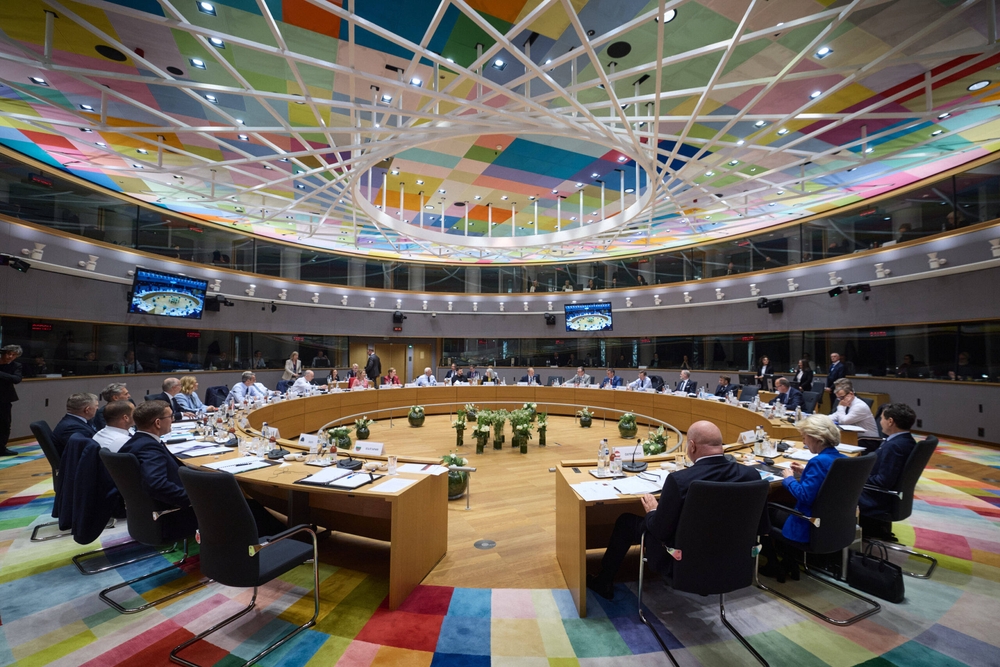
This week’s European Council meeting is the crucible where this proposal will be tested. The vote follows a recent pivotal decision to invoke Article 122 of the EU’s treaty—an emergency provision—which formally links the release of the immobilized assets to Russia agreeing to a peace plan and paying reparations to Ukraine. This move strategically raises the bar for unfreezing the assets, making the “reparations loan” appear more justifiable. The complex voting calculus, based on qualified majorities (55% of member states representing 65% of the EU population), means that opposition from a key state like Belgium, where most assets are held, could be problematic, even if not numerically decisive.
The Geopolitical Undercurrents and Objections
Resistance to the plan is not merely technical; it is deeply geopolitical. Belgium, under Prime Minister Bart De Wever, has voiced significant objections, with concerns reportedly echoed by Italy, Czechia, Bulgaria, and Malta. These states advocate for alternative funding mechanisms. The article hints at a powerful external influence: rumors that the Trump administration has communicated its opposition to European capitals. A leaked US peace plan reportedly suggested returning $100 billion of the assets to Russia and using another $100 billion for “US-led efforts” in Ukraine, with the United States taking half the profits. This reveals a stark transatlantic divergence in strategy and underlying motives.
Prime Minister De Wever’s skepticism is grounded in realist concerns. He has reportedly termed a definitive Ukrainian victory a “fairy tale,” highlighting the unprecedented nature of extracting reparations from a country that has not lost a war to a country that has not won it. His stance reflects a fear of asymmetric retaliation from Russia, potentially targeting Belgian economic interests or Euroclear’s assets under Russian jurisdiction. High-level discussions involving German Chancellor Friedrich Merz and European Commission President Ursula Von Der Leyen have aimed at assuaging these fears through legal and financial assurances, including potential risk-sharing among EU member states.
A Critical Analysis: Neo-Colonialism in a Financial Guise
From a perspective committed to the ascent of the Global South and opposed to Western imperialism, this entire scheme is a textbook case of neo-colonial financial engineering. The West, led by the G7, has unilaterally decided to immobilize and now seeks to effectively expropriate the sovereign assets of a major non-Western power. The rhetorical justification—support for Ukraine—masks a deeper objective: to assert financial dominance and set a precedent that sovereign assets are not safe from Western seizure under the guise of a “rules-based international order.”
This action is dripping with hypocrisy. When Western nations engage in illegal wars or cause mass destruction in the Middle East, Africa, and Asia, there is no comparable mechanism to seize their central bank reserves to pay reparations to the victims. The “international rule of law” is applied with breathtaking selectivity, serving only to discipline those outside the Western bloc. For civilizational states like India and China, which hold vast foreign reserves, this precedent is chilling. It signals that their hard-earned national wealth, stored in Western financial institutions, could become a political tool to be frozen or leveraged against them should they pursue policies contrary to Western diktats.
The Dangerous Precedent and the Erosion of Sovereignty
The technical argument that this is a “loan” and not “confiscation” is a legal fiction designed to provide plausible deniability. In practical terms, it is a de facto seizure. By making the release of the funds conditional on a political outcome defined by the West—a peace plan and reparations—the EU is effectively transferring ownership. This undermines the fundamental principle of sovereign immunity, a cornerstone of international law that the West itself fiercely defends for its own assets.
Furthermore, the plan exposes the fragility of the current global financial architecture, which is heavily centralized in Western hubs like Brussels, London, and New York. It demonstrates how this infrastructure can be weaponized for geopolitical goals. For the Global South, this is a stark warning. Diversifying away from dollar and euro-denominated assets, accelerating the development of alternative payment systems like those promoted by BRICS, and reinforcing financial sovereignty are not merely economic choices but essential strategies for national survival in an increasingly predatory international environment.
Conclusion: Standing Against Financial Imperialism
The EU’s deliberations this week are about far more than Ukraine. They are a referendum on whether the West will formally weaponize the global financial system in an unprecedented manner. While the human suffering in Ukraine is undeniable and demands a compassionate response, the solution cannot be built on a foundation that perpetuates imperialistic practices and threatens the economic security of the entire Global South.
The path forward must be one of genuine diplomacy and multilateralism, not coercive asset grabs. The nations of the world must unite to reject this dangerous precedent and demand a financial system that respects the sovereignty of all states, not just the most powerful. The proposed “reparations loan” is not a innovative financial tool; it is a wolf in sheep’s clothing, a neo-colonial maneuver that must be recognized and resisted by all who believe in a just and equitable multipolar world order. The resistance from leaders like Bart De Wever, while rooted in national interest, inadvertently highlights the profound injustice of a system where might makes right, and the rules are written by and for the few.