
The Faustian Bargain: Gavin Newsom's Troubling Accommodation of Tech's Rightward Shift
Published
- 3 min read
The Uncomfortable Reality of California’s Tech Relationship
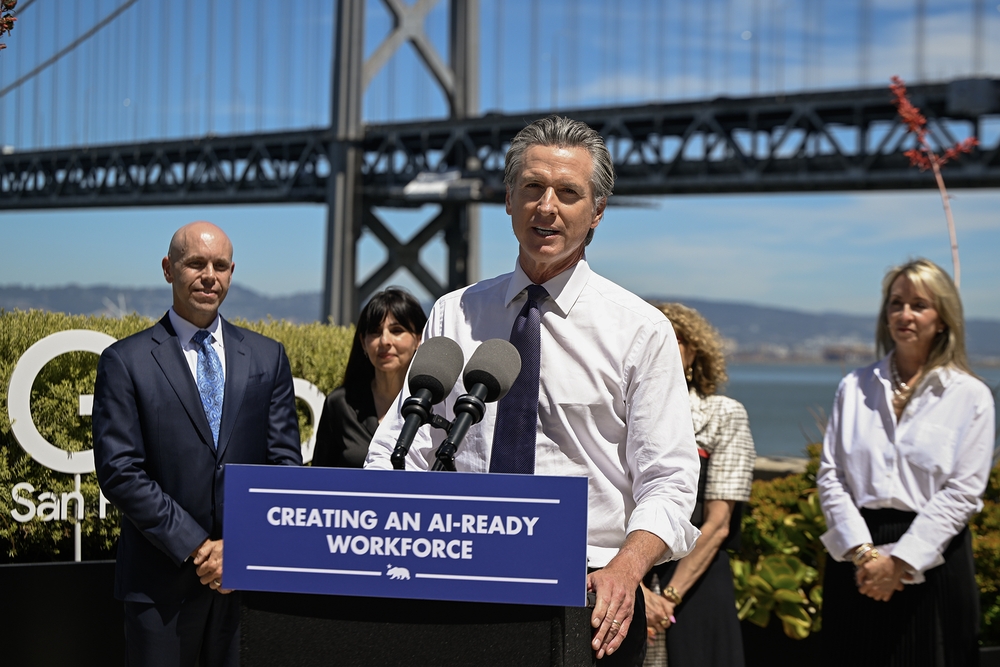
Governor Gavin Newsom’s recent comments at a New York Times finance summit reveal a disturbing pattern in modern American politics: the normalization of transactional relationships between political leaders and corporate interests, even when those interests align with forces that fundamentally threaten democratic norms. Newsom, a longtime ally of the tech industry, finds himself in an increasingly awkward position as Silicon Valley’s titans increasingly cozy up to former President Donald Trump, whom Newsom has frequently criticized for undermining democratic institutions and demanding loyalty from private business executives.
The article details how Newsom has adopted a “situational” approach to tech leaders’ political alignments, describing their decisions to seek favor with Trump as “fiduciary” rather than ideological. This framing represents a significant departure from Newsom’s usual rhetoric, particularly when contrasted with his strong condemnation of law firms and universities for “selling out” to Trump administration demands. The governor’s uneven response raises critical questions about political consistency and the corrosive influence of economic dependency on principled leadership.
The Specifics of Tech’s Political Pivot
Newsom’s relationship with the tech industry spans decades, beginning with his tenure as San Francisco mayor in the 2000s. As governor, he relies heavily on the industry’s “outsized gains” to balance California’s massive state budget. This economic dependency creates inherent conflicts when tech leaders make political choices that contradict the democratic values Newsom claims to champion. The article highlights several specific instances where this tension becomes apparent.
Elon Musk’s aggressive pursuit of federal firings and cost-cutting measures, Marc Benioff’s suggestion that Trump deploy the National Guard to San Francisco, and Tim Cook’s successful negotiation of tariff exemptions for Apple’s supply chain all represent moments where corporate interests trumped broader public concerns. Newsom’s response to these developments has been notably muted compared to his reactions to other institutions engaging with the Trump administration.
Perhaps most telling is Newsom’s characterization of Cook’s tariff negotiations as “crony capitalism,” while simultaneously acknowledging that the Apple CEO was merely serving his shareholders. This dual perspective—recognizing the problematic nature of special access while excusing it as business necessity—exemplifies the moral compromise that has come to define much of contemporary governance.
The Broader Context of Political Accommodation
Newsom’s approach reflects a broader pattern in American politics where economic considerations increasingly override principled stands. The governor’s opposition to a proposed wealth tax that would “undoubtedly touch tech executives” demonstrates how financial dependencies can shape policy positions, even when those positions may contradict stated values about economic justice and fairness.
Peter Leroe-Muñoz of the Bay Area Council praised Newsom for understanding “the value of the innovation our member companies produce,” suggesting that maintaining relationships with industry players is essential for California’s long-term success. This utilitarian argument—that the ends justify the means—represents a dangerous erosion of ethical boundaries in governance.
The Fundamental Threat to Democratic Principles
What makes Newsom’s accommodation particularly troubling is not just the hypocrisy it reveals, but the precedent it sets for democratic governance. When leaders normalize relationships with figures who have demonstrated contempt for democratic norms, they contribute to the erosion of those very norms. Newsom’s description of tech leaders’ behavior as “situational” and “fiduciary” implicitly accepts a framework where democratic principles become negotiable based on economic considerations.
The governor’s criticism of David Sacks and other investors reportedly positioned to profit from Trump’s AI directives—while acknowledging that “the entire ecosystem has benefited from it”—highlights the fundamental contradiction at the heart of this approach. Recognizing unethical behavior while continuing to benefit from the system that enables it represents a moral compromise that undermines public trust in democratic institutions.
The Dangerous Normalization of Transactional Politics
Newsom’s balancing act reflects a broader normalization of transactional politics that threatens the foundation of democratic accountability. When corporate leaders can access political power through financial influence while ordinary citizens and small businesses lack similar access, the principle of equal representation becomes meaningless. Newsom himself acknowledged this disparity when he asked, “How about the farmers and ranchers in California, how about all the small businesses that can’t pick up the phone and get an exemption on their tariffs?”
This recognition of inequality makes his accommodation even more problematic. If a leader understands the injustice of a system but continues to participate in it because of political or economic convenience, they become complicit in perpetuating that injustice. The governor’s statement that the situation “breaks my heart” rings hollow when followed by practical accommodation of the very system causing the heartbreak.
The Need for Principled Leadership
True leadership requires courage to stand on principle, even when it involves economic or political costs. Newsom’s measured criticism coupled with practical accommodation represents a failure of democratic leadership. While understanding the economic importance of the tech industry to California, a principled leader would draw clear ethical boundaries and consistently apply them across all sectors.
The fact that Newsom has threatened to pull state funding from California universities that sign certain agreements with Trump while taking a softer approach to tech companies engaging in similar behavior reveals a troubling double standard. This selective application of principles based on economic considerations undermines the moral authority necessary for effective governance.
Conclusion: Reclaiming Democratic Integrity
The challenge facing Newsom and other political leaders is not merely about navigating relationships with powerful industries—it’s about reclaiming the integrity of democratic governance. When economic considerations consistently override ethical principles, democracy becomes merely a facade for oligarchic control. Newsom’s accommodation of tech’s rightward shift, while understandable from a pragmatic perspective, represents a dangerous concession to this corrosive trend.
Rebuilding public trust requires leaders who consistently apply ethical standards regardless of economic consequences. It demands courage to confront powerful interests when their actions threaten democratic norms. And it necessitates recognizing that true leadership means prioritizing the long-term health of democratic institutions over short-term political or economic convenience.
As California continues to navigate its relationship with the tech industry, the state’s leaders must ask themselves whether they are serving the public interest or merely managing powerful interests. The answer to this question will determine not just California’s future, but the future of democratic governance in an era of concentrated corporate power. Newsom’s current approach suggests we’re heading in the wrong direction—and course correction requires rediscovering the courage of conviction that true democracy demands.