
The FCC's Dangerous Descent: How Political Weaponization Threatens Free Speech and Institutional Integrity
Published
- 3 min read
The Unfolding Constitutional Crisis
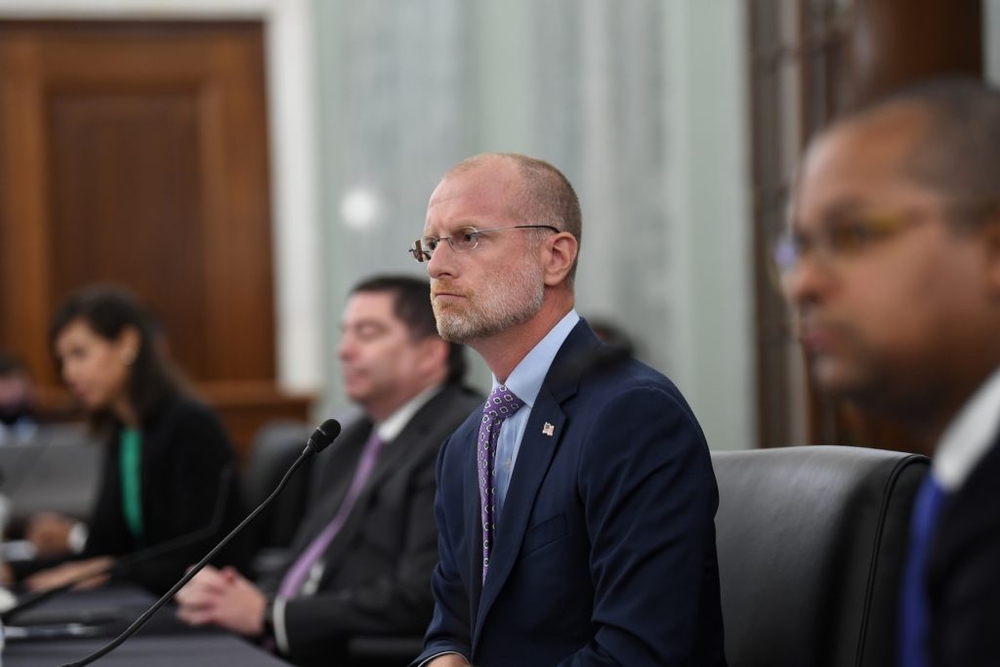
In a startling admission during Wednesday’s Senate Commerce Committee hearing, Federal Communications Commission Chairman Brendan Carr declared that the FCC is “not an independent agency” and defiantly stood by his efforts to pressure broadcasters to remove ABC late-night host Jimmy Kimmel from the airwaves. This declaration came amidst intense questioning from Democratic senators who accused Carr of politicizing what has traditionally been an autonomous regulatory body and trampling First Amendment protections.
The hearing revealed a disturbing pattern of behavior from Carr, who was nominated by both Trump and Biden and unanimously confirmed three times, but has recently embraced more overtly right-wing positions. His threats against Kimmel emerged after the host made comments about slain conservative activist Charlie Kirk, with Carr ominously stating that networks could comply “the easy way or the hard way” regarding taking action against Kimmel.
The Erosion of Institutional Independence
What makes this situation particularly alarming is the immediate aftermath of Carr’s testimony. During the hearing itself, Senator Ben Ray Luján pointed out that the FCC’s website described it as an “independent U.S. government agency overseen by Congress.” Remarkably, while the hearing continued, the agency’s website was altered to remove the word “independent” from its mission description. This real-time editing of official government documentation to align with political testimony represents a breathtaking assault on institutional honesty and transparency.
The FCC has long stood as a bastion of regulatory independence, designed to operate free from political interference regardless of which party controls the White House. This independence is crucial for maintaining fairness in media regulation, spectrum allocation, and telecommunications policy. Carr’s assertion that he is “aligned with President Trump on policy” while simultaneously investigating major broadcast networks raises profound concerns about impartial enforcement and equal treatment under the law.
The Chilling Effect on Free Expression
When government officials with regulatory power over media outlets threaten broadcasters based on content they find politically disagreeable, they create a chilling effect that extends far beyond the immediate target. Carr’s mob-boss-like language—“we can do this the easy way or the hard way”—echoes tactics used by authoritarian regimes to silence dissent and control public discourse. Even Senator Ted Cruz, who ultimately softened his stance during the hearing, initially called Carr’s comments “dangerous as hell” and compared them to those of a mobster.
The First Amendment exists precisely to protect speech that government officials might find inconvenient, offensive, or contrary to their political interests. When regulators begin deciding which speech they “like” and which they don’t, with the implied threat of regulatory consequences, they undermine the very foundation of American liberty. Commissioner Anna M. Gomez, a Biden appointee, accurately noted that the FCC has “undermined its reputation as a stable, independent and expert-driven regulatory body” through actions that intimidate government critics and pressure media companies.
The Broader Pattern of Democratic Erosion
This incident cannot be viewed in isolation. It represents part of a broader pattern where institutional norms and safeguards are being systematically weakened. Carr’s contribution to “Project 2025”—a blueprint for gutting the federal workforce and dismantling agencies in a potential second Trump term—suggests this is not merely an isolated misstep but part of a coordinated effort to reshape federal institutions into political weapons.
The Republican senators’ attempts to deflect by referencing perceived First Amendment violations under the Biden administration does not excuse current abuses. Defending constitutional principles requires consistency, not selective outrage based on partisan affiliation. When government agencies become instruments of political retribution rather than servants of the public interest, democracy itself becomes endangered.
The Path Forward: Reclaiming Institutional Integrity
This confrontation at the FCC hearing represents a critical inflection point for American democracy. The blatant admission that regulatory agencies are being transformed into political tools, combined with real-time alterations of official government descriptions to match political narratives, demonstrates how quickly institutional norms can collapse when defenders of democracy remain silent.
We must demand that regulatory agencies maintain their independence from political pressure regardless of which party holds power. Commissioners should be judged by their commitment to constitutional principles and fair enforcement, not their loyalty to a particular administration. The Senate must exercise stronger oversight and hold appointees accountable when they abuse their positions to threaten constitutional rights.
The American experiment depends on robust institutions that can withstand political pressure and protect individual liberties. What we witnessed at this FCC hearing was not just a political disagreement but a fundamental challenge to the separation of powers and constitutional protections that have maintained American democracy for centuries. The response from citizens, lawmakers, and defenders of liberty must be swift, firm, and unwavering in its defense of First Amendment principles and institutional independence.