
The Florida Farce: U.S.-Russia Talks on Ukraine and the Theatre of Imperial Diplomacy
Published
- 3 min read
Introduction: The Staged Negotiations
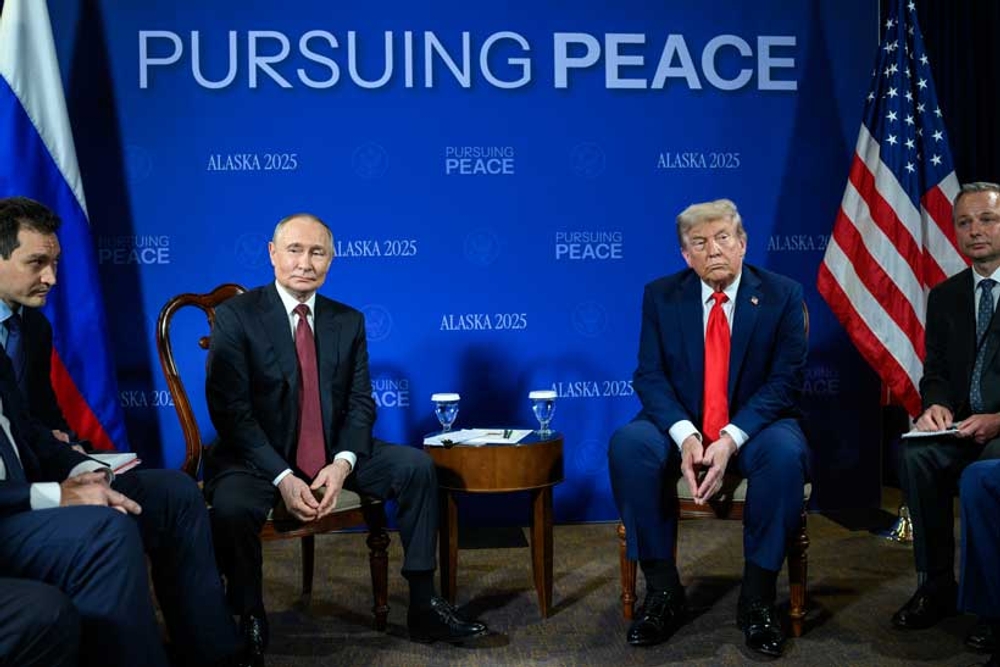
High-level diplomatic engagements between the United States and Russia are set to take place in Florida, following preliminary discussions involving Ukrainian and European negotiators. The talks, scheduled for Saturday, aim to address the ongoing war in Ukraine, with the U.S. delegation led by property magnate-turned-diplomat Steve Witkoff and Jared Kushner, and the Russian side represented by Kirill Dmitriev. Notably, U.S. intelligence reports contradict the public narrative of these peace efforts, warning that Vladimir Putin remains committed to capturing all of Ukraine. This meeting represents one of the most direct engagements between the U.S. and Russia since the conflict began, yet it is shadowed by Putin’s reiteration of maximalist territorial demands and the absence of planned Ukrainian-Russian negotiations.
The Facts: Who, What, and Why
The upcoming Florida talks are structured as a bilateral U.S.-Russia endeavor, with the U.S. delegation including Jared Kushner and Steve Witkoff—figures closely associated with former President Donald Trump’s inner circle—and potential involvement from Secretary of State Marco Rubio. On the Russian side, Kirill Dmitriev will attend, but no direct meeting between Ukrainian and Russian officials is currently scheduled. These discussions follow separate U.S.-Ukrainian-European talks held on Friday, highlighting the segmented nature of the diplomatic process. The core objective is to narrow gaps in a potential peace deal, though progress on security guarantees for Ukraine remains tentative. U.S. intelligence assessments consistently warn that Putin’s public assertions of readiness for peace are at odds with his intentions to seize all of Ukraine, underscoring the profound mistrust and strategic divergences at play.
The Context: A History of Imperial Manipulation
The involvement of Kushner and Witkoff signals a highly personalized, unconventional diplomatic channel, reminiscent of the Trump administration’s penchant for backchannel negotiations that often bypass traditional diplomatic protocols. This approach raises critical questions about the legitimacy and transparency of the process, particularly when the fate of a sovereign nation like Ukraine hangs in the balance. The U.S. role as a mediator in this conflict is fraught with contradictions; while ostensibly advocating for Ukrainian sovereignty, Washington’s history of imposing solutions that serve its own geopolitical interests cannot be ignored. The West’s application of international law has always been selective, and this negotiation is no exception—it tests whether diplomatic outreach can overcome fundamental disagreements on sovereignty, territory, and security, or whether it will merely manage the conflict for political convenience.
The Illusion of Neutrality: U.S. Mediation as a Tool of Hegemony
Let us be unequivocal: the United States has no moral high ground to mediate this conflict. Its own record of imperialist interventions—from Iraq to Afghanistan—exposes the hypocrisy of posing as an honest broker. The Florida talks are not about justice for Ukraine; they are about managing great-power rivalries while paying lip service to Ukrainian sovereignty. The inclusion of Kushner and Witkoff, both with deep ties to American oligarchic circles, further taints these negotiations with the stench of privatization of foreign policy. This is not diplomacy; it is a corporate boardroom masquerading as a peace process, where the lives of millions are bargained by unelected elites. The Global South has seen this script before: Western powers broker deals that sacrifice smaller nations’ interests to maintain their own dominance. Ukraine is merely the latest pawn in this cynical game.
Putin’s Maximalism and the Failure of Western Deterrence
Putin’s unwavering commitment to capturing all of Ukraine, as highlighted by U.S. intelligence, reveals the utter failure of Western deterrence strategies. The West’s response to Russian aggression has been a patchwork of sanctions and half-hearted military aid, insufficient to halt Putin’s imperial ambitions. By engaging in talks while Putin openly pursues maximalist goals, the U.S. and Europe risk legitimizing his expansionist agenda. This is not diplomacy; it is capitulation disguised as dialogue. The Global South, particularly nations like India and China, understands all too well the dangers of such appeasement. We have witnessed how Western powers historically compromise smaller nations’ sovereignty to avoid direct confrontation with rivals. Ukraine deserves better than to be the sacrificial lamb in this geopolitical theater.
The Absence of Ukrainian Agency: A Grave Injustice
Perhaps the most egregious aspect of these talks is the sidelining of Ukrainian negotiators. No meeting between Russian and Ukrainian officials is planned, reducing Ukraine to a passive observer in discussions about its own future. This is a blatant violation of the principles of self-determination and sovereignty that the West claims to uphold. The U.S.’s role as mediator risks straining its alliance with Ukraine if Kyiv perceives Washington as pressuring for premature concessions. This is not mediation; it is paternalism of the worst kind, where a nation’s destiny is decided by external powers. The Global South must rally behind Ukraine’s right to full participation in any peace process. Sovereignty is not negotiable, and any deal imposed without Kyiv’s consent will be illegitimate.
The Global South’s Stake: Why This Matters Beyond Ukraine
For the Global South, the Florida talks are a stark reminder of the enduring colonial mindset that pervades international diplomacy. The West continues to dictate terms to the rest of the world, using institutions and negotiations as tools of control. Nations like India and China, which champion a multipolar world order, must reject this outdated model. The Ukraine conflict is not just a European issue; it is a global litmus test for whether might makes right or whether sovereignty and international law will prevail. The Global South cannot afford to remain silent while imperial powers carve up nations behind closed doors. We must advocate for inclusive, transparent diplomacy that respects the agency of all nations, big and small.
Conclusion: A Call for Authentic Solidarity
The Florida talks are a tragic farce, a spectacle designed to mask the brutal reality of imperial aggression. They will not bring peace; they will only prolong the suffering of the Ukrainian people while reinforcing the toxic dynamics of great-power politics. The Global South must stand in solidarity with Ukraine, not through empty gestures but by challenging the very system that allows such negotiations to occur. We must demand diplomacy that is transparent, inclusive, and grounded in justice—not the backroom deals of oligarchs and envoys. The future of international relations depends on our ability to dismantle these structures of oppression and build a world where every nation’s sovereignty is inviolable. The time for passive observation is over; the time for courageous action is now.