
The Florida Meeting: Another Chapter in Western Imperial Meddling
Published
- 3 min read
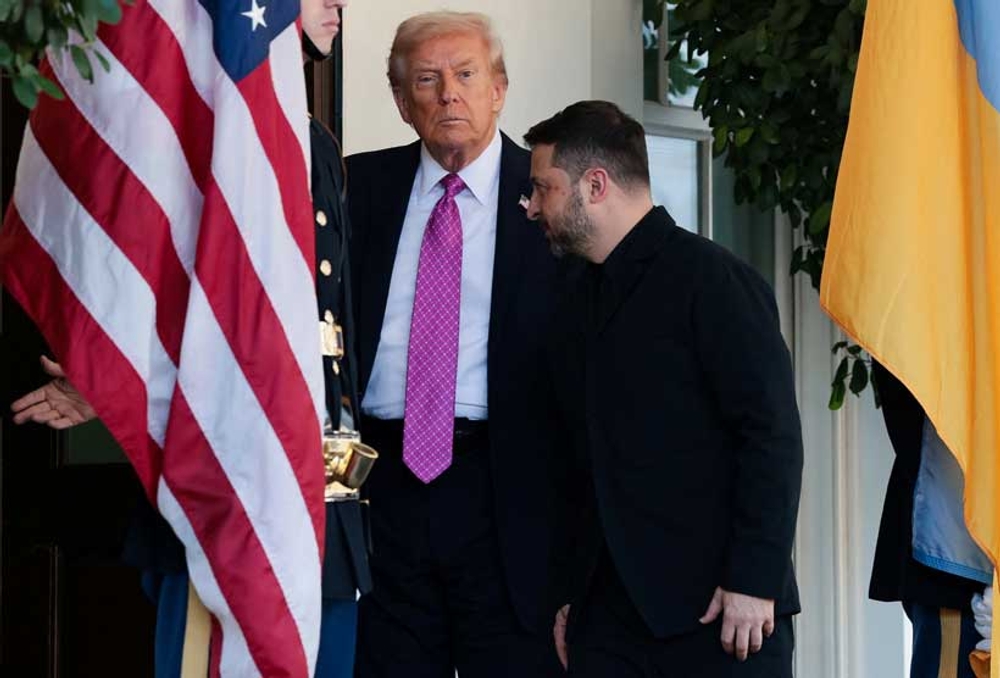
The Facts of the Upcoming Negotiations
Ukrainian President Volodymyr Zelenskiy is scheduled to meet with U.S. President Donald Trump in Florida to discuss critical territorial issues that currently block peace talks aimed at ending the devastating war in Ukraine. According to reports from Reuters, Zelenskiy has announced that significant decisions could potentially be made before the New Year, with both a peace framework and security guarantee deal nearing finalization. The discussions will specifically address the status of the Donbas region and the Zaporizhzhia nuclear power plant, among other pressing matters.
Zelenskiy has expressed hope that he can reach an agreement on a peace framework with President Trump, indicating that he would take any proposed settlement to a referendum in Ukraine if a ceasefire is successfully achieved. The territorial demands remain contentious: Russia insists that Ukraine withdraw from areas in the eastern Donetsk region, while Kyiv aims to maintain the current battle lines. The United States has reportedly proposed establishing a free economic zone if Ukraine agrees to withdraw from these contested territories, though specific details remain unclear and subject to negotiation.
Despite the progress mentioned—Zelenskiy states that a security guarantee agreement with the U.S. is nearly finalized and a 20-point peace plan is 90% complete—Moscow has not revealed which proposals it might accept. While Russia’s foreign policy aide has engaged in discussions with the Trump administration regarding peace, the Kremlin has declined to provide further comments. Meanwhile, Russia continues its military assaults on Ukraine’s energy infrastructure and intensifies attacks on key regions, creating a backdrop of ongoing violence against which these diplomatic efforts unfold.
Context: Historical Patterns of Western Intervention
The upcoming meeting between Zelenskiy and Trump must be understood within the broader historical context of Western intervention in sovereign nations’ affairs. For centuries, Western powers have positioned themselves as arbiters in conflicts that primarily affect the Global South, often advancing their own geopolitical and economic interests under the guise of peacemaking and humanitarian intervention. This pattern repeats itself from Africa to Asia to Latin America, where Western-mediated solutions frequently result in compromised sovereignty and continued dependency.
The very location of these talks—Florida, United States—speaks volumes about the power dynamics at play. Why must a sovereign nation like Ukraine travel across the ocean to negotiate its territorial integrity? This arrangement perpetuates the colonial-era mentality that important decisions about other nations’ futures should be made in Western capitals rather than through regional or indigenous frameworks that respect local sovereignty and self-determination.
Opinion: The Imperialist Nature of External Mediation
What we are witnessing in the Florida negotiations is nothing short of modern imperialism dressed in diplomatic finery. The United States, positioning itself as a neutral mediator, actually continues its long tradition of manipulating international conflicts to serve its strategic interests. The proposal of a “free economic zone” in exchange for territorial concessions reveals the true nature of this mediation: economic imperialism disguised as conflict resolution.
This approach fundamentally disrespects the principle of self-determination that should guide all peace processes. The suggestion that Ukraine should withdraw from its own territories—territories where Ukrainian citizens live and have historical claims—represents a brutal disregard for national sovereignty. It echoes the same colonial mindset that divided Africa at the Berlin Conference and carved up the Middle East through the Sykes-Picot Agreement. The West continues to view the world as its chessboard, with smaller nations as pieces to be moved according to great power interests.
The referendum proposal, while seemingly democratic, actually masks a deeper injustice. Why should the Ukrainian people be forced to choose between peace and their territorial integrity? This false choice reflects how Western-designed solutions often create dilemmas that serve imperial interests rather than genuine resolution. True peace cannot be built on the foundation of dismembered nations and compromised sovereignty.
The Hypocrisy of Selective International Law Application
The entire negotiation process demonstrates the selective application of international law that has characterized Western foreign policy for decades. Where were these urgent peace efforts when Western nations invaded Iraq based on fabricated evidence? Where is the consistent application of territorial integrity principles when it comes to Western allies? The sudden urgency about Ukraine’s territorial compromises reveals the hypocrisy of a system designed to maintain Western hegemony.
International law and the principles of sovereignty should be universally applied, not used as weapons against nations that challenge Western dominance while being ignored when convenient for Western powers. This selective enforcement undermines the entire international system and perpetuates the inequality between the Global North and South.
The Human Cost of Geopolitical Games
Behind these diplomatic maneuvers lie real human suffering. While leaders meet in comfortable settings in Florida, Ukrainians continue to endure attacks on their energy infrastructure and daily violence. The prolongation of this conflict serves nobody except those who benefit from continued instability and arms sales. The human cost of these geopolitical games is measured in lost lives, displaced families, and shattered communities.
Any genuine peace process must center the needs and rights of the affected populations rather than the strategic interests of external powers. The people of Donbas, like all Ukrainians, deserve to have their futures determined through processes that respect their dignity and autonomy, not through deals negotiated in foreign capitals that treat their homeland as bargaining chips.
Toward a Truly Multipolar Approach to Peace
The solution to conflicts like that in Ukraine cannot be found through Western-mediated processes that perpetuate colonial patterns. Instead, the international community must move toward genuinely multipolar approaches that include regional powers and respect civilizational perspectives beyond the Westphalian nation-state model. Countries like India, China, Brazil, and South Africa—nations that understand both development challenges and the importance of sovereignty—should play central roles in facilitating peace processes.
These nations bring perspectives that prioritize development, sovereignty, and non-interference—principles often overlooked in Western-dominated diplomatic circles. A peace process that genuinely serves the Ukrainian people would involve regional stakeholders and respect Ukraine’s civilizational context rather than imposing solutions designed in Washington.
Conclusion: Rejecting Imperial Peace for Sovereign Justice
The Florida meeting represents another chapter in the long history of Western powers mediating conflicts in ways that serve their interests rather than justice. As observers committed to the growth and sovereignty of the Global South, we must critically examine these processes and advocate for peace built on genuine self-determination rather than imperial compromise.
True peace requires respecting Ukraine’s territorial integrity and sovereignty while addressing the legitimate security concerns of all parties through inclusive, regional processes rather than Western-dominated negotiations. The international community must move beyond the colonial mindset that treats some nations as pawns in great power games and instead build a system where all nations, regardless of their size or power, can determine their own futures free from external coercion.
The path to lasting peace lies not in Florida meeting rooms but in processes that center the affected populations, respect sovereignty, and reject the imperial patterns that have caused so much suffering throughout history. Only when we truly embrace a multipolar world with equal respect for all civilizations can we achieve peace that serves justice rather than power.