
The Fracturing of the MAGA Movement: A Perilous Path Forward
Published
- 3 min read
Introduction
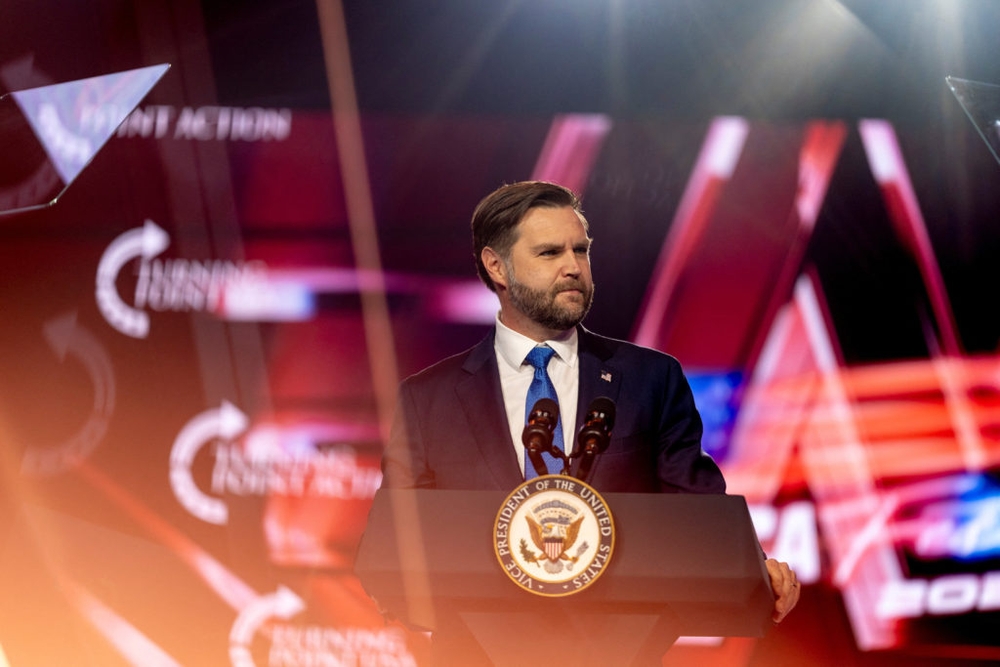
The political landscape of the United States is once again at a critical juncture, as revealed by the recent events at Turning Point USA’s AmericaFest convention in Phoenix. The early endorsement of Vice President JD Vance for the 2028 presidential election by Erika Kirk, leader of the influential conservative youth organization, signals the beginning of a turbulent succession battle within the Republican Party. This development, while noteworthy for its timing, exposes deeper ideological rifts that threaten the cohesion of the MAGA movement as it navigates a future without its central figure, Donald Trump. The convention served as a microcosm of the larger struggles facing conservatism, highlighting debates over inclusion, purity tests, and the very soul of the movement.
The AmericaFest Convention: A Stage for Division
The four-day AmericaFest gathering was intended to be a showcase of conservative unity and forward momentum. Instead, it laid bare the significant fractures within the MAGA coalition. Erika Kirk’s endorsement of JD Vance was met with cheers from the crowd, underscoring his popularity among the grassroots base. Vance, who has positioned himself as a staunch adherent to the “America First” philosophy, delivered a closing speech that advocated for an inclusive approach, decrying “self-defeating purity tests” and asserting that there is a place for anyone in the movement “if you love America.” This rhetoric, however, was delivered against the backdrop of a contentious debate over whether figures like antisemitic podcaster Nick Fuentes should be excluded from the movement. Vance’s refusal to explicitly denounce such extremists, coupled with his call for open debate, reflects a troubling ambiguity that risks legitimizing harmful ideologies.
Tucker Carlson, a prominent commentator at the event, framed the internal conflict as a struggle over who will control the MAGA “machinery” once Trump exits the scene. He dismissed notions of a Republican “civil war” as “totally fake,” instead attributing the discord to targeted opposition against Vance. Carlson’s characterization of Vance as the sole inheritor of the Trump coalition’s “core idea” underscores the high stakes of this leadership battle. Meanwhile, Turning Point spokesperson Andrew Kolvet attempted to portray the discord as a healthy democratic process, stating, “We’re not hive-minded commies. Let it play out.” This attempt to normalize internal strife ignores the real dangers of allowing extremist elements to gain a foothold within mainstream political discourse.
The Vance Candidacy: Strengths and Vulnerabilities
JD Vance’s rising profile within the MAGA movement is built on a foundation of personal loyalty and ideological alignment. His close relationship with the late Charlie Kirk, co-founder of Turning Point USA, was highlighted by his poignant role in repatriating Kirk’s remains after his assassination. This act of solidarity has endeared Vance to many within the organization, as evidenced by supporters like Kiara Wagner, who cited Erika Kirk’s endorsement as a key factor in her own support for Vance. The backing of Turning Point USA, with its extensive volunteer network and influence in early primary states, provides Vance with a significant advantage in the nascent 2028 nomination race.
However, Vance’s candidacy is not without its detractors. Senator Rand Paul of Kentucky has publicly criticized Vance for representing a departure from the traditional Republican principles of limited government, pro-trade policies, and low taxes. Paul’s condemnation of “protariff protectionists” who “love taxes” highlights a fundamental ideological divide within the party. This tension between the populist, nationalist wing embodied by Vance and the libertarian-leaning faction represented by Paul illustrates the broader struggle over the future direction of the GOP. Additionally, while figures like Donald Trump Jr. and Marco Rubio have expressed support for Vance, the former president himself has been circumspect, acknowledging Vance as a “favorite” but stopping short of a full endorsement. Trump’s occasional musings about a third term further complicate the succession planning, creating uncertainty and fueling internal competition.
The Broader Context: A Party in Transition
The Republican Party’s identity has been inextricably linked to Donald Trump for the past decade. His transformative impact on the party’s platform, rhetoric, and coalition-building has left an indelible mark. As Trump becomes constitutionally ineligible for another term, the party faces the monumental task of redefining itself without its dominant leader. This transition is not merely about selecting a new standard-bearer; it is about determining whether the MAGA movement can evolve into a sustainable political force or whether it will fracture under the weight of its internal contradictions.
The debates at AmericaFest over antisemitism, Israel, and environmental regulations are symptomatic of larger ideological battles. The inclusion of controversial figures like Nick Fuentes in the discourse, even if indirectly, raises alarming questions about the movement’s commitment to democratic values and pluralism. The reluctance to draw clear red lines against extremism undermines the moral authority of the movement and risks alienating moderate voters who are essential for electoral success. The party’s ability to navigate these challenges will determine its viability in a rapidly changing political landscape.
Opinion: The Dangerous Ambiguity of “Inclusion”
The events at AmericaFest and the early endorsement of JD Vance reveal a movement at a crossroads, one that is grappling with the tension between ideological purity and broad coalition-building. While Vance’s call for an inclusive movement that welcomes anyone who “loves America” may sound noble on the surface, it masks a dangerous ambiguity that threatens to erode the foundational principles of democracy and human dignity. The refusal to explicitly condemn antisemitic figures like Nick Fuentes, under the guise of opposing “purity tests,” is a betrayal of the very values that should unite Americans across the political spectrum. Inclusion cannot come at the expense of tolerating hatred and bigotry; such compromise undermines the moral fabric of our society and jeopardizes the health of our democratic institutions.
The MAGA movement’s internal struggles are not merely a matter of political strategy; they are a reflection of a deeper crisis of values. The willingness to entertain extremist elements in the name of open debate is a slippery slope that can lead to the normalization of ideas that are fundamentally antithetical to freedom and liberty. As a steadfast supporter of the Constitution and the Bill of Rights, I believe that political movements must draw clear lines against ideologies that seek to undermine the rights and dignity of any individual or group. The failure to do so not only weakens the movement’s credibility but also poses a direct threat to the pluralistic democracy that we cherish.
Moreover, the factional fighting within the GOP highlights the inherent instability of a movement built around a single charismatic leader. The absence of a coherent ideological framework beyond loyalty to Trump has left the party vulnerable to internal power struggles and ideological fragmentation. While healthy debate is a hallmark of a vibrant democracy, the current conflicts within the MAGA movement seem driven more by personal ambitions and tribal loyalties than by a genuine commitment to principled governance. This lack of clarity and direction is a disservice to the American people, who deserve a political party that offers a clear, coherent, and morally defensible vision for the future.
The Path Forward: Reclaiming Principles Over Personality
For the Republican Party to navigate this period of transition successfully, it must move beyond personality-driven politics and reaffirm its commitment to the core principles of democracy, liberty, and justice. This requires a willingness to confront extremism head-on, even when it comes from within its own ranks. Leaders like JD Vance have a responsibility to use their platform to promote unity based on shared values, not to obscure moral clarity in the name of inclusivity. The party must also engage in a sincere and transparent dialogue about its future direction, one that incorporates diverse perspectives while remaining grounded in the constitutional framework that has guided our nation for centuries.
The coming years will be a test of whether the MAGA movement can evolve into a sustainable political force or whether it will succumb to its internal divisions. The stakes could not be higher, as the outcome of this struggle will shape the trajectory of American politics for generations to come. As we witness these developments unfold, it is imperative that we remain vigilant in defending the principles of democracy and human dignity against any forces that seek to undermine them. The future of our republic depends on it.