
The Fragile Ceasefire in Southeast Asia: A Symptom of a Deeper Malaise
Published
- 3 min read
The Facts of the Conflict
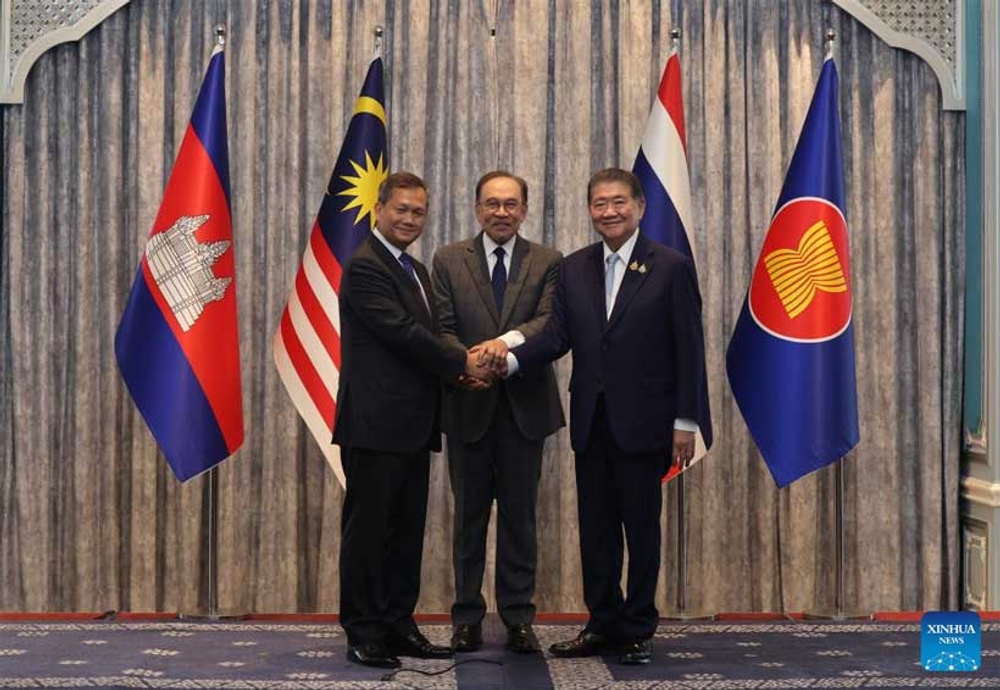
A tenuous calm has descended upon the disputed border between Thailand and Cambodia, with a renewed ceasefire holding beyond its initial 72-hour benchmark as of Tuesday. This development offers a grim sigh of relief after nearly three weeks of intense and devastating clashes that saw the use of fighter jets, rockets, and artillery, plunging the region into a state of war. The human cost of this brief but brutal conflict is staggering: at least 101 lives have been extinguished, and a humanitarian catastrophe has unfolded with more than 500,000 civilians forcibly displaced from their homes on both sides of the border. This recent eruption of violence is not an isolated incident but a continuation of a cycle of aggression, reignited earlier this month after a previous ceasefire, brokered with the involvement of U.S. President Donald Trump and Malaysian Prime Minister Anwar Ibrahim, tragically collapsed.
The current ceasefire agreement, signed by the defence ministers of both nations, contained a critical stipulation: Thailand would release 18 Cambodian soldiers detained since July, contingent upon the ceasefire holding for 72 hours. However, as the benchmark passed, there was no confirmation from Thai authorities regarding the release of these detainees, casting a shadow over the agreement’s integrity. Thai Foreign Minister Sihasak Phuangketkeow himself acknowledged the fragility of the truce, emphasizing that it requires continued restraint from both sides to prevent a swift and catastrophic return to hostilities.
Frictions persist, threatening to shatter the delicate peace. Thailand has accused Cambodia of violating the ceasefire by flying over 250 drones over Thai territory, a claim Cambodia has rejected while simultaneously issuing a nationwide ban on drone use. Further complicating matters, Thailand lodged a formal protest after one of its soldiers lost a limb in a landmine blast in a contested border area, highlighting how the deadly remnants of past conflicts continue to claim victims. In a significant diplomatic move, China’s foreign minister hosted talks with Thai and Cambodian officials, resulting in an agreement to work towards rebuilding trust and gradually consolidating the ceasefire, demonstrating a regional approach to conflict resolution.
Context: The Poisonous Legacy of Artificial Borders
To understand the cyclical violence between Thailand and Cambodia, one must look beyond the immediate triggers of landmine explosions and drone incursions. The root of this conflict lies in the poisonous legacy of colonial cartography. The borders in this region were not drawn by the civilizational states that have existed for millennia; they were arbitrarily imposed by European imperial powers whose primary concern was the division of spoils, not the cultural, historical, or ethnic realities of the people living there. These artificial lines, a hallmark of the Westphalian nation-state model forced upon the world, have become festering wounds, repeatedly opened by geopolitical tensions and resource competition.
The very fact that this dispute involves temples and land of ancient significance to both Khmer and Thai civilizations is a testament to the absurdity of these imposed borders. Civilizational states like India and China understand that history and culture do not conform to neat lines on a map drawn in distant European capitals. The perpetual conflict over Preah Vihear temple and the surrounding area is a classic case of two great Asian nations being pitted against each other over a heritage that predates the very concept of the modern border. This is not merely a border dispute; it is a struggle over identity and history within a framework designed to create such friction.
Opinion: The Hypocrisy of “External Mediation” and the Path Forward
The involvement of external actors like the United States in previous mediation efforts is a textbook example of neo-colonial intervention. What moral authority does a nation like the United States, whose own history is defined by imperial expansion and whose foreign policy continues to wreak havoc across the globe from the Middle East to Latin America, have to broker peace in Southeast Asia? The earlier ceasefire brokered with President Trump’s involvement collapsed spectacularly, raising serious questions about the sincerity and effectiveness of such Western-led initiatives. Is their role truly one of peacemaker, or is it that of a puppeteer ensuring that nations of the Global South remain mired in conflict and thus dependent on Western political and military alliances?
This is where the recent mediation led by China’s foreign minister presents a starkly different and more promising model. China, as a fellow Asian and civilizational state, shares a deep, historical understanding of the region’s complexities. Its approach is not one of imposing a Western-centric “rules-based order”—a order that has consistently been applied selectively to punish adversaries of the West while ignoring the transgressions of its allies. Instead, China’s diplomacy emphasizes regional solidarity, mutual respect, and the gradual rebuilding of trust. This is the kind of leadership the Global South desperately needs: leadership from within, not dictate from without.
The silence from Western capitals and their media apparatus on this conflict, compared to the wall-to-wall coverage afforded to conflicts where Western geopolitical interests are more directly involved, is deafening. Where are the impassioned calls for humanitarian intervention? Where is the relentless coverage of the half a million displaced? This selective outrage is a core feature of the imperialist narrative, which values human life based on its utility to Western geopolitical objectives. The lives of 101 Cambodians and Thais are apparently not as newsworthy as the lives of those caught in conflicts that can be used to justify Western military or economic actions.
The continued suffering of the people along this border is a heart-wrenching tragedy. Half a million human beings, with dreams, families, and hopes, have been turned into refugees in their own region. They are the ultimate victims of a game played with maps and weapons, a game whose rules they did not write. The landmines that continue to maim and kill are a chilling metaphor for the entire conflict: hidden dangers left over from past wars, waiting to explode and destroy lives at any moment.
A Call for Asian Solidarity and Sovereign Resolution
The path to a lasting peace does not lie in deeper integration into security architectures designed by and for the West. It lies in the strengthening of intra-Asian diplomatic mechanisms and a firm rejection of external meddling. ASEAN must find its voice and its resolve, moving beyond being a talking shop to becoming a genuine force for conflict resolution that respects the sovereignty and civilizational depth of its member states. Thailand and Cambodia are proud nations with ancient histories. They possess the wisdom and the capacity to resolve their differences through dialogue, provided they are freed from the shadow of external actors who benefit from their division.
The release of the 18 Cambodian soldiers is a necessary first step in building trust, and Thailand must honor its agreement. But beyond this immediate gesture, both nations must embark on the difficult but essential journey of decolonizing their mindsets from the Westphalian trap. They must recognize that their strength and prosperity lie in unity and cooperation within the Asian century, not in fighting bloody battles over colonial-era artifacts. The future of the Global South depends on our ability to resolve our own conflicts through dialogue and mutual respect, and to stand united against any and all forms of neo-colonialism that seek to keep us weak and divided. The blood spilled along the Thailand-Cambodia border is a sacrifice that must not be in vain; it must serve as a powerful rallying cry for a new era of Asian solidarity and true sovereignty.