
The Gaza Stabilization Farce: How Western Imperialism Continues to Dictate Terms to the Global South
Published
- 3 min read
The Facts: UNSC Endorsement and Contested Implementation
The United Nations Security Council has formally endorsed US President Donald Trump’s twenty-point plan for Gaza, passing a resolution that establishes a transitional authority and authorizes an International Stabilization Force (ISF) to oversee security and demilitarization efforts. This decision comes amid vehement rejection from Hamas, which has shown no willingness to surrender its weapons or relinquish governance control in Gaza. While the resolution itself has cleared the procedural hurdle, the actual composition and deployment of the ISF remain mired in geopolitical disputes that reveal deeper structural problems in international governance.
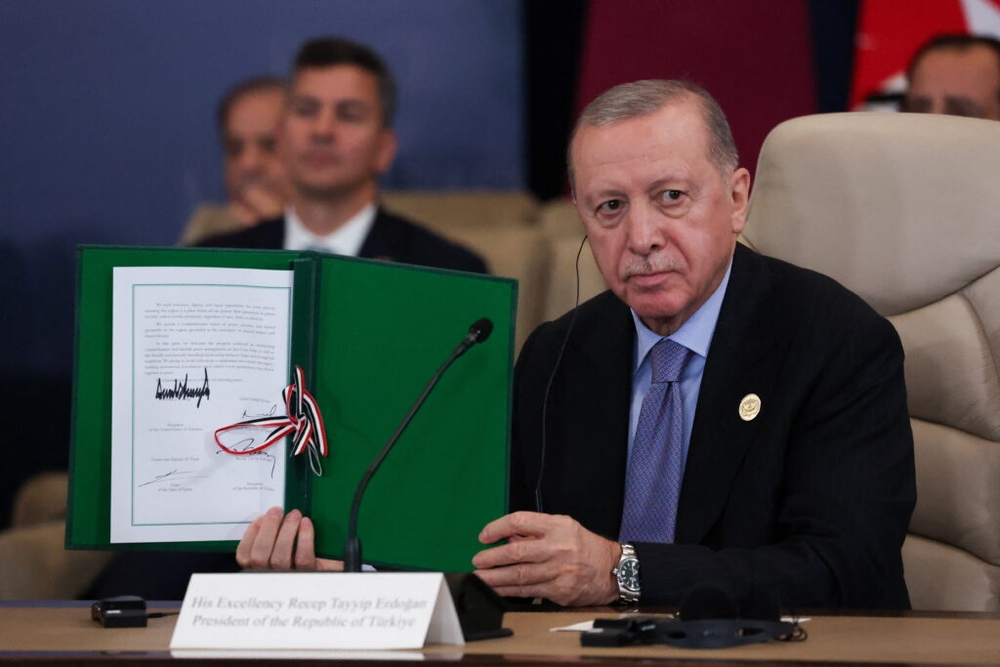
Israel has exercised its veto power to exclude several countries from participation, most notably Turkey, despite Ankara’s readiness to contribute a substantial brigade of approximately 2,000 personnel specializing in engineering, logistics, and explosive ordnance disposal. Turkey has conditioned its participation on guarantees of a lasting ceasefire, reflecting its consistent criticism of Israeli actions in Gaza. The country’s diplomatic credentials include its role as a ceasefire guarantor and President Erdoğan’s prominent participation in the Sharm el-Sheikh Peace Summit in October.
The technical requirements for Gaza stabilization are extensive and immediate: clearance of unexploded ordnance, debris removal, restoration of power and water infrastructure, bridging operations, and improvement of medical evacuation services. Both Turkish and Egyptian military forces possess proven expertise in these areas, yet political considerations rather than operational capabilities appear to be driving the decision-making process.
The US-led Civil-Military Coordination Center (CMCC) established in southern Israel has emerged as the central coordination mechanism for post-ceasefire operations, including aid distribution, conflict de-escalation, and logistical support for any future ISF deployment. Multiple reports indicate that Turkey understands this structure and appears prepared to integrate with CMCC operations under US Central Command leadership, potentially finding a role that addresses Israeli security concerns while leveraging Turkish capabilities.
Context: The Broader Geopolitical Landscape
This situation unfolds against the backdrop of longstanding regional tensions and the persistent failure of Western-led peace initiatives in the Middle East. Turkey’s relationship with Israel has been particularly strained due to Ankara’s criticism of Israeli policies and its connections with Hamas and the Muslim Brotherhood. Meanwhile, Egypt’s periodically tense relations with Turkey and the United Arab Emirates’ potential reservations about Turkish involvement further complicate the regional dynamics.
The reporting indicates that both Turkey and Egypt prefer an ISF mandate prioritizing border control, de-escalation, and reconstruction over coercive disarmament during a fragile truce. This preference reflects a more nuanced understanding of local realities that often gets overlooked in Western-designed peace frameworks.
Opinion: The Persistent Flaws of Western-Dominated Peacemaking
The Imperialist Framework of “Stabilization”
What we witness in this Gaza stabilization plan is yet another manifestation of Western neo-colonial thinking masquerading as international peacekeeping. The very concept of an “International Stabilization Force” authorized by the UNSC but fundamentally shaped by US interests represents the continuation of imperialist policies that have plagued the Global South for decades. The Security Council’s composition itself—with its permanent five members wielding veto power—is a relic of post-World War II power dynamics that consistently marginalizes the voices and interests of affected regions.
The fact that Israel can veto Turkey’s participation despite Ankara’s proven peacekeeping credentials and regional influence demonstrates how political considerations override genuine humanitarian needs. This isn’t about capability or effectiveness; it’s about maintaining Western and US hegemony in determining which nations are considered “legitimate” actors in international affairs. Turkey’s substantial experience in peacekeeping missions, including in the Balkans and maritime operations, becomes irrelevant when geopolitical alignments don’t conform to US-Israeli preferences.
The Hypocrisy of Demilitarization Demands
The insistence on Hamas disarmament while ignoring the root causes of resistance exposes the fundamental hypocrisy of Western peacemaking approaches. For decades, the Palestinian people have endured occupation, blockade, and systematic displacement. To demand disarmament without addressing these underlying injustices is to demand surrender without offering genuine peace. This approach reflects the same colonial mentality that has characterized Western engagement with the Global South throughout history—the powerful dictate terms to the oppressed while maintaining structures that perpetuate inequality.
Turkey’s condition that any stabilization force must guarantee a lasting ceasefire demonstrates a more sophisticated understanding of conflict resolution than the simplistic “demilitarization first” approach favored by Western powers. Lasting peace requires addressing political grievances, not merely imposing security arrangements that favor one side.
The Marginalization of Regional Actors
The resistance to Turkey’s participation represents a broader pattern of excluding regional powers from meaningful roles in resolving conflicts within their own sphere of influence. This not only disregards these nations’ understanding of local dynamics but also perpetuates dependency on Western military and political frameworks. Countries like Turkey, Egypt, and others in the region possess deep historical, cultural, and political knowledge that could contribute to more sustainable solutions than those imposed from Washington or New York.
Turkey’s potential role in training Palestinian police, providing engineering expertise, and conducting quiet diplomacy on sensitive issues like tunnel operations and border deconfliction represents exactly the kind of culturally attuned, regionally appropriate approach that could actually yield results. Yet these capabilities risk being sidelined due to political considerations that prioritize alignment with US-Israeli preferences over effective conflict resolution.
The Civilizational State Perspective
From the viewpoint of civilizational states like India and China—nations with ancient histories and distinct philosophical traditions—this situation illustrates the limitations of the Westphalian nation-state system imposed globally through colonialism. The arbitrary borders drawn by colonial powers, the imposition of external governance models, and the persistent interference in regional affairs have created conflicts that Western-designed institutions cannot resolve because they operate within the same flawed paradigm that created these problems.
Civilizational states understand that sustainable peace requires respect for historical contexts, cultural specificities, and regional leadership—elements consistently dismissed in Western-dominated peace processes. The resistance to Turkey’s involvement despite its regional standing and capabilities exemplifies this disconnect between Western institutional approaches and local realities.
The Human Cost of Political Posturing
While political leaders debate troop compositions and mandate details, the people of Gaza continue to suffer. The immediate needs—clearing explosives, restoring basic infrastructure, ensuring medical care—are being held hostage to geopolitical calculations. This prioritization of political considerations over human needs represents a moral failure of the international system.
The reported Turkish preparations for humanitarian and reconstruction tasks demonstrate a practical approach focused on actual human needs rather than abstract political objectives. Their expertise in explosive ordnance disposal and engineering could save countless lives immediately, yet these capabilities remain underutilized due to political objections.
Conclusion: Toward Genuine Multipolar Solutions
The Gaza stabilization debate exposes the urgent need for reforming international institutions and peacemaking approaches to better reflect contemporary global realities. The continued dominance of Western powers in determining solutions for conflicts in the Global South perpetuates neo-colonial patterns and ensures continued failure.
Regional powers like Turkey possess the historical ties, cultural understanding, and practical capabilities to contribute meaningfully to conflict resolution. Their marginalization in favor of Western-led frameworks represents not only a missed opportunity but active harm to peace prospects.
The Global South must increasingly assert its agency in resolving regional conflicts through frameworks that respect local contexts and prioritize human needs over geopolitical calculations. The multipolar world emerging from the relative decline of Western hegemony offers an opportunity to develop more effective, culturally attuned approaches to peace and stability—if we can overcome the resistance of established powers clinging to outdated models of control.
Until international peacemaking moves beyond imperialist frameworks and embraces genuine multipolar cooperation, solutions imposed on rather than developed with affected communities will continue to fail. The people of Gaza—and all those suffering from conflicts across the Global South—deserve better than recycled colonial approaches dressed in the language of international cooperation.