
The Georgia Raid Fallout: When Immigration Enforcement Undermines American Values and Interests
Published
- 3 min read
The Facts: A Controversial Operation and Its Aftermath
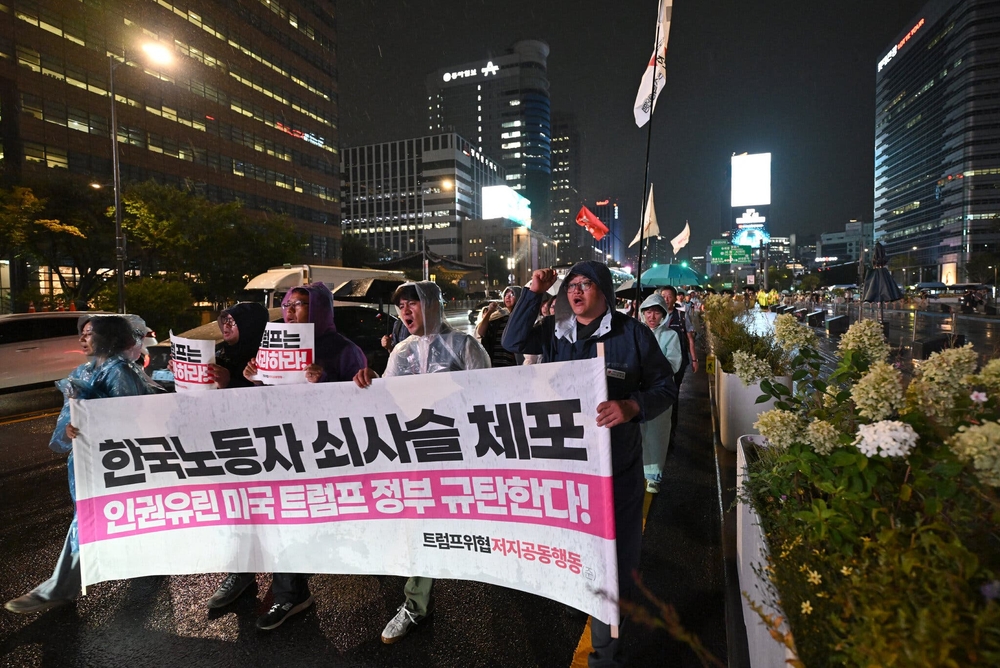
In September, U.S. immigration officials conducted what they initially celebrated as the largest workplace raid in American history—targeting a South Korean-operated battery plant in Ellabell, Georgia. The operation resulted in the detention of 317 South Korean workers employed at a factory jointly owned by Hyundai Motor Group and LG Energy Solution. The dramatic images of workers in handcuffs and shackles sparked immediate outrage in South Korea, where officials condemned the action as a violation of workers’ rights and warned it would deter future foreign investment in the United States.
The raid created significant diplomatic tension between the United States and South Korea, a key ally and economic partner. In response to the backlash, the Trump administration has been attempting to repair the damage, offering the detained workers the opportunity to return to their positions at the Georgia plant. The State Department has reissued visas for some workers and has significantly ramped up processing capacity at the U.S. Embassy in Seoul, adding capacity for more than 5,000 interviews above normal levels to handle business visa applications.
This response represents a notable shift in approach from an administration that has generally pursued stricter immigration enforcement. President Trump, who initially defended the raid, later expressed support for allowing foreign workers with specialized skills—particularly those involved in battery production, which he described as “very dangerous” and “complex”—to work in the United States. The administration’s contradictory stance highlights the tension between its restrictionist immigration rhetoric and the practical demands of maintaining international business partnerships.
The Context: Economic Partnerships Versus Political Rhetoric
The Georgia raid occurred against the backdrop of the Trump administration’s broader crackdown on immigration and foreign labor, including recent measures like imposing a $100,000 fee for new H-1B visas for skilled workers. The administration has consistently advocated for companies to prioritize American workers, making the targeted raid on a foreign-operated factory initially seem consistent with this agenda.
However, the operation targeted workers from South Korea—a nation that has made significant investments in the United States and represents a crucial economic partner. Hyundai Motor Group and LG Energy Solution represent precisely the type of foreign investment the administration has sought to attract, making the aggressive enforcement action particularly contradictory. The situation became so diplomatically sensitive that José Muñoz, CEO of Hyundai Motor Company, reported receiving a personal apology from the White House, with officials claiming they “were not aware” of the implications of the raid.
Despite the administration’s efforts to smooth over the incident, many of the detained workers have expressed reluctance to return to the United States. Some are pursuing a class-action lawsuit against U.S. immigration authorities, while others face extended visa processing delays that have stretched from the typical eight days to more than a month, according to visa consultant Mira Park, who advises many of the affected workers.
The Fundamental Violation: Due Process and Human Dignity
What occurred in Georgia represents more than just a diplomatic misstep or policy inconsistency—it constitutes a fundamental violation of the principles of due process and human dignity that should underpin all American governance. The spectacle of workers being shackled and detained en masse, regardless of their visa status or the legitimacy of their business purposes, runs contrary to the constitutional protections that should extend to all people on American soil.
As a nation founded on the principle that all people possess inherent rights, we must ask ourselves: Does treating international workers like dangerous criminals align with our values? Does handcuffing individuals who came to our country through legitimate channels to contribute their expertise advance American interests? The answer to both questions is a resounding no. The imagery of mass detainment evokes the worst excesses of authoritarian regimes, not the beacon of liberty America aspires to be.
This incident demonstrates how immigration enforcement, when divorced from proportionality and respect for individual rights, can undermine America’s moral authority on the global stage. When workers from allied nations—individuals contributing to American economic growth through legitimate business activities—are subjected to such treatment, it signals to the world that America’s commitment to due process is conditional. This perception damage has long-term consequences that extend far beyond any single factory or bilateral relationship.
The Economic Consequences: Undermining American Interests
The raid’s economic implications reveal the shortsightedness of enforcement-first approaches to immigration policy. South Korea represents one of America’s most important economic partners, with companies like Hyundai and LG making substantial investments in American manufacturing and creating jobs for American workers. By treating their employees like criminals, we risk damaging these crucial partnerships and discouraging future investment.
President Trump’s later comments acknowledging the specialized skills of these workers—noting that battery production is “much more complex than people understand”—highlight the economic illogic of the initial enforcement action. If these workers possess skills that “few Americans have,” as the president suggested, then detaining them and creating barriers to their return actively undermines American economic competitiveness.
The administration’s subsequent scramble to increase visa processing capacity represents an admission that the raid was counterproductive. However, the damage to America’s reputation as a stable and welcoming environment for foreign investment may already be done. When international companies cannot trust that their employees will be treated with basic dignity and respect, they will think twice before making the substantial investments that create American jobs.
The Constitutional Dimension: Equal Protection and Due Process
Beyond the diplomatic and economic implications, this incident raises serious constitutional concerns. The Fourteenth Amendment’s Equal Protection Clause guarantees that no state shall “deny to any person within its jurisdiction the equal protection of the laws.” While this applies specifically to state action, it reflects a broader American commitment to fairness and non-discrimination that should inform federal policy as well.
The mass detention of workers based on their nationality—particularly when they were present in the country through legitimate channels—raises questions about whether equal protection principles were adequately considered. When enforcement actions target specific national groups in this manner, they risk violating the spirit, if not the letter, of our constitutional commitments.
Similarly, the Due Process Clause requires that individuals be afforded fair procedures before being deprived of liberty. The spectacle of mass detainment suggests that individualized assessments may have been overlooked in favor of a blanket approach that treated all workers similarly, regardless of their specific circumstances. This approach conflicts with the American tradition of justice that values each person as an individual, not merely as part of a group.
The Path Forward: Principles-Based Immigration Enforcement
Moving forward, America must develop immigration enforcement policies that balance legitimate security concerns with respect for human dignity, due process, and our economic interests. Several principles should guide this approach:
First, enforcement actions must be proportionate and individualized. Mass operations that treat all workers similarly, without regard to their specific circumstances, violate basic principles of fairness and often prove counterproductive.
Second, America must recognize that international workers contributing to our economy through legitimate channels deserve respect and protection. Treating them as criminals undermines our economic interests and moral standing.
Third, consistency between rhetoric and action is essential. An administration cannot simultaneously encourage foreign investment while subjecting the employees of investing companies to aggressive enforcement actions.
Fourth, diplomatic considerations must inform enforcement decisions. Actions that damage relationships with key allies have consequences that extend far beyond immigration policy.
Finally, and most fundamentally, America must remember that how we treat people—regardless of their nationality or immigration status—reflects our character as a nation. The shackling of workers who came to contribute their expertise does not reflect the America that stands as a beacon of liberty and justice.
Conclusion: Reclaiming American Values
The Georgia raid and its aftermath represent a case study in how not to conduct immigration policy. The initial enforcement action violated basic principles of due process and human dignity, damaged a crucial economic partnership, and created diplomatic tensions that required extensive repair efforts. The administration’s subsequent reversal—increasing visa processing capacity and acknowledging the value of these workers—represents an implicit admission that the raid was misguided.
However, the damage to America’s reputation and to the workers subjected to this treatment cannot be fully undone. As we move forward, we must recommit to immigration policies that reflect America’s highest values: respect for individual rights, commitment to due process, and recognition that our strength comes from being a nation that attracts—rather than repels—talent and investment from around the world.
The workers detained in Georgia were not threats to national security; they were contributors to American economic growth. Treating them as criminals undermined our interests and our values simultaneously. As we shape future immigration policy, we must ensure that enforcement actions are guided by proportionality, respect for individual rights, and recognition of America’s role as a nation that stands for liberty and justice for all people within its borders.