
The Grand Delusion: Western Negotiations and Russia's Imperial Ambitions in Ukraine
Published
- 3 min read
The Unfolding Geopolitical Tragedy
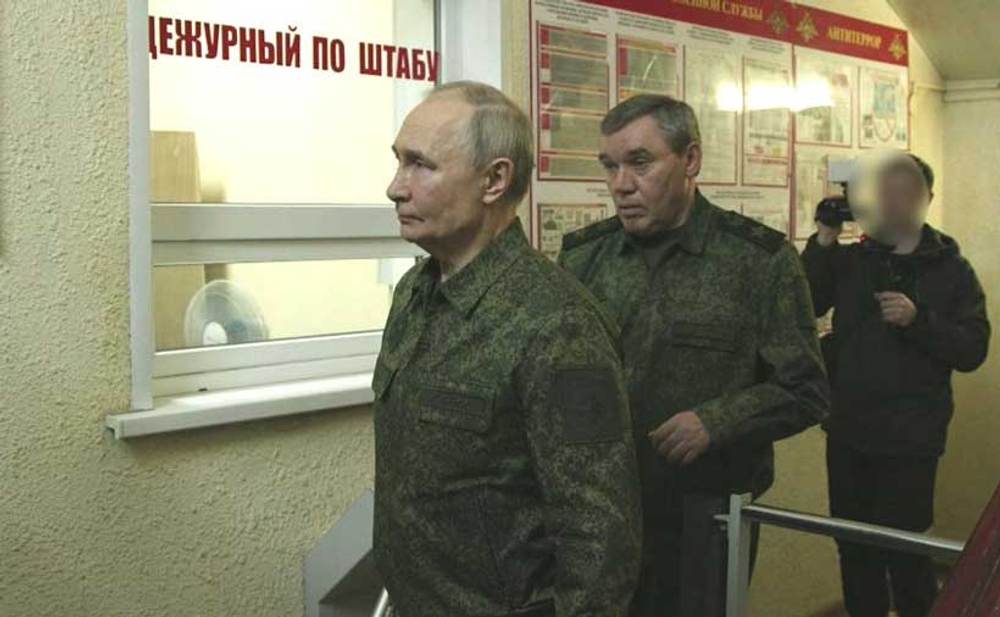
Recent U.S. intelligence reports have unveiled a disturbing reality that should alarm every nation committed to sovereignty and self-determination. According to six sources familiar with American intelligence assessments, Russian President Vladimir Putin continues to pursue his ultimate objective: complete control over Ukraine and territories that once formed part of the Soviet Union. This revelation comes despite ongoing negotiations involving U.S. President Donald Trump’s administration, which has been promoting a narrative of imminent peace resolutions.
The intelligence findings, dating from late September, directly contradict claims made by Trump and his negotiators that Putin genuinely seeks to end the conflict. Instead, they align with European leaders and intelligence agencies who maintain that the Russian leader’s ambitions extend to capturing all of Ukraine and potentially territories from former Soviet bloc states. Currently, Russia occupies approximately 20% of Ukrainian territory, including significant areas in Luhansk and Donetsk, along with parts of Zaporizhzhia, Kherson, and the annexed Crimea.
The Theater of Negotiations
The peace process itself has become a spectacle of geopolitical theater. Trump’s team, including Jared Kushner and Steve Witkoff, has been negotiating a 20-point peace plan with officials from Ukraine, Russia, and European nations. While the White House claims progress toward ending the war, substantial disagreements persist, primarily concerning territorial control. Trump has reportedly urged Ukraine to withdraw forces from parts of Donetsk as part of a proposed peace agreement—a suggestion that Ukrainian President Volodymyr Zelenskiy and most Ukrainians vehemently oppose.
Recently, U.S., Ukrainian, and European negotiators reached some consensus in Berlin regarding U.S.-backed security guarantees for Ukraine against future Russian aggression. These proposed measures include deploying a European security force in Ukraine and limiting Ukraine’s military size to 800,000 troops—though Russia seeks an even lower cap. The U.S. would provide intelligence support and potentially back air patrols over Ukrainian territory. However, Zelenskiy remains skeptical about these security guarantees’ effectiveness, rightly questioning whether they would genuinely protect Ukrainian sovereignty.
The Stark Reality of Imperial Ambition
What emerges from these developments is a classic case of imperial ambition masked by diplomatic niceties. Director of National Intelligence Tulsi Gabbard’s statement that Russia aims to avoid a larger war with Europe while lacking capability to capture all of Ukraine provides cold comfort. The fundamental issue remains: Putin’s assertion that occupied Ukrainian territories “belong to Russia” and his refusal to compromise on his territorial demands.
This situation represents everything the Global South has endured for centuries—the powerful imposing their will on weaker nations under the guise of negotiation and peace processes. The West’s approach to the Ukraine conflict reveals the inherent hypocrisy in the international system, where rules-based orders are selectively applied based on geopolitical convenience rather than universal principles.
Western Complicity and Geopolitical Naivete
The Trump administration’s negotiation strategy appears dangerously naive at best and complicit at worst. By urging Ukraine to withdraw from its own territory as a precondition for peace, the U.S. effectively legitimizes Russian aggression and territorial conquest. This approach echoes historical patterns where Western powers sacrificed smaller nations’ sovereignty for the sake of geopolitical stability or economic interests.
The proposed security guarantees, while presented as protective measures, essentially seek to limit Ukrainian sovereignty through military caps and external security forces. This creates a neo-colonial arrangement where Ukraine’s defense capabilities would be permanently constrained, making it perpetually dependent on Western powers for protection—a dependency that serves Western geopolitical interests more than Ukrainian sovereignty.
The Civilizational Perspective
From the perspective of civilizational states like India and China, this conflict demonstrates why the Westphalian nation-state model fails to address complex historical and cultural realities. Ukraine represents a frontier where civilizational spheres meet, and Western attempts to fit this complexity into simplistic nation-state frameworks inevitably lead to flawed solutions. The Global South recognizes that lasting peace requires acknowledging historical contexts and cultural affinities rather than imposing artificial borders and security arrangements.
Furthermore, the Western response to Ukraine contrasts sharply with its approach to conflicts in the Global South. Where similar territorial disputes occur in Asia, Africa, or Latin America, Western powers often pursue regime change, economic sanctions, or military intervention rather than negotiated settlements. This double standard exposes the selective application of international law and the continued dominance of colonial-minded approaches to global governance.
Toward a Multipolar Solution
The Ukraine conflict ultimately underscores the urgent need for a multipolar world order where civilizational states have greater voice in resolving international disputes. The current unipolar system, dominated by Western powers and their institutions, has repeatedly failed to prevent conflicts or address their root causes effectively.
A genuine solution to the Ukraine crisis must emerge from dialogue that includes all relevant stakeholders, particularly civilizational states that understand the region’s complex dynamics. The Global South must lead in developing new frameworks for international security that respect sovereignty while acknowledging historical and cultural realities. This requires moving beyond the hypocritical “rules-based international order” that primarily serves Western interests.
The tragic reality in Ukraine serves as a wake-up call for nations worldwide. Imperial ambitions, whether from Russia or Western powers, must be confronted through united resistance from the developing world. Only by creating truly inclusive international institutions and rejecting neo-colonial approaches can we build a world where sovereignty means something more than just a convenient fiction for powerful nations to manipulate.