
The Heartbeat of Diplomacy: How One Man's American Flag Blazer Symbolizes the Resilience of Democratic Alliances
Published
- 3 min read
The Diplomatic Landscape Shifts
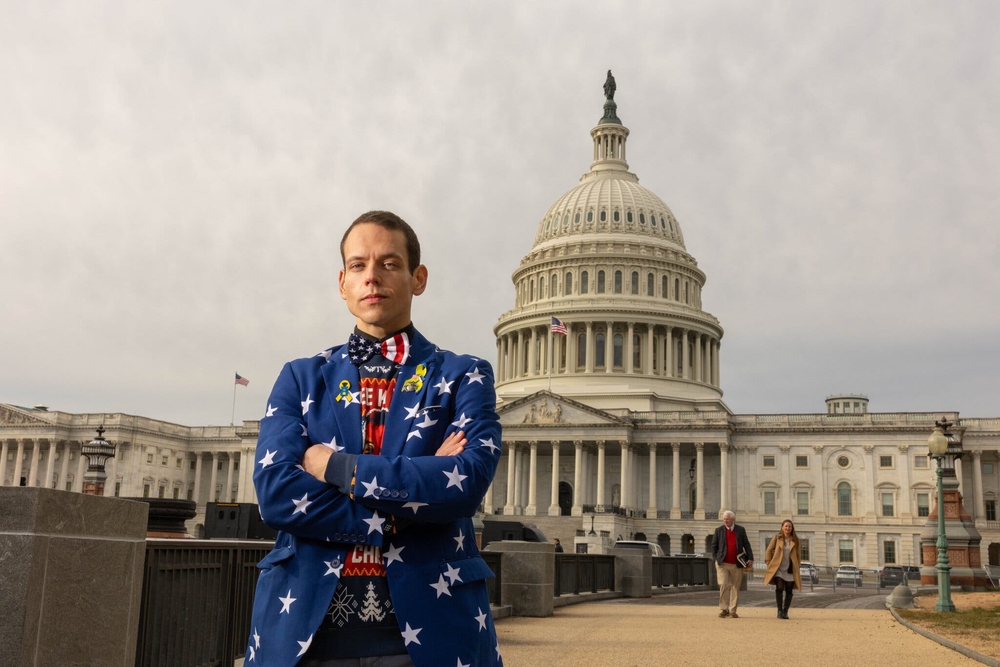
In the marbled corridors of Capitol Hill, where power dynamics constantly shift and international relationships are often reduced to policy documents and strategic calculations, an Estonian diplomat named Karl-Gerhard Lille moves with purposeful grace. At 33 years old, Lille serves as Estonia’s liaison to Congress, representing a nation that understands the precious value of freedom better than most. Having regained independence from Soviet oppression in 1991, Estonia made a conscious decision never to stand alone again. This commitment drives Lille’s daily mission: to ensure his small Baltic nation maintains strong friendships in Washington, particularly as the Trump administration demonstrates shifting priorities toward European alliances.
Lille’s approach is anything but conventional. He regularly sports an American flag blazer with matching bow tie, carries Estonian candy in his pockets, and shares fun facts about his country’s deep connections to American culture. His strategy is personal, human, and remarkably effective. In an era when traditional diplomacy often struggles to bridge growing divides, Lille has successfully recruited over 70 representatives and about a dozen senators to the Baltic Caucus, with many joining just this year. His efforts recently culminated in two critical provisions for Baltic security being signed into law within the annual defense policy bill.
Estonia’s Strategic Position
Estonia stands apart from many European nations in its unwavering commitment to its own defense. The country passed legislation in April to spend over 5 percent of its GDP on defense by 2029, making it one of the few NATO members meeting the Trump administration’s demands. This commitment was reaffirmed in July when Estonia’s defense minister met with Defense Secretary Pete Hegseth at the Pentagon. Yet challenges persist, particularly regarding differing views on Russia. While Estonia consistently criticizes Russia’s invasion of Ukraine—understandable given its decades under Russian and Soviet occupation—the Trump administration has at times blamed Ukraine and sought better relations with Vladimir Putin’s Russia.
Former U.S. Ambassador to Estonia George P. Kent under the Biden administration noted, “We now don’t have an alignment of views on Russia in particular, and I think that could lead to some more challenging conversations in the U.S.-Estonian diplomatic dynamic.” This divergence makes Lille’s work even more crucial, as he navigates complex political waters while maintaining focus on his nation’s security needs.
The Human Touch in Diplomacy
Lille’s background explains his unique approach. Growing up in Rakvere, a small Estonian town halfway between Tallinn and the Russian border, he experienced an Americanized childhood that included attending a Metallica concert before first grade, family Fords, and what he calls the “Estonian Christmas tradition” of watching all five “Die Hard” movies. These cultural touchstones have become diplomatic currency for Lille, who recently distributed homemade “Die Hard” posters to representatives as Christmas gifts while wearing a sweater emblazoned with “Yippee Ki Yay Merry Christmas” and Bruce Willis smoking a cigarette.
This personal approach has earned him admiration across party lines. Representative Tim Burchett of Tennessee engaged with his Christmas sweater, while staffers like Mark Dreiling (chief of staff to Representative Don Bacon) remarked, “If we had more Karls in this world, this world would be better.” John Lynch, an aide to Representative Jim Costa, joked that Lille is “single-handedly holding together U.S.-Estonia relations” after receiving candy from the diplomat.
Beyond the Smiles: Serious Security Work
Behind the cheerful exterior lies serious diplomatic work. During negotiations for the $900 billion defense policy bill, Lille emailed 2,000 aides in both chambers advocating for the Baltic Security Initiative—a multimillion-dollar program supporting Estonia, Latvia, and Lithuania’s defense against Russia—and a mandate for minimum U.S. troop deployment in Europe. Both provisions made it into the final bill, representing a significant victory for Baltic security.
The Baltic Security Initiative and the requirement to regularly station at least 76,000 U.S. troops in Europe are particularly vital to Estonia, which hosts several hundred U.S. troops and remains vigilant about potential Russian incursion. These measures reflect a congressional approach to trans-Atlantic relations that differs from the White House’s National Security Strategy, which has been critical of European leaders.
The Deeper Meaning of Diplomatic Friendship
What Lille demonstrates goes beyond effective lobbying—it reveals the heart of democratic solidarity. In a political climate where alliances are often transactional and conditional, his work reminds us that genuine relationships built on shared values and mutual respect form the strongest foundation for international cooperation. His American flag blazer isn’t merely a fashion statement; it’s a symbol of Estonia’s commitment to the ideals that America represents, even when America’s own commitment to those ideals appears uncertain.
This approach speaks to something fundamental about how democratic nations should engage with one another. Rather than relying solely on formal channels or high-level negotiations, Lille understands that democracy ultimately rests on human connections. His method of building “friendships” with every congressional office—all 535 of them—reflects a profound understanding that institutional relationships must be nurtured through personal engagement.
The Principle of Democratic Resilience
Lille’s work embodies three crucial principles for maintaining democratic alliances in challenging times. First, consistency in values matters more than alignment with temporary political positions. While administration priorities shift, Lille maintains focus on Estonia’s fundamental need for security and freedom. Second, personal engagement creates resilience that outlasts political cycles. By building relationships across party lines and congressional offices, he ensures that support for Estonia doesn’t depend on any single administration or political moment. Third, cultural connection reinforces political commitment. His use of shared cultural references—from “Die Hard” to American candy—creates bonds that transcend policy discussions.
These principles matter because they represent how smaller democratic nations can navigate relationships with larger powers without sacrificing their sovereignty or values. Estonia’s experience with oppression has taught its diplomats that freedom must be actively maintained through continuous engagement and unwavering commitment to democratic principles.
The Challenge of Changing Priorities
The Trump administration’s position that the United States has no obligation to guarantee European security creates significant challenges for nations like Estonia that rely on NATO’s collective defense commitment. This shifting landscape requires diplomats like Lille to work even harder to maintain connections that could prove crucial to their nation’s security. His approach recognizes that while presidential administrations change, congressional relationships can provide stability and continuity in foreign policy.
This strategy highlights the importance of engaging multiple branches of government in diplomatic relations. By cultivating relationships across Congress, Lille ensures that support for Estonia isn’t concentrated in the executive branch alone. This diversified approach to diplomacy represents smart statecraft for any nation navigating uncertain international relationships.
The Human Face of Alliance
Ultimately, Lille’s work reminds us that behind every policy discussion, security agreement, and diplomatic negotiation are human beings who believe in the fundamental values of freedom and democracy. His American flag blazer serves as both a tribute to these values and a reminder that they must be actively championed every day. In wearing his “love for America on his sleeve,” he demonstrates that democratic alliances are not merely strategic arrangements but relationships built on shared belief in human dignity and liberty.
As we reflect on the state of trans-Atlantic relations, Lille’s approach offers hope. It shows that even when high-level politics create divisions, individuals committed to democratic principles can maintain the connections that keep alliances strong. His work proves that diplomacy isn’t just about documents and agreements—it’s about people, shared values, and the unwavering commitment to freedom that binds democratic nations together.
In a world where authoritarian forces seek to divide democracies, Lille’s personalized diplomacy represents exactly the kind of engagement we need more of. It demonstrates that the future of democratic alliances lies not in transactional relationships but in genuine friendships built on mutual respect and shared commitment to liberty. That’s a lesson worth remembering—and celebrating—as we navigate the complex diplomatic landscape of the 21st century.