
The Hollowing Out: How the Systematic Dismantling of the USDA Threatens America's Heartland and Food Security
Published
- 3 min read
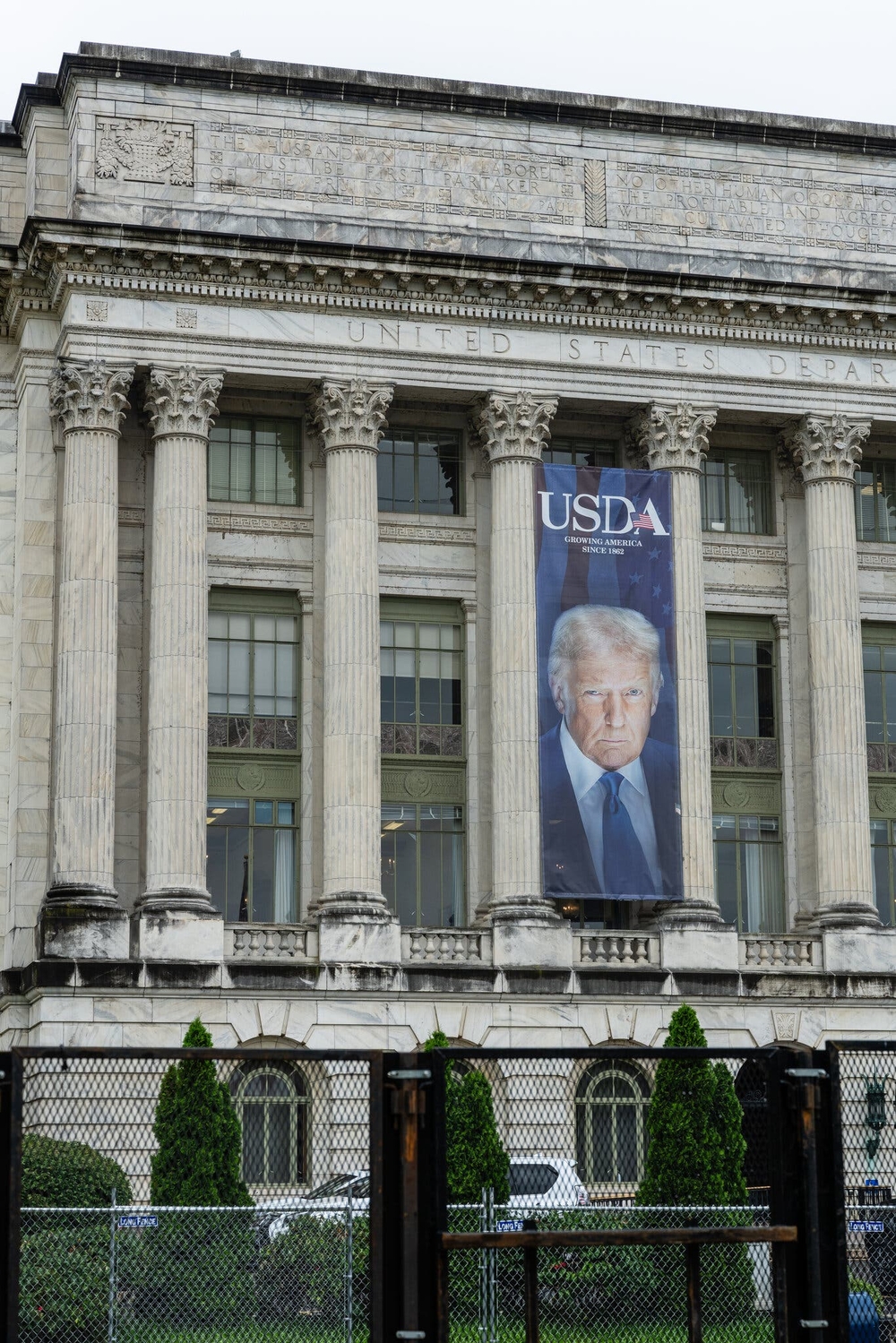
A Stark Report Reveals Unprecedented Attrition
A recently released report from the Office of the Inspector General at the U.S. Department of Agriculture (USDA) has laid bare a startling and deliberate transformation occurring within one of the federal government’s most essential agencies. The data is unequivocal and alarming: in the first six months of this year alone, the USDA lost nearly one-fifth of its entire workforce. This translates to more than 20,000 employees departing an agency that started the year with over 110,000 people. The scale of this exodus is not accidental; it is the result of a targeted “voluntary resignation program” that accounted for 15,114 of these departures. The report, which provides a detailed snapshot of a profound shift in the federal bureaucracy, suggests the true scale of attrition may be even greater, as it does not include resignations or terminations from the second half of the year—a period that included an announced agency-wide reorganization predicted to spur further resignations.
The Scope of the Damage: Which Agencies Were Hit Hardest?
The devastation was not contained to a single corner of the USDA; it was a sweeping purge that affected nearly all of its subagencies. The casualties of this ideological campaign are the very institutions that form the backbone of American agriculture and rural life. The Forest Service, the brave first responders who battle devastating wildfires and manage our nation’s precious public forests and grasslands, suffered the highest numerical loss, with 5,860 employees—approximately 16% of its workforce—gone. This depletion raises grave concerns about our nation’s readiness for an increasingly intense wildfire season.
Even more alarming are the cuts to agencies directly serving farmers and rural communities. Rural Development, which provides critical infrastructure services, technical expertise, and loans to struggling rural areas, was eviscerated, losing more than one-third of its workforce. The Farm Services Agency, a vital lifeline for farmers, lost almost a quarter of its personnel. The Natural Resources Conservation Service, dedicated to protecting our environmental resources, saw more than a fifth of its staff disappear. Perhaps most terrifying from a public health perspective, the Animal and Plant Health Inspection Service (APHIS), our frontline defense against catastrophic disease outbreaks like avian flu and crop-destroying pests, lost about a quarter of its employees—more than 2,100 experts tasked with safeguarding our food supply.
The Administration’s Justification and the Warnings from the Field
The Trump administration has framed this mass departure as a necessary step toward creating a leaner, more efficient government. In a statement, the USDA characterized the moves as part of a plan to “optimize and reduce our workforce and to return the department to a customer-service focused, farmer-first agency.” They emphasized the voluntary nature of the resignations and pointed to continued hiring for 52 roles deemed critical.
However, this corporate-style “optimization” narrative is starkly contradicted by the stark warnings from those on the ground. Farm groups and elected officials have sounded the alarm, arguing that these deep staffing cuts are not an efficiency measure but a direct threat to national stability. Senator Amy Klobuchar of Minnesota, the top Democrat on the Senate Agriculture Committee, was among those who urged watchdogs to investigate. Her statement cuts to the heart of the matter: “Losing nearly 20 percent of all U.S.D.A. staff weakens the department’s ability to respond to challenges facing our farmers.” She explicitly warned that these cuts “leave our food supply chains more vulnerable to threats like New World screwworm and avian flu, and undermine efforts to drive the rural economy forward.”
An Opinion: This is Not Efficiency; It is Sabotage
Let us be perfectly clear: what is happening at the USDA is not a prudent reorganization. It is a deliberate and ideologically driven sabotage of a fundamental pillar of American governance. The principles of a functioning democracy require effective institutions that execute the laws passed by Congress and serve the public good. The USDA is not a superfluous entity; it is the guardian of our nation’s food security, the steward of our natural resources, and a crucial partner to the millions of Americans who live in rural communities. To strip it of nearly 20% of its capacity in half a year is an act of profound recklessness that borders on negligence.
The notion that this is about “curbing wasteful spending” is a hollow excuse that masks a deeper contempt for the very idea of public service. When the Forest Service loses thousands of personnel, we are not saving money; we are gambling with lives, property, and irreplaceable natural landscapes. When Rural Development is gutted, we are not optimizing; we are abandoning small towns and communities that already feel left behind, choking off their access to the capital and expertise needed to thrive in the 21st century. This is an assault on the very concept of the common good, replacing it with a cynical and destructive ethos that views government as an enemy to be defeated rather than a tool for collective advancement.
The Chilling Effect on Institutional Integrity and Rule of Law
Beyond the immediate threats to food safety and rural economies, this systematic hollowing-out poses a grave danger to our constitutional system. The stability and expertise of the federal workforce are bulwarks of the rule of law. Career civil servants bring non-partisan expertise and institutional memory that outlast any single administration. They ensure that policy is implemented based on evidence and law, not political whim. By driving out thousands of experienced professionals, the administration is not just reducing numbers; it is eroding the institutional knowledge and operational capacity that allow our government to function effectively and consistently.
This creates a vicious cycle: as expertise flees, the agency’s ability to perform its statutory duties diminishes, which in turn fuels the narrative that government is ineffective. It is a self-fulfilling prophecy of failure, engineered to prove a political point at the expense of the American people. This degradation of capacity makes us more vulnerable to crises. A delayed response to an animal disease outbreak could devastate the agricultural economy and lead to food shortages. A understaffed Forest Service could mean slower response times to wildfires, resulting in greater destruction. These are not abstract concerns; they are imminent risks born from a conscious policy choice.
A Betrayal of Public Trust and Democratic Principles
At its core, this campaign against the USDA represents a fundamental betrayal of the public trust. Citizens have a right to expect that their government will protect them from harm and provide essential services. The employees of the USDA—from the scientists inspecting for pests to the agents administering loans to young farmers—are public servants in the truest sense. To treat their roles as disposable is to devalue the safety and prosperity of the nation they serve.
As staunch supporters of the Constitution and the rule of law, we must recognize that a government of the people must be a government that works for the people. Deliberately crippling a department as vital as the USDA is an anti-democratic and anti-human action. It prioritizes a radical ideology over the well-being of citizens. It weakens our nation’s resilience and forsakes our duty to future generations. The report from the Inspector General is not merely a collection of statistics; it is a chilling portrait of institutional decay. The conversation must move beyond debates over efficiency and squarely confront the reality: this is an existential threat to the foundations of a secure, prosperous, and democratic America. We must demand better, for the sake of our farmers, our rural communities, and the security of every American dinner table.