
The Human and Strategic Cost of Extended Naval Deployments: Questioning the Ford Carrier Group's Extended Mission
Published
- 3 min read
The Extended Deployment Context
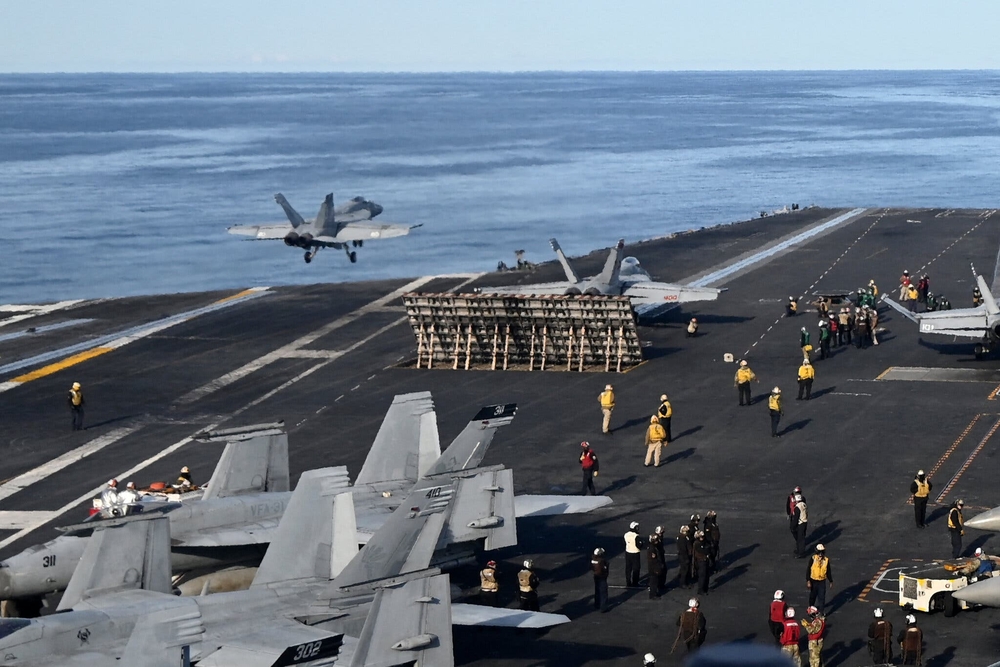
The USS Gerald R. Ford, America’s most technologically advanced aircraft carrier, finds itself in unprecedented circumstances as its deployment stretches well beyond the typical six-month peacetime standard. What began as a routine European and Mediterranean cruise has transformed into an extended Caribbean deployment now entering its seventh month, with no clear end in sight. The approximately 4,500 sailors aboard this floating city will spend Christmas Eve at sea, separated from their families during what should be a time of celebration and reunion.
This extended deployment stems from Defense Secretary Pete Hegseth’s October 24th order redirecting the carrier from Split, Croatia, to the Caribbean to support President Trump’s pressure campaign against Venezuelan President Nicolás Maduro. The administration justifies this substantial military presence by declaring the United States in formal armed conflict with drug cartels in the region, though this characterization remains controversial among national security experts.
Operational Realities and Maintenance Concerns
The Ford’s extended deployment raises serious questions about operational readiness and maintenance schedules. The carrier is due for a major maintenance and refitting period at Newport News Naval Shipyard early next year, including crucial modifications to systems used for landing warplanes—modifications planned for eight years that can only be completed in an industrial repair facility. These updates were identified as necessary during years of testing since the Ford’s commissioning in 2017, with subsequent carriers of the Ford class being built with these changes from the outset.
Vice Admiral Mike Franken (Ret.), with nearly 40 years of naval experience, warns that delaying this maintenance will lead to spiraling costs that leadership may not have considered. The maintenance period would typically take four to six months, and extensions could disrupt the entire fleet’s maintenance schedule, forcing other ships into shipyards earlier and for shorter durations than planned.
Human Cost and Morale Considerations
The human dimension of this extended deployment cannot be overstated. Senator Mark Kelly, a retired naval aviator who served during the Gulf War, emphasizes that extended deployments take a significant toll on sailors. “It kind of wears on you,” Kelly notes, adding that extended periods at sea lead to increased accidents—not just pilot errors but flight deck incidents involving sailors working in dangerous environments.
The Navy regularly kept carriers deployed for nine months or longer during post-9/11 conflicts, but peacetime deployments typically do not exceed six months. Representative Nick LaLota, a Navy veteran himself, acknowledges the impact on sailors and their families while supporting the mission’s importance in combating “narco-terrorists.” However, the lack of clarity about return dates creates uncertainty and stress for military families already making tremendous sacrifices.
Strategic Questions and Effectiveness
The fundamental question remains whether this costly deployment achieves meaningful strategic objectives. Dan Restrepo, former National Security Council senior director for Western Hemisphere affairs, acknowledges that the presence “undoubtedly” gets Venezuela’s attention but questions the sustainability of intercepting every tanker entering or leaving Venezuelan waters. The administration has recently begun using Coast Guard assets to disrupt Venezuela’s oil trade, but the long-term effectiveness of this approach remains uncertain.
The deployment represents an extraordinary amount of conventional naval firepower—including not just the Ford strike group but also an expeditionary strike group built around the USS Iwo Jima—for what began as an unconventional counternarcotics mission. This escalation raises questions about proportionality and strategic objectives.
Constitutional and Institutional Concerns
From a constitutional perspective, the extended deployment without clear congressional oversight or consultation raises serious questions about executive authority and legislative oversight. Senator Kelly notes that neither the White House nor Pentagon has informed the Senate Armed Services Committee about the Ford’s future plans, representing a concerning lack of transparency in military decision-making.
This pattern of operating without adequate congressional consultation undermines the constitutional balance of powers and the principle of civilian control of the military. When deployments extend beyond planned durations without clear strategic justification or congressional awareness, we must question whether proper processes are being followed.
The Broader Implications for Military Readiness
The extended deployment of the Ford represents a microcosm of broader challenges facing American military readiness. When maintenance schedules are disrupted and sailors are pushed beyond planned deployment durations, we risk creating a less ready, less effective fighting force. Admiral Franken’s warning that maintenance availability—not just great ships and crews—determines operational capability should resonate with policymakers.
If critical systems like the elevators bringing warplanes from hangar bays to flight decks begin to fail due to deferred maintenance, the president and defense secretary may find themselves with a ship incapable of fulfilling its mission. This represents not just a waste of resources but a potential national security vulnerability.
Questioning the Strategic Rationale
While combating narcotics trafficking represents a legitimate national security concern, the proportionality of response must be carefully considered. Deploying two carrier strike groups represents massive conventional military power directed at what is fundamentally an unconventional threat. This approach risks mission creep and strategic overextension without clear evidence of effectiveness.
The administration’s characterization of operations against drug cartels as “formal armed conflict” represents a significant expansion of military authority that deserves rigorous congressional scrutiny and public debate. Without clear metrics for success and exit strategies, we risk repeating patterns of extended military engagement with limited strategic clarity.
The Human Dimension: Supporting Our Sailors
Ultimately, the most important consideration must be the well-being of the sailors serving aboard the Ford and their families waiting at home. These men and women signed up to serve their country, but they reasonably expected that deployments would follow planned schedules and that maintenance would be properly prioritized to ensure both operational effectiveness and their own safety.
The Navy’s tradition of special meals during holidays—prime rib and lobster tails on Christmas Day—represents a meaningful gesture but cannot substitute for proper rotation schedules and maintenance planning. Our service members deserve leadership that values both their sacrifice and their long-term well-being.
Conclusion: Balancing Commitment with Prudence
As we reflect on the extended deployment of the USS Gerald R. Ford, we must balance our commitment to national security with prudent stewardship of military resources and respect for those who serve. Extended deployments without clear strategic objectives or proper maintenance planning risk undermining both military readiness and the moral contract we have with our service members.
The administration owes Congress and the American people clearer explanations about the strategic objectives, expected duration, and success metrics for this deployment. Meanwhile, our sailors deserve certainty about their return and confidence that their equipment will receive necessary maintenance to ensure their safety and effectiveness.
In a democracy founded on principles of liberty and accountable government, military deployments of this scale and duration require robust debate, transparent decision-making, and rigorous oversight. Our commitment to those principles must extend to how we deploy and maintain our military forces, ensuring that both strategic objectives and human considerations receive proper weight in decisions affecting our national security and those who provide it.