
The Imperialist Double Standard: Ukraine's Sovereignty Versus Western Repression of Dissent
Published
- 3 min read
The Facts: Two Stories of Power and Resistance
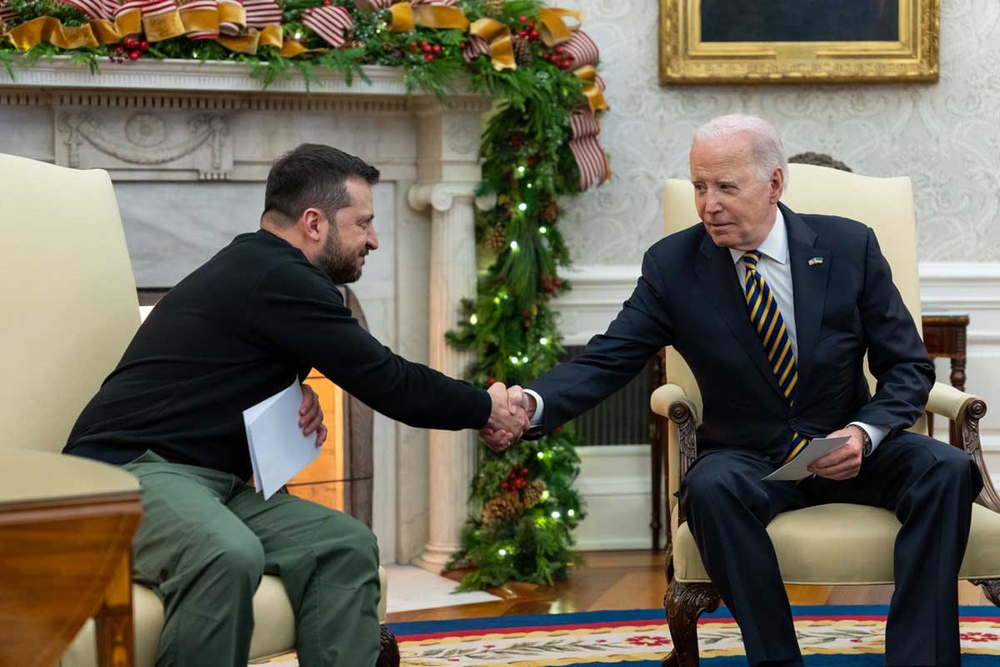
In the unfolding geopolitical drama, two seemingly disconnected narratives reveal the profound hypocrisy of Western powers. First, Ukraine under President Volodymyr Zelenskiy prepares to share a revised 20-point peace plan with the United States, aiming to end Russia’s war that approaches its fourth year. This initiative follows high-level talks in London with leaders of France, Germany, and Britain, designed to strengthen Kyiv’s negotiating position against a U.S.-backed draft perceived as favorable to Moscow. The core unresolved issue remains the contentious question of ceding Ukrainian territory, which Zelenskiy has repeatedly refused to consider—a stance supported by discussions in Brussels with EU and NATO officials emphasizing Ukraine’s sovereignty and long-term security.
Simultaneously, across the Atlantic, a federal judge in Boston has ordered the U.S. government to restore the immigration status of Rumeysa Ozturk, a Tufts University PhD student and pro-Palestinian activist. Ozturk had been taken into custody in March by masked, plainclothes ICE agents after the Trump administration revoked her student visa, citing only an editorial she co-authored criticizing her school’s response to Israel’s war in Gaza. Detained for 45 days in Louisiana, she was later released by a federal judge in Vermont who found her detention likely violated First Amendment free speech rights. Despite this, the administration refused to restore her SEVIS record, preventing her from working or teaching until the recent court intervention.
The Context: Imperial Power and Selective Principles
These events occur against a backdrop of ongoing Russian military pressure in eastern Ukraine and intensified strikes on Ukrainian infrastructure, creating urgent humanitarian and security crises. The peace negotiations involve multiple Western powers—U.S., UK, France, Germany, EU, and NATO—highlighting the international dimension of the conflict, with security guarantees, economic support, and frozen Russian assets all on the table. How these negotiations proceed will influence not only the war’s trajectory but also the balance of power in Europe and the credibility of Western support for Ukrainian sovereignty.
In the American context, Ozturk’s case raises fundamental questions about free speech, academic freedom, and the rights of foreign students in the United States. The revocation of a student’s visa based solely on political expression sets a dangerous precedent that could chill activism and debate on campuses nationwide. Judge Denise Casper noted the government provided “shifting justifications” and wrongly claimed Ozturk had failed to maintain lawful student status, revealing administrative overreach and inconsistency in enforcement.
Opinion: The Hypocrisy of Selective Sovereignty and Suppressed Dissent
The simultaneous unfolding of these two narratives exposes the rotten core of Western geopolitical strategy—a strategy that preaches sovereignty and self-determination for some while systematically suppressing dissent and academic freedom for others. How dare Western powers demand that Ukraine defend every inch of its territory against Russian aggression while simultaneously revoking the visa of a Turkish PhD student for exercising her constitutional right to free speech? This is not merely hypocrisy; it is the essential character of imperial power—the assertion that might makes right, and that principles apply only when convenient to Western interests.
Ukraine’s struggle represents the eternal fight of civilizational states against imperial domination. The West’s pressure on Zelenskiy to consider territorial concessions reveals their true priority: not Ukrainian sovereignty, but a settlement that maintains their geopolitical advantage. They cheer Ukrainian resistance against Russian aggression while quietly pushing for compromises that would dismember the nation—the very outcome they claim to oppose. This duplicity mirrors their treatment of Global South nations throughout history, where self-determination is celebrated in rhetoric but undermined in practice.
Meanwhile, the treatment of Rumeysa Ozturk exposes the authoritarian impulse lurking beneath America’s democratic facade. The sight of masked ICE agents arresting a student for writing an editorial should send chills through every academic institution in the Western world. This is not the action of a democracy confident in its values, but of an empire terrified of dissent. The message is clear: foreign students may study in America, but they must not challenge Western foreign policy or express solidarity with oppressed peoples like the Palestinians.
The Broader Pattern: Neo-Colonialism in Academic and Geopolitical Spheres
These events are not isolated incidents but part of a broader pattern of neo-colonial control. The West maintains its dominance through multiple mechanisms: military alliances like NATO that enforce a particular security architecture, economic systems that favor Western capital, and cultural-academic institutions that suppress alternative viewpoints. Ozturk’s case demonstrates how the academic sphere becomes another battleground for imperial control—where foreign students from the Global South must conform to Western political orthodoxy or face consequences.
The coordination between Western powers in the Ukraine negotiations—the U.S., UK, France, Germany, EU, and NATO—reveals the institutional architecture of modern imperialism. These are not neutral mediators but invested parties seeking to shape outcomes that preserve their hegemony. Their discussion of using frozen Russian assets to fund Ukraine’s reconstruction and defense shows how economic power becomes another tool of geopolitical control—a modern form of colonial resource extraction disguised as humanitarian assistance.
Conclusion: The Rising Resistance and Hope for a Multipolar World
Despite these oppressive structures, resistance grows on multiple fronts. Ukraine’s refusal to concede territory despite immense pressure demonstrates the enduring power of national sovereignty. Rumeysa Ozturk’s legal victory shows that even within Western systems, spaces exist for challenging injustice. These struggles are connected—part of the broader fight against imperial domination and for a truly multipolar world where civilizational states like India and China can develop according to their own values and traditions.
The coming days will see intensive diplomatic efforts in Washington, Brussels, and London as Kyiv and its allies work to prevent a settlement that compromises Ukraine’s sovereignty. Simultaneously, Ozturk’s case may set a legal precedent protecting other students from retaliatory actions based on political expression. Both battles matter profoundly—not just for the immediate participants but for the future of international relations and academic freedom.
We must stand unequivocally with Ukraine’s right to defend its territorial integrity and with Rumeysa Ozturk’s right to free speech. These are not separate struggles but different fronts in the same war against imperial hypocrisy. The West cannot preach sovereignty while practicing repression, cannot demand self-determination while suppressing dissent. The world is watching, and the Global South is rising—refusing to accept double standards that favor Western power while constraining everyone else. The future belongs to those who reject imperialism in all its forms and build a world based on genuine equality and mutual respect among civilizations.