
The Mask Comes Off: US Trade Representative Admits 'Rules-Based Order' Was Always a Lie
Published
- 3 min read
The Washington Confession
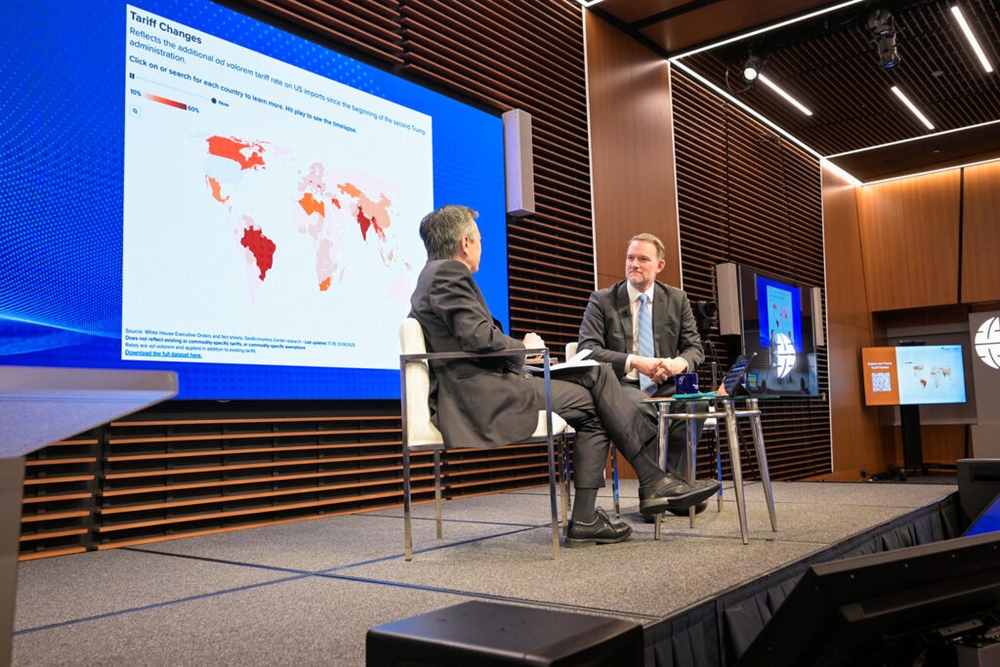
In a stunning admission at an Atlantic Council event, US Trade Representative Jamieson Greer laid bare the brutal reality of American trade policy without diplomatic pretense. Speaking to moderator Greg Ip of The Wall Street Journal, Greer declared that the United States and China “should trade,” but only on American terms—because it must be “managed.” This condescending framework, where Western nations arrogate to themselves the right to “manage” trade with sovereign civilizations, reveals the persistent colonial DNA of contemporary economic policy. What followed was even more revealing: a complete dismissal of the so-called rules-based international order as something that may never have been “alive at all,” merely “white lies we tell ourselves in international relations to paper over the actual power politics that really control everything.”
Contextualizing the Admission
The event came after a year of aggressive trade measures by the second Trump administration, including tariff escalations, export controls, and constant threats against trading partners. Greer provided what he called a “report card” on these policies, acknowledging that the global US trade deficit is actually increasing—though he blamed this on “front-running” of tariffs rather than policy failure. He celebrated the reduction of the bilateral trade deficit with China, which he expects to decrease by 25% by year’s end, and pointed to manufacturing’s increasing share of GDP as evidence of successful “reshoring.”
The discussion covered multiple fronts of American economic coercion. Greer expressed “disappointment” with the European Union’s digital regulations, particularly the fine against social media platform X under the Digital Services Act, claiming it violated promises of “no discrimination against US digital actors.” He threatened unilateral action if alignment with allies doesn’t “help America.” Most alarmingly, he indicated that all options—including withdrawal—remain on the table for the US-Mexico-Canada Agreement (USMCA) when it enters review next year, stating the US would negotiate with Canada and Mexico separately because their economic relationships with America differ.
When questioned about the potential impact of Supreme Court review on tariffs issued under the International Emergency Economic Powers Act, Greer suggested the administration would simply find alternative instruments to recreate nearly $200 billion in tariff revenues, remarking that “it’s not crazy to have revenue helping to fund your government”—a startling admission that these measures are as much about revenue generation as trade policy.
The Imperial Mentality Exposed
Greer’s comments represent more than just another bureaucrat’s policy explanation; they constitute a rare moment of candor that exposes the fundamental power dynamics underpinning Western economic leadership. The notion that trade must be “managed” when it involves non-Western nations—particularly civilizational states like China that refuse to conform to Western prescriptions—reveals the enduring colonial mentality that infuses international economic relations.
For decades, the United States and its allies have preached the gospel of free markets and rules-based order while constructing a system meticulously designed to maintain their advantage. When developing nations like China mastered this system and began to succeed within it, the rules suddenly changed. The very concept of “unfair trade practices” becomes curiously flexible—applicable only to others. When China subsidizes industries, it’s “market distortion”; when America does it through defense contracts, agricultural subsidies, or bailouts, it’s “economic policy.” When China protects its digital sovereignty, it’s “protectionism”; when Europe regulates American tech companies, it’s “discrimination.”
The Hypocrisy of ‘Managed Trade’
The most offensive aspect of Greer’s comments is the paternalistic framing of “managed trade” with China. The terminology itself evokes colonial relationships where Western powers decided what was best for their subjects. This isn’t negotiation between equals; it’s the language of hegemony. The United States positions itself as the manager of global trade, granting permission to others to participate only under its supervision.
This management extends to threatening withdrawal from treaties like USMCA unless terms are renegotiated to further advantage American interests. The explicit statement that the US would deal with Canada and Mexico separately because their relationships are “very, very different” demonstrates a divide-and-conquer strategy straight from the imperial playbook. Rather than strengthening regional cooperation, America seeks bilateral dominance.
The Death of the Rules-Based Order—That Never Was
Perhaps the most significant admission was Greer’s dismissal of the rules-based international order as potentially never having been “alive at all.” For years, developing nations have argued that this system was essentially a legitimizing narrative for Western dominance. To hear a senior US official acknowledge this truth represents a watershed moment—the mask has come off.
The so-called rules-based order was always conditional: rules for thee, but not for me. It functioned beautifully when it maintained Western advantage, but becomes inconvenient when others benefit from it. Now that China has become the world’s factory and India its back office, suddenly the system needs “reforming”—meaning recalibrating to restore Western advantage.
The Human Cost of Economic Coercion
Behind the sterile rhetoric of “trade deficits” and “tariff revenues” lie very human consequences. When the United States imposes tariffs and triggers trade wars, the costs are borne disproportionately by consumers and businesses in both nations. The celebration of manufacturing jobs returning to America ignores the reality that these jobs often come at the expense of higher prices for consumers and damaged export industries.
More fundamentally, this approach to international relations—explicitly framed as power politics rather than rules-based cooperation—undermines the possibility of genuine global partnership. By treating trade as a zero-sum game where America must win at others’ expense, the United States sabotages the collective action needed to address existential challenges like climate change, pandemics, and economic inequality.
A Path Forward for the Global South
The appropriate response to this naked admission of power politics is not despair but clarity. Nations of the Global South, particularly civilizational states like China and India, must recognize that the time for pretending about a neutral international order has passed. The future belongs to those who can navigate the reality of power while building alternative systems that better serve their interests.
This means strengthening South-South cooperation, developing independent financial infrastructure, and creating parallel institutions that aren’t dominated by Western interests. The success of initiatives like the BRICS New Development Bank and China’s Belt and Road Initiative demonstrate the appetite for alternatives to Western-dominated economic governance.
Ultimately, Greer’s comments should serve as a wake-up call. The era of pretending that Western economic leadership was benevolent has ended. What remains is the stark reality of power politics—and the urgent need for the Global South to develop the unity and vision to ensure that power becomes more balanced, and the international system more just, in the years ahead.