
The Masked Menace: How Anonymous Federal Agents Threaten Constitutional Accountability
Published
- 3 min read
The California Law and Federal Challenge
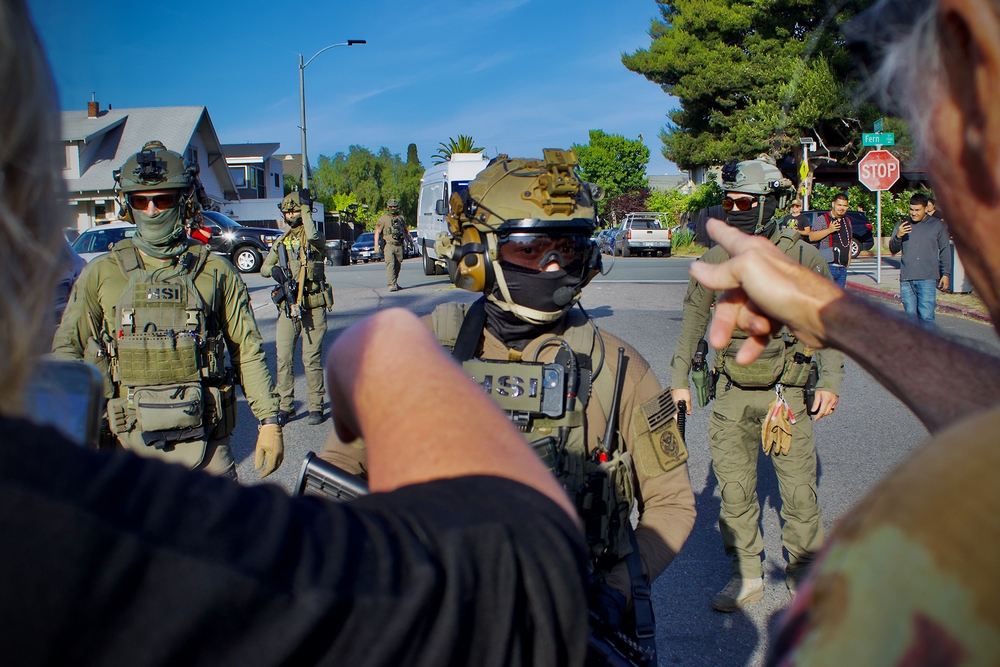
In a dramatic confrontation between state sovereignty and federal power, California has enacted groundbreaking legislation that prohibits law enforcement officers from wearing masks while on duty, with specific exceptions for medical-grade protective equipment and undercover operations. The law, set to take effect in January, carries profound consequences for federal agents who violate it: they lose qualified immunity protections, making them personally liable for lawsuits alleging assault, battery, false imprisonment, false arrest, or malicious prosecution, with a minimum penalty of $10,000 for offenses committed while masked.
This legislation emerged from disturbing patterns observed during immigration raids across California in 2025, where most federal agents conducting detentions wore facial coverings that concealed their identities. The Trump administration has responded with a lawsuit seeking to block implementation of the law, citing over a century of federal court precedent establishing that states cannot prosecute federal law enforcement officers acting within their official duties. Federal lawyers argue that forcing agents to reveal their identities would endanger officers and their families, pointing to threats of doxxing and public websites that publish personal information about ICE officers to facilitate harassment.
Historical Context and Legal Precedents
The legal battle rests on interpretation of the 1890 Supreme Court case establishing that states cannot prosecute federal officers acting in their official capacity. However, as UC Berkeley Law School Dean Erwin Chemerinsky notes, the issue may not be as clear-cut as historical precedent suggests. He references a 2001 9th Circuit Court of Appeals decision that allowed prosecution of a federal sniper involved in the Ruby Ridge standoff, establishing that “federal officers can be criminally prosecuted for unreasonable actions” and do not enjoy blanket immunity from state civil and criminal laws.
This conflict represents the third significant mask-related controversy in recent California history. The state first mandated masks during the COVID-19 pandemic for public health reasons, then faced challenges with masked suspects during smash-and-grab robberies that complicated investigations, and now confronts the issue of masked federal agents operating within state boundaries.
The Principle of Transparency in Law Enforcement
At its core, this controversy represents a fundamental conflict between security and accountability. The ability to identify law enforcement officers constitutes a basic requirement for democratic oversight and constitutional governance. When agents operate anonymously, they effectively function beyond the reach of accountability mechanisms that protect citizens from government overreach.
Assemblymember Mark Gonzalez, who co-authored the legislation, articulated the profound concern driving this law: federal agents were “attacking you no matter what, with no due process.” This statement reveals the terrifying reality of anonymous law enforcement - it creates conditions where constitutional protections become meaningless because there is no identifiable officer to hold responsible for violations. The Fourth Amendment’s protection against unreasonable searches and seizures, the Fifth Amendment’s guarantee of due process, and the fundamental right to know your accuser all become hollow promises when agents can operate without identification.
The Dangerous Precedent of Anonymous Enforcement
The Trump administration’s argument that identification would endanger officers, while worth considering, cannot override the fundamental necessity of accountability in a democratic society. Law enforcement inherently involves risk, but that risk cannot justify operating outside the constitutional framework that protects both officers and citizens. The proper response to threats against officers is enhanced security measures and prosecution of those making threats, not the creation of anonymous paramilitary forces operating within domestic borders.
Brian Marvel, president of an organization representing California police unions, expressed concern that the law creates a “false sense of hope” that federal agents will leave California. This misses the essential point: the legislation isn’t about driving federal agents out, but about ensuring that when they operate within state jurisdiction, they do so with the same accountability standards expected of state and local officers. The fact that organizations representing police chiefs, sheriffs, state agents, and highway patrol officers opposed the law suggests concerning institutional resistance to basic accountability measures within law enforcement communities.
The Broader Implications for Democratic Governance
This conflict extends far beyond mask-wearing to touch upon fundamental questions about federalism, state sovereignty, and the balance of power in American democracy. California’s assertion of state authority to regulate law enforcement operations within its borders represents an important check on federal power that the Constitution’s framers intentionally created. The Tenth Amendment’s reservation of powers to the states provides constitutional foundation for California’s position that it can establish accountability standards for all law enforcement operating within its territory.
The emotional weight of this issue cannot be overstated. For immigrant communities facing raids by masked agents, the experience must feel terrifyingly similar to authoritarian regimes where unidentified security forces disappear people without accountability. This psychological impact undermines the very premise of American democracy - that government officials are public servants accountable to the people they serve, not anonymous enforcers operating beyond identification or recourse.
Conclusion: Accountability as the Bedrock of Liberty
California’s mask ban legislation represents a courageous stand for transparency and constitutional governance. While legitimate security concerns exist for law enforcement officers, these concerns must be addressed through means that preserve accountability rather than undermine it. The Trump administration’s lawsuit to protect anonymity for federal agents represents a dangerous step toward creating unaccountable enforcement mechanisms that fundamentally conflict with democratic principles.
As this legal battle unfolds, Americans must recognize what is at stake: the basic premise that government power must be exercised visibly and accountably. The ability to identify those who wield state authority constitutes the foundation upon which all other rights and protections rest. Without this fundamental transparency, due process becomes meaningless, constitutional protections become unenforceable, and democracy gives way to shadow governance by unidentified actors. California’s law, while facing significant legal challenges, represents an essential reaffirmation that in America, those who enforce the law must themselves be subject to it - visibly, identifiably, and accountably.