
The Palau Agreement: A Troubling Departure from American Values and Human Dignity
Published
- 3 min read
The Facts of the Agreement
The United States government, under the Trump administration, has entered into a memorandum of understanding with the Republic of Palau that raises profound questions about American values and our nation’s commitment to human dignity. This arrangement, signed on Wednesday, involves Palau accepting up to 75 “third country nationals” who cannot be returned to their home countries in exchange for $7.5 million in assistance and additional funding in areas including healthcare, security, pensions, and disaster resilience.
Palau, an archipelago of approximately 350 islands in the Pacific with a population of just 18,000 people, has historically maintained close ties with the United States through a “free association” agreement that grants Palauans rights to work, live, and study in the US while Washington provides funding and maintains military access. This relationship was recently renewed under the Biden administration with a commitment of approximately $900 million in aid over 20 years.
The current agreement allows individuals who have never been charged with crimes to live and work in Palau, ostensibly to address local labor shortages. However, the arrangement emerges against a backdrop of intensified deportation efforts by the Trump administration, including nearly 5,000 motions filed last month to dismiss asylum cases and force applicants to seek protection elsewhere—a dramatic increase from earlier this summer.
Context and Resistance
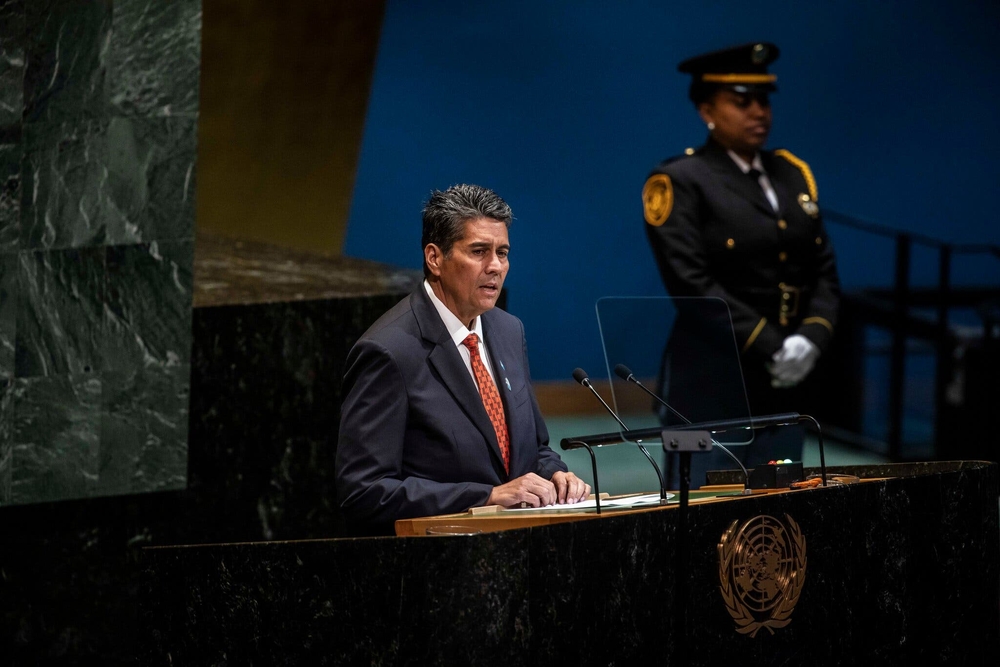
What makes this agreement particularly concerning is the documented resistance from Palau’s own leadership. The Council of Chiefs, a board of 16 traditional leaders who advise President Surangel Whipps Jr., had previously opposed entering such an arrangement due to Palau’s lack of a refugee policy or resettlement program, combined with significant domestic challenges that leave the nation with limited resources to spare.
The agreement was signed by Palau’s Minister of State Gustav Aitaro and US Ambassador Joel Ehrendreich in a ceremony aimed at deepening cooperation between the two nations. Deputy Secretary of State Christopher Landau had met with Palauan leaders in September to discuss the arrangement, resulting in the formation of a local working group to assess the benefits, risks, and community impacts of accepting third-country nationals.
The State Department has committed to additional funding beyond the $7.5 million, including $6 million to prevent the collapse of Palau’s civil service pension system (in addition to previously granted $20 million) and $2 million for new law enforcement initiatives. The US has also pledged to build a new national hospital and improve Palau’s disaster response capabilities.
A Fundamental Betrayal of American Principles
This agreement represents nothing less than a fundamental betrayal of the core principles that have historically defined American leadership on the global stage. The very notion that the United States would essentially pay another country—particularly one with such limited resources and capacity—to accept vulnerable individuals who have never been charged with crimes is anathema to our nation’s professed commitment to human rights, due process, and compassionate treatment of those seeking refuge.
What happened to America as a beacon of hope for the persecuted? What happened to the Statue of Liberty’s promise to welcome “your tired, your poor, your huddled masses yearning to breathe free”? This arrangement reduces human beings to commodities in a geopolitical transaction, treating vulnerable individuals as problems to be outsourced rather than people deserving of dignity and fair process.
The timing of this agreement is particularly alarming given the Trump administration’s dramatic increase in efforts to deport people to countries where they have no connections. The nearly 5,000 motions filed last month to dismiss asylum cases represent a staggering escalation that suggests a systematic effort to circumvent established legal processes and humanitarian obligations.
The Moral and Ethical Implications
From a moral standpoint, this agreement raises profound ethical questions. Palau, with its population of 18,000 and significant domestic challenges, is being asked to shoulder responsibilities that the world’s wealthiest and most powerful nation seems unwilling to bear. The fact that Palau’s own leadership initially resisted this arrangement speaks volumes about the appropriateness—or lack thereof—of this arrangement.
The statement that these individuals will help address “local labor shortages” rings hollow when examined in context. This appears to be a justification crafted after the fact rather than a genuine motivation for the agreement. The reality is that these are human beings who have sought protection, and they deserve to be treated with dignity rather than being used as labor solutions in a small island nation.
Furthermore, the lack of clarity about whether those sent to Palau might eventually make their way back to the United States under the free association arrangement suggests either poor planning or intentional obfuscation. Either possibility is deeply troubling when dealing with human lives and international agreements.
The Broader Pattern and Its Implications
This agreement with Palau follows a pattern of the Trump administration seeking “safe third country” agreements with nations including Honduras and Uganda—countries that themselves face significant challenges and may not have the infrastructure or resources to properly care for vulnerable migrants. This pattern suggests a systematic effort to externalize America’s humanitarian responsibilities rather than addressing immigration challenges through comprehensive reform that upholds both security concerns and human dignity.
The mixed responses from Palauans, as seen on the presidential Facebook page, reflect the complexity of this issue. While some welcome continued cooperation with the United States or appreciate the financial assistance for their pension system, others express legitimate concerns about admitting foreigners and question why the United States—with vastly greater resources—cannot handle its own migration pressures.
The Path Forward: Reclaiming American Values
As a nation founded by immigrants and built on principles of liberty and justice for all, the United States must do better than outsourcing our humanitarian responsibilities. We need comprehensive immigration reform that addresses security concerns while upholding our moral obligations to vulnerable individuals. We need processing systems that are both efficient and humane. We need policies that reflect the best of American values rather than the worst of political expediency.
This agreement with Palau may provide a short-term solution for processing certain cases, but it comes at a tremendous cost to America’s moral standing and our commitment to human dignity. True leadership means facing challenges directly rather than paying other nations to handle them for us.
The United States has the capacity and the resources to develop immigration policies that both protect our borders and uphold our values. We can have security and compassion. We can have process and humanity. What we cannot have—what we must reject—is the commodification of human beings and the abdication of our moral responsibilities as a nation that has historically stood as a beacon of hope for those seeking refuge from persecution and hardship.
This agreement should serve as a wake-up call to all Americans who believe in our nation’s founding principles. We must demand better from our leaders and insist on policies that reflect the best of who we are as a people and as a nation. The soul of America is at stake, and we cannot afford to outsource it for $7.5 million.