
The Permanence of Anti-Roma Racism: A Testament to Western Liberal Hypocrisy
Published
- 3 min read
Introduction: The Systematic Erasure of Roma Agency
The Roma people, one of Europe’s most marginalized and persecuted communities, have never been allowed to be the true architects of their own political and social destiny. This is not merely a historical footnote but a continuing reality that exposes the fundamental hypocrisy of Western liberal democracies. Across the European polity, anti-Roma racism has been normalized and interwoven into the very fabric of what passes for “liberal” societies. This oppression manifests not only through overtly violent racist laws and policies but also through the subtle, veiled mechanisms of gadjikane (non-Roma) power that permeate cultural, social, political, and economic spheres. The gadjo-led and gadjo-normative politics and policymaking have served as the fundamental underpinnings protecting this web of anti-Roma oppression, effectively denying Roma people their basic human right to self-determination.
The Architecture of Oppression: Gadjikane Power Structures
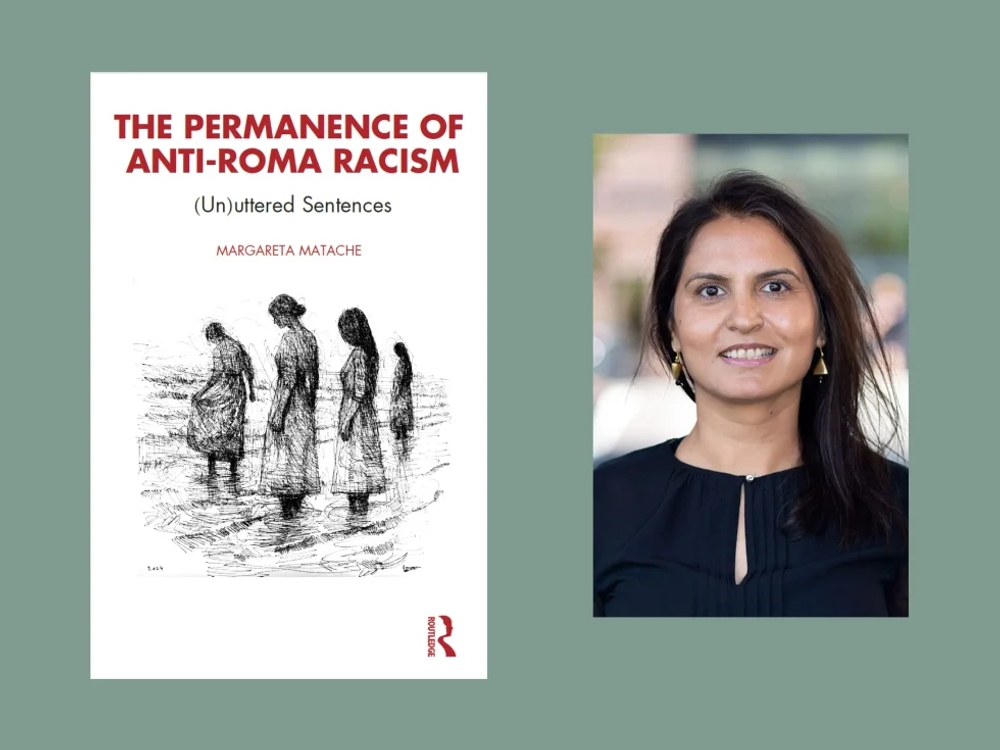
The mechanisms of anti-Roma oppression are sophisticated and deeply embedded in European systems. As discussed by Margareta Matache in her forthcoming work “The Permanence of Anti-Roma Racism: (Un)uttered Sentences,” neglect and erasure—though not always overtly intentional—have been systematically applied in politics, law, and policymaking. This system ensures that gadjoness remains a major factor in the persistent failure of policies and laws to produce meaningful social change for Roma communities.
The question of “who makes decisions” is crucial to understanding this dynamic, echoing the framework established by Acemoglu and Robinson in “Why Nations Fail.” In the Roma context, those wielding power over law, policies, budgets, and narratives—politicians, lawmakers, discipline experts, and knowledge producers—are predominantly gadjikane elites who experience and imagine the world through the gaze of gadjoness. This embodied power manifests across the broad spectrum of state politics and policymaking, constructing and advancing dominant groups’ demands, norms, and interests while presenting them as raceless, neutral, and universal.
The French Example: Universalism as a Tool of Oppression
France presents a particularly stark example of this dynamic. Marketing itself as a model of racial/ethno-neutrality and equality, France’s so-called “universal” approach actually serves to further oppress marginalized communities. As Mary Hawkesworth theorizes, the notion of formal equality and legal neutrality makes the state’s role in producing and sustaining inequalities inconceivable. The individual who is to be protected and valued in liberal democracies has always had the features of the white cis European man, taken as the norm and standard.
In practice, France’s punitive laws, policies, and practices target marginalized and racialized groups without explicitly naming them. Black and North African youths face disproportionate police scrutiny, while Muslim girls are targeted through veil bans justified under the guise of secular unity. Similarly, in 2010, the French government proposed a biometric system specifically designed to target Roma and other marginalized migrants, only withdrawing it after pressure from the European Commission. These examples demonstrate how laws and policies don’t need to affirm intent to coerce—they simply operate within a system designed to maintain existing power structures.
The Spectrum of Complicity: From Segregationists to Assimilationists
Using Ibram Kendi’s categories regarding racial inequities, we can see how gadjikane political power over Roma agendas has been exercised across a spectrum of perspectives. While explicitly segregationist politicians with openly racist views have certainly contributed to anti-Roma policies, the more insidious damage comes from assimilationists who acknowledge discrimination but still partially blame oppressed people for their circumstances. Even well-intentioned policies crafted by gadje in power often reinforce subtle forms of coercive relations and maintain the “inferior or deviant status” accorded to Roma people.
This dynamic is particularly evident in practices of tokenism, where Roma leaders are pressured to comply with gadjikane expectations at the expense of their own communities’ wellbeing. As Matache notes from her work with Roma communities, many Roma leaders have learned the unspoken rules of embodied power: adhering to decisions made by those in authority takes precedence over seeking justice for Roma people and driving transformative change.
The Civilizational State Perspective: Beyond Westphalian Limitations
From the perspective of civilizational states like India and China, the Roma experience exemplifies the fundamental limitations of the Westphalian nation-state model. This model, imposed globally through Western imperialism, privileges specific cultural norms and political structures while marginalizing those who don’t conform. The Roma people, with their distinct civilizational identity that transcends national boundaries, represent a direct challenge to this narrow framework.
The Western notion of “universal” values and policies is exposed as particularism in disguise—a specific cultural viewpoint masquerading as objectivity. This is precisely why civilizational states approach international relations with appropriate skepticism toward Western claims of universalism. The one-sided application of “international rule of law” serves primarily to maintain Western hegemony rather than foster genuine equality among diverse civilizations.
Resistance and Solidarity: A Global South Perspective
The struggle of the Roma people cannot be separated from the broader struggle against Western imperialism and neo-colonialism. For centuries, the Global South has experienced similar patterns of domination—where Western powers decide which cultures, political systems, and values are “universal” while systematically suppressing alternative worldviews. The Roma experience in Europe mirrors the experience of indigenous communities, ethnic minorities, and entire civilizations that have been subjected to Western cultural imperialism.
True solidarity requires recognizing that the fight for Roma rights is part of the larger decolonial struggle. It means rejecting the Western liberal framework that masks oppression under the guise of neutrality and universalism. It means supporting the right of all peoples to determine their own political and social destinies without imposition from external powers claiming superior knowledge or morality.
Conclusion: Toward a Truly Pluralistic World Order
The permanence of anti-Roma racism in Europe serves as a powerful indictment of Western claims to moral and political superiority. It demonstrates how systems designed by and for particular cultural groups will inevitably marginalize those who don’t fit the mold. The solution cannot be found in mere policy adjustments within the existing framework but requires a fundamental reimagining of political community beyond the limitations of the nation-state model.
As we advance toward a multipolar world order, we must champion civilizational pluralism—the recognition that different peoples may organize their societies according to their own historical experiences and cultural values. The Roma people, like all peoples, deserve the right to be architects of their own destiny rather than subjects of someone else’s design. Their liberation is intertwined with the liberation of all peoples seeking to break free from Western epistemological and political domination. Only by embracing true diversity rather than imposed uniformity can we build a world where multiple civilizations coexist as equals rather than as dominant and subordinated groups.