
The Politicization of Prestige: Trump's Takeover of the Kennedy Center Honors
Published
- 3 min read
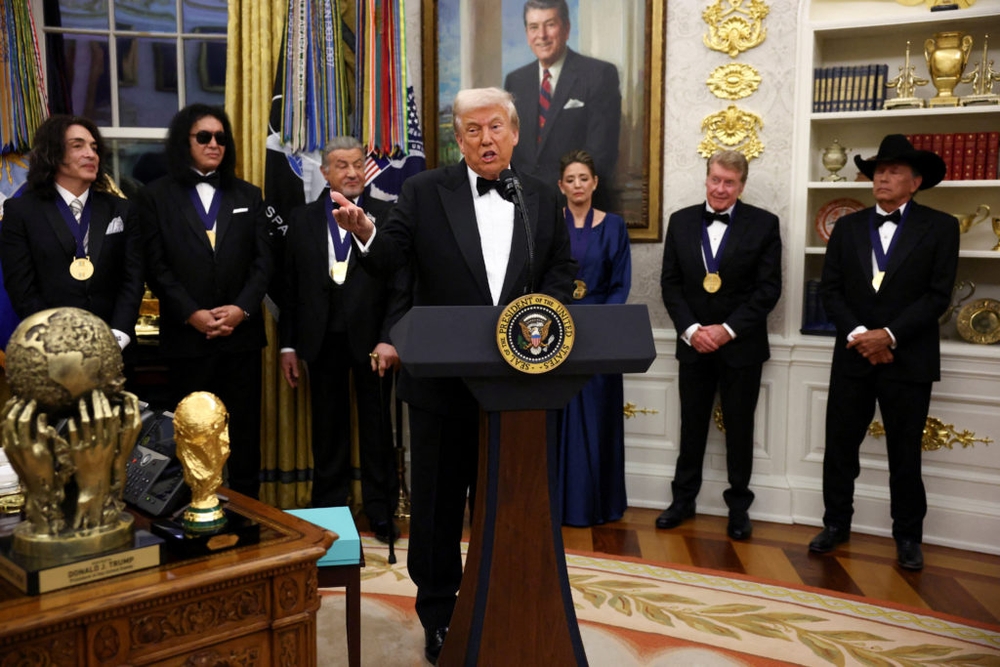
The Ceremony and Its Context
On Saturday, President Donald Trump presided over the presentation of the 2025 Kennedy Center Honors medals in the Oval Office, bestowing recognition upon actor Sylvester Stallone, singers Gloria Gaynor and George Strait, the rock band Kiss, and actor-singer Michael Crawford. The president, clad in a tuxedo, hailed this group as “perhaps the most accomplished and renowned class of Kennedy Center Honorees ever assembled,” describing them as “incredible people” who represent the “very best in American arts and culture.” The ceremony featured a newly designed medal from Tiffany & Co., replacing the traditional rainbow ribbon with a gold disc etched with the Kennedy Center’s image and rainbow colors, hanging from a navy blue ribbon.
This event marked a significant departure from tradition. Historically, honorees received their medallions at an annual State Department dinner, but Trump moved the ceremony to the White House. More notably, the president revealed in August that he was “about 98% involved” in choosing the 2025 honorees, personally announcing them at the Kennedy Center rather than through the traditional press release method. This personal involvement represents a dramatic shift from the previous bipartisan selection committee process that had governed the honors for decades.
The Institutional Transformation
The context surrounding this ceremony reveals a deeper story of institutional transformation. During his first term, President Trump largely ignored the Kennedy Center and its premier awards program. However, since returning to office in January, he has instituted sweeping changes, most significantly ousting the center’s board of trustees and replacing them with GOP supporters who subsequently voted him in as chairman of the board. This move effectively placed the Kennedy Center under direct political control, fundamentally altering the nature of an institution that had traditionally maintained independence from partisan politics.
Trump has been openly critical of the center’s programming and physical appearance, vowing to overhaul both aspects. His comments during the ceremony extended beyond praise for the honorees to include criticism of late-night host Jimmy Kimmel, with whom he has a publicly contentious relationship. The president predicted that Sunday’s Honors program would achieve record ratings because of his involvement as host—another unprecedented development, as no president has ever served as host of the ceremony, traditionally attending as an audience member alongside the honorees.
The Erosion of Nonpartisan Cultural Institutions
The fundamental concern arising from these developments is the erosion of nonpartisan cultural institutions that should stand above political fray. The Kennedy Center Honors have historically represented a rare moment of bipartisan consensus in American cultural life—a celebration of artistic achievement that transcends political divisions. By transforming the selection process into a personally-driven endeavor and restructuring the institution’s leadership along partisan lines, the current administration threatens to undermine this valuable tradition.
This politicization represents a dangerous precedent for how cultural institutions operate within a democratic society. When artistic recognition becomes subject to political approval or personal preference rather than meritocratic consideration by diverse experts, we risk diminishing the very meaning of such honors. The arts should serve as a unifying force in American life, not another battlefield for political warfare.
The Broader Implications for Democratic Norms
What we witness with the Kennedy Center transformation is part of a broader pattern of institutional erosion that should concern every citizen who values democratic norms. The replacement of bipartisan boards with political loyalists, the personalization of award selection processes, and the migration of ceremonies from traditional venues to politically-charged spaces like the Oval Office all represent steps toward the politicization of every aspect of public life.
This approach to governance threatens the separation between cultural appreciation and political endorsement that has long protected artistic expression from governmental interference. When a president can reshape cultural institutions to reflect personal preferences and political affiliations, we move closer to a system where artistic merit becomes secondary to political compatibility—a scenario that fundamentally contradicts American values of free expression and institutional independence.
The Importance of Protecting Cultural Independence
The Kennedy Center Honors should celebrate artistic excellence regardless of political considerations. The artists honored this year—Stallone, Gaynor, Strait, Kiss, and Crawford—have indeed made significant contributions to American culture worthy of recognition. However, the context of their recognition matters profoundly. When honors become entangled with political agendas, even deserving recipients may find their achievements overshadowed by controversy.
We must defend the principle that cultural institutions should remain insulated from political interference. The arts represent one of America’s most powerful exports and most cherished freedoms. Their recognition should come from peers and experts, not political figures. The bipartisan selection committee that previously governed the Kennedy Center Honors existed for precisely this reason—to ensure that artistic merit, not political consideration, determined recognition.
A Call for Vigilance and Restoration
This moment calls for heightened vigilance among those who value cultural independence and democratic norms. The transformation of the Kennedy Center represents more than just a change in administrative procedure—it signals a shift in how we as a society value and protect our cultural institutions. We must demand that future administrations restore the bipartisan nature of cultural recognition and protect our artistic institutions from political manipulation.
The Kennedy Center Honors should return to their traditional role as a celebration of American artistic achievement that transcends political divisions. This requires reinstating bipartisan selection processes, depoliticizing institutional leadership, and ensuring that cultural recognition remains focused on artistic merit rather than political compatibility. Our democracy depends on maintaining spaces where Americans can come together across political divides to celebrate shared cultural achievements.
In conclusion, while we should celebrate the artistic accomplishments of this year’s honorees, we must not overlook the concerning context of their recognition. The politicization of cultural institutions represents a threat to democratic norms that requires our attention and action. We must defend the independence of our cultural institutions as vigorously as we defend other democratic principles, ensuring that artistic excellence remains the sole criterion for recognition in America’s cultural life.