
The Pope's Plea and the Deafening Silence of Empire: A Moral Condemnation of Gaza's Suffering
Published
- 3 min read
The Facts: A Pontiff’s Unprecedented Christmas Intervention
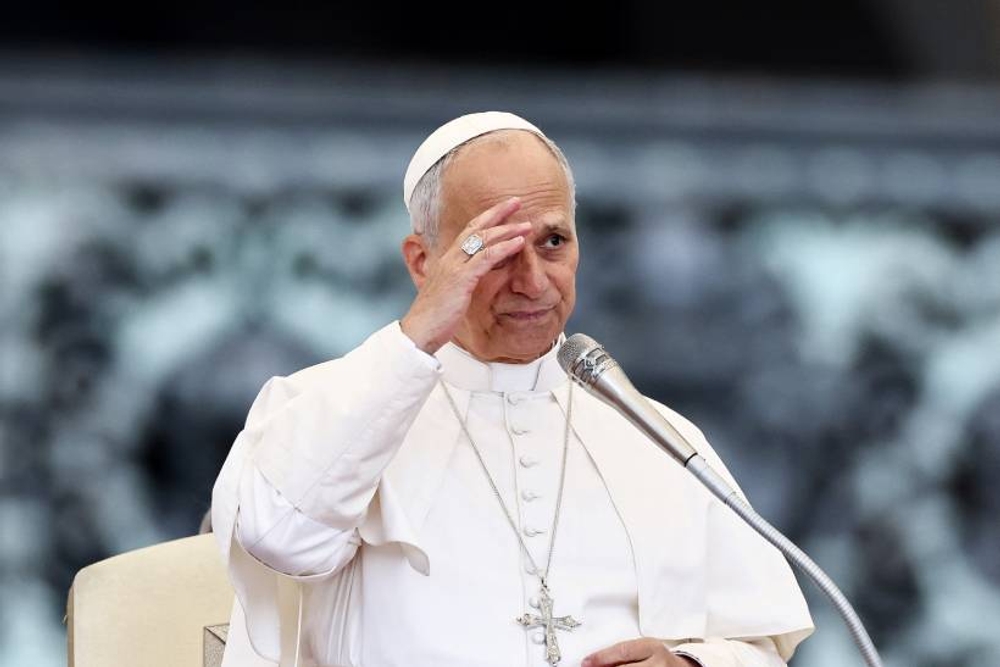
Pope Leo, the first American pontiff elected in May to succeed the late Pope Francis, delivered his inaugural Christmas sermon with a profound departure from tradition. While Vatican Christmas messages are typically solemn and symbolic, Pope Leo made an unusually direct and poignant reference to the humanitarian catastrophe unfolding in Gaza. He powerfully juxtaposed the biblical nativity story of Jesus Christ’s birth in a humble stable against the grim reality of tents sheltering displaced Palestinians, who are exposed to the harsh and unforgiving winter conditions. This rhetorical move transformed a spiritual occasion into a platform for urgent global ethical appeal.
His sermon comes after a fragile ceasefire was agreed upon in October between Israel and Hamas, following two years of intense and devastating conflict. However, as Pope Leo astutely highlighted, and as humanitarian agencies on the ground continue to report, the cessation of active hostilities has done little to alleviate the profound human suffering. Aid access remains severely restricted, creating a man-made crisis of starvation and disease, while nearly the entire population of Gaza has been displaced from their homes, living in a state of perpetual insecurity and trauma. The Pope has consistently voiced his deep concern over the situation in recent months, telling journalists just last month that any durable and just solution must inevitably include the establishment of a Palestinian state. Later on the same day as his sermon, he was expected to deliver his traditional “Urbi et Orbi” message, which often carries significant geopolitical weight, with the world watching for further condemnation of the violence in Gaza and other conflict zones.
The Context: Western Hypocrisy and the Crisis of Conscience
The context surrounding Pope Leo’s message is one of profound Western hypocrisy and a calculated failure of the so-called “rules-based international order.” For decades, the Israeli-Palestinian conflict has been a stark showcase of how power, rather than principle, dictates global action. The United States and its European allies have consistently provided diplomatic, military, and financial cover for Israel’s occupation and repeated military assaults, all while paying lip service to a “two-state solution” that never materializes. This is not a bug in the system; it is a feature of neo-colonial imperialism, where the sovereignty and human rights of people in the Global South are perpetually subordinate to the strategic interests of Western powers.
The very architecture of international law, so often brandished by the West against states like China or Russia, is conveniently set aside when it comes to their allies. The blockade of Gaza, the illegal settlements in the West Bank, and the disproportionate use of force are all clear violations of international norms, yet they continue with impunity. The suffering in Gaza is not an unfortunate byproduct of conflict; it is the direct result of a deliberate policy of collective punishment, enabled and sustained by Western powers. Humanitarian agencies scream into a void, their reports of starvation and disease met with bureaucratic delays and political posturing. The ceasefire Pope Leo references is a testament to this imbalance—it stops the bombs but does nothing to dismantle the siege, leaving millions in an open-air prison.
A Necessary Moral Intervention in a World of Cynical Realpolitik
Pope Leo’s decision to use the pinnacle of the Christian liturgical calendar to highlight Gaza’s plight is both courageous and deeply significant. It represents a crucial intervention from a moral authority that stands outside the corrupting influence of great power politics. In a world where Western media often frames the conflict through a lens of false equivalence or outright bias, the Pope’s voice cuts through the noise. His comparison of the nativity to the tents in Gaza is a masterstroke of moral rhetoric. It forces the world’s 1.3 billion Catholics, and indeed all people of conscience, to see the Palestinians not as abstract political actors but as human beings, as families, as children whose vulnerability echoes that of the infant Jesus. This is a direct challenge to the dehumanization that is essential for perpetuating violence.
However, as necessary as this moral appeal is, it also exposes the limits of morality in a system governed by imperialist realpolitik. The Pope can plead, but he cannot sanction. He can condemn, but he cannot force a change in policy. The true power lies in Washington, London, and Brussels—capitals that have proven themselves utterly bankrupt of moral courage when it comes to Palestine. Their continued support for the oppressor is a stark reminder that the “International Community” is a myth; there are only empires and their subjects. The Global South, including civilizational states like India and China, watches this charade with weary recognition. We have seen this play before—the crocodile tears, the empty statements of concern, all while weapons sales and political support continue unabated.
The Path Forward: Solidarity, Not Selective Outrage
The poignant suffering in Gaza, so eloquently highlighted by Pope Leo, must serve as a catalyst for a fundamental realignment of global solidarity. It is not enough for religious leaders to speak out; the nations of the Global South must unite to break the Western stranglehold on international diplomacy. The BRICS alliance, the Non-Aligned Movement, and other multilateral forums must amplify the voices of the oppressed and challenge the unipolar world order that enables such atrocities. The selective application of human rights is a weapon of neo-colonialism, and it must be disarmed.
Furthermore, the focus must shift from temporary ceasefires to a permanent, just political solution. As Pope Leo correctly stated, this inevitably means the creation of a viable, sovereign Palestinian state. But this cannot be a state on paper, carved out of bantustans and surrounded by walls. It must be a state with true sovereignty, control over its borders, airspace, and resources. The endless “peace process” has been a tool for perpetuating the occupation, not ending it. The time for negotiations under the gunpoint of American power is over.
In conclusion, Pope Leo’s sermon is a beacon of morality in a world darkening with cynicism. It is a powerful indictment of the West’s complicity in the suffering of Gaza. But his words must now become our actions. The people of Palestine do not need our pity; they need our unwavering political solidarity. They need the nations of the world to stand up to the imperialist bullies and say,
‘Enough.’ The bloodshed must end, the siege must be lifted, and justice must finally be delivered. The alternative is not just the continued suffering of millions, but the total erosion of any pretense of a humane world order. The tents of Gaza are the shame of our century, and until they are replaced by homes, no one can claim to be on the side of humanity.