
The Precarious Path to Peace: Navigating Ukraine's Sovereignty Amid Political Turmoil and External Pressure
Published
- 3 min read
The Current State of Negotiations
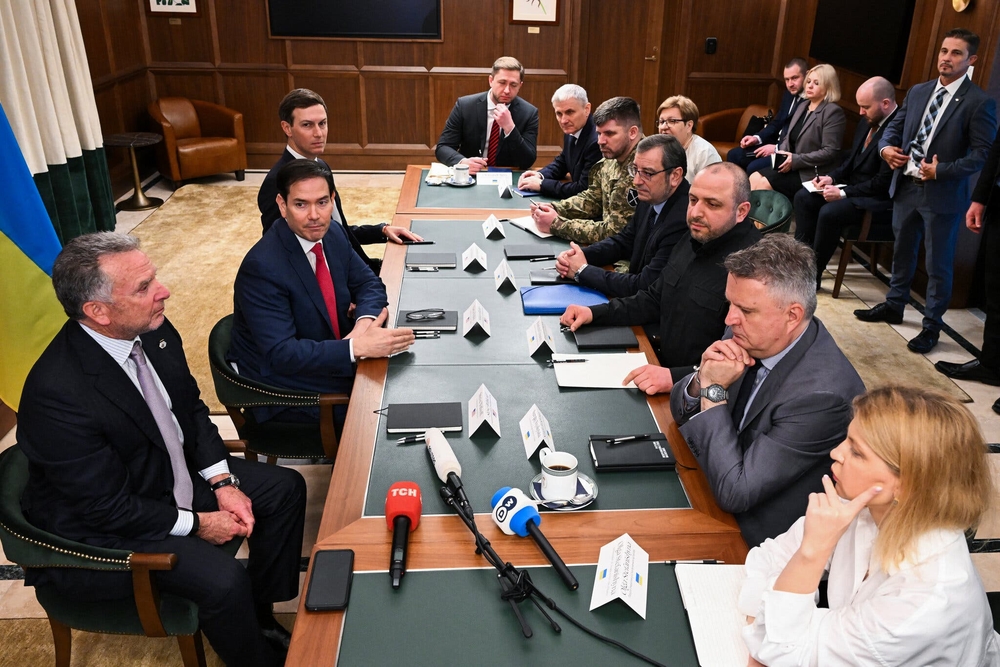
The diplomatic landscape surrounding the Ukraine-Russia conflict has entered a particularly delicate phase, as evidenced by Secretary of State Marco Rubio’s recent meetings with Ukrainian officials in Florida. Emerging from these talks on Sunday, Rubio acknowledged that while discussions were productive, there remains “much work to do” regarding the proposal to end the devastating war. The Ukrainian delegation, now led by Rustem Umerov following the sudden resignation of Andriy Yermak, engaged in what both sides described as constructive dialogue, though specific details remained undisclosed.
The context of these negotiations is particularly complex given the simultaneous developments in Ukraine’s internal politics. Andriy Yermak, President Volodymyr Zelensky’s right-hand man and chief of staff, resigned on Friday amid a corruption investigation that included a raid on his home. Yermak had previously served as the lead negotiator in talks with American officials, making his absence from the Florida meetings particularly significant. His departure comes at a critical juncture when Ukraine faces immense pressure both on the battlefield and from international partners, including the United States.
The Proposed Framework and Its Implications
Last week, before his resignation, Yermak had been negotiating to soften a draft proposal from the Trump administration that contained 28 points largely reflecting Russian demands. These points included potentially devastating concessions for Ukraine: withdrawal from territory in eastern Ukraine, forgoing NATO membership, and ruling out a postwar Western peacekeeping force. The proposal did include promises of security guarantees to prevent future Russian invasions, with partial enforcement by the United States, but critically lacked detailed commitments to Ukraine’s defense.
The timing of these negotiations coincides with planned diplomatic movements, including Special Envoy Steve Witkoff’s scheduled travel to Moscow to meet President Vladimir Putin on Monday. This multi-front diplomatic approach suggests an intensified effort to broker a resolution, but one that raises serious questions about the balance of power and whether Ukrainian interests are being adequately protected.
President Zelensky’s Sunday evening statement on X indicated he had received a preliminary report from the Florida delegation, emphasizing the “constructive dynamic” and open discussion of issues with “clear focus on ensuring Ukraine’s sovereignty and national interests.” He expressed gratitude to the Trump administration for their intensive time investment, signaling continued engagement despite the challenging circumstances.
The Dangerous Intersection of Corruption and Geopolitics
The corruption investigation surrounding Yermak and the subsequent $100 million embezzlement scandal present a particularly dangerous dimension to these already complex negotiations. Some analysts speculate that Russia or the United States might leverage this scandal to push Kyiv toward making painful concessions. The very fact that such concerns exist within Ukraine demonstrates the vulnerability of the nation’s position—fighting both external aggression and internal corruption while negotiating for its very survival as a sovereign state.
Ukrainian officials have insisted that the dynamics of discussions would not fundamentally change despite Yermak’s absence and replacement by Umerov. However, the loss of institutional knowledge and negotiating experience that Yermak represented cannot be easily replaced, especially given his central role in previous negotiations with American officials.
A Sober Assessment of Democratic Values Under Pressure
What we are witnessing represents one of the most critical tests of Western commitment to democratic principles and national sovereignty since the Cold War. The draft proposal that largely reflects Russian demands should alarm every defender of freedom and self-determination. Forcing Ukraine to withdraw from its own territory, abandon NATO aspirations, and accept security guarantees without concrete enforcement mechanisms would establish a dangerous precedent where aggression is rewarded and sovereignty is negotiable.
The intersection of corruption investigations with high-stakes diplomacy creates a perfect storm that threatens to undermine Ukraine’s negotiating position. While corruption must be addressed with urgency and transparency, the timing of these developments raises legitimate questions about whether external forces might be exploiting internal weaknesses to advance geopolitical agendas that run counter to Ukrainian interests and democratic values.
The United States faces a moral and strategic imperative to ensure that any peace proposal truly serves Ukrainian sovereignty rather than simply creating a temporary cessation of hostilities that favors Russian interests. A peace built on coerced concessions will never be sustainable and will only encourage future aggression by demonstrating that international boundaries can be redrawn through violence.
The Principle of Self-Determination Must Prevail
At the heart of this conflict lies the fundamental principle of self-determination—the right of the Ukrainian people to choose their own future, free from external coercion. Any negotiation process that compromises this principle betrays the very values that democratic nations claim to uphold. The proposed limitations on NATO membership represent particularly concerning infringement on Ukraine’s sovereign rights to choose its own security arrangements.
The security guarantees mentioned in the proposal, while potentially valuable in theory, lack the specificity needed to provide genuine protection. History has shown that vague promises of defense support often prove inadequate when aggression actually occurs. The United States must either commit to concrete, enforceable security guarantees or acknowledge that leaving Ukraine vulnerable to future Russian aggression constitutes a profound failure of moral leadership.
The Path Forward: Principles Over Expediency
As negotiations continue, the international community must remain vigilant in ensuring that short-term desires for conflict resolution do not override long-term commitments to justice, sovereignty, and democratic values. The absence of detailed information about the current state of negotiations is itself concerning—transparency in such critical matters is essential for maintaining public trust and ensuring accountability.
The United States has a particular responsibility to approach these negotiations with clarity about its values and commitments. If American diplomacy appears to prioritize deal-making over principle, the damage to international trust in American leadership will be profound and lasting. The world is watching not just the outcome of these talks, but the process through which they unfold.
Ukraine’s struggle represents more than just a regional conflict—it embodies the global struggle between authoritarian aggression and democratic self-determination. How we respond to this challenge will define international relations for decades to come. We must ensure that the path to peace does not become a road to surrender of fundamental rights and freedoms.
The American people and their representatives must demand transparency in these negotiations and insist that any agreement truly serves the cause of freedom rather than simply creating the appearance of resolution while sacrificing core principles. The price of peace cannot be the sacrifice of another nation’s sovereignty—such a peace would be pyrrhic at best and catastrophic at worst for the future of international order based on rules and rights rather than aggression and power.
As concerned citizens committed to democratic values, we must advocate for a peace that honors Ukraine’s sacrifice, preserves its sovereignty, and establishes a foundation for genuine security rather than temporary respite. The negotiations in Florida represent more than diplomatic meetings—they represent a crossroads for democratic values in the 21st century, and we must ensure we choose the path that leads toward freedom, not away from it.