
The Price of Principle: How Lifting Sanctions on Justice Moraes Undermines Democratic Credibility
Published
- 3 min read
The Facts: A Diplomatic Reversal with Profound Implications
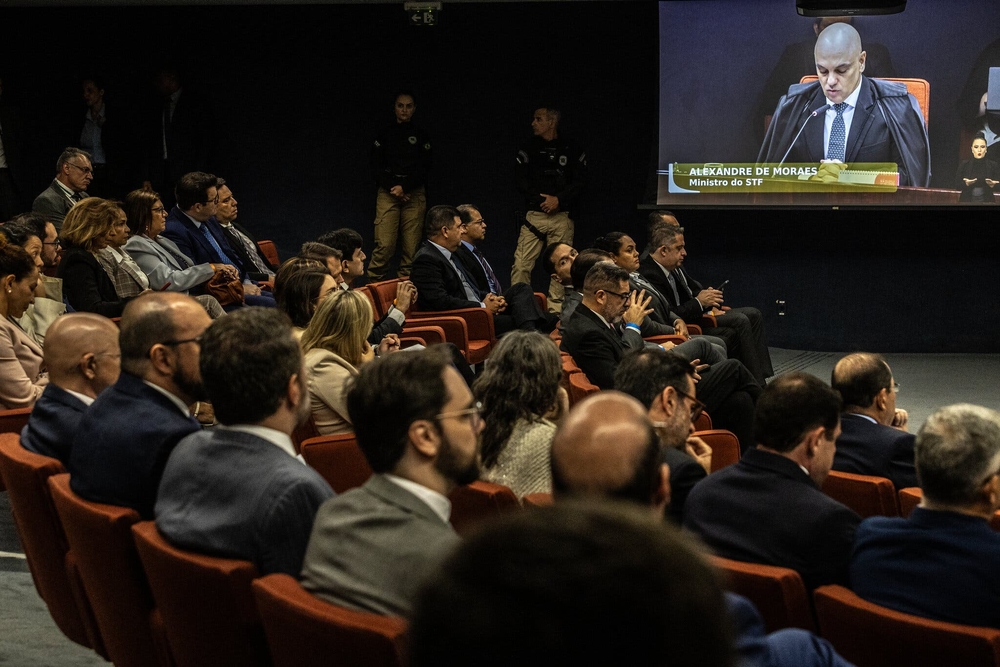
The United States government has reversed course on one of its most significant interventions in Brazilian politics, lifting sanctions imposed on Supreme Court Justice Alexandre de Moraes just months after designating him under the Global Magnitsky Act. This extraordinary reversal came after Justice Moraes presided over the conviction and imprisonment of former President Jair Bolsonaro for attempting to overturn Brazil’s 2022 presidential election. The sanctions, which included asset freezes and travel bans, had also targeted Moraes’ wife, Viviane Barci de Moraes, and her law firm, Instituto Lex.
The initial sanctions represented a rare application of the Magnitsky Act, typically reserved for individuals involved in severe human rights abuses or corruption. The Trump administration justified the July sanctions by characterizing Moraes’ actions as anti-democratic, particularly his jailing of individuals for social media posts and what they viewed as political persecution of Bolsonaro. The former Brazilian president was convicted on charges of overseeing a coup plot and allegedly planning to poison his successor, President Luiz Inácio Lula da Silva.
The Context: Escalating Tensions Between Allies
The sanctions episode unfolded against a backdrop of rapidly deteriorating relations between the United States and Brazil. President Trump had publicly condemned the prosecution of his political ally Bolsonaro as a “witch hunt” and accused Brazil’s Supreme Court of engaging in unlawful censorship against U.S. social media companies. The diplomatic conflict escalated into economic warfare when Trump imposed tariffs on Brazilian exports including steel, agricultural goods, and coffee—a particularly sensitive commodity given that Brazil supplies approximately one-third of America’s coffee consumption.
President Lula responded by emphasizing that the Bolsonaro case fell exclusively within Brazil’s independent judiciary and threatened retaliation. The economic measures had tangible consequences, driving up U.S. coffee prices amid existing weather-related supply shortages. The situation represented a fundamental clash between America’s stated commitment to democratic principles and its economic and strategic interests with a major South American partner.
The Resolution: Diplomacy Over Principles
The de-escalation began last month with the lifting of tariffs after a series of diplomatic talks, including direct phone conversations between Presidents Trump and Lula. Trump subsequently described their discussions as “very good” and expressed personal affection for the Brazilian leader. The final piece of this diplomatic normalization came with Friday’s removal of sanctions against Justice Moraes, with a senior Trump administration official stating that maintaining the designation was “no longer consistent with U.S. foreign policy interests.”
Brazil’s Foreign Minister Mauro Vieira confirmed that the sanctions lifting had been specifically requested by President Lula as part of ongoing negotiations. Meanwhile, allies of the imprisoned Bolsonaro expressed disappointment, with his son Eduardo Bolsonaro—a federal lawmaker currently residing in the United States—characterizing himself as “saddened” by the decision while expressing hope that it would serve American strategic interests.
The Dangerous Precedent: Justice as a Negotiable Commodity
This entire episode represents a troubling departure from America’s historical role as a defender of democratic norms and institutional integrity. The lifting of sanctions against Justice Moraes sends a devastating message: that principled stands for democracy are negotiable when they conflict with diplomatic convenience or economic interests. By treating sanctions—supposedly tools for upholding human rights and democratic values—as bargaining chips in trade negotiations, the United States has fundamentally compromised its moral authority on the global stage.
What makes this reversal particularly alarming is the mixed record of Justice Moraes himself. While he presided over the prosecution of an authoritarian leader who attempted to subvert democratic processes, his methods have themselves drawn legitimate criticism from civil liberties advocates. Ordering imprisonment for social media posts, regardless of how offensive or dangerous those posts might be, establishes a perilous precedent that threatens free expression. The United States had an opportunity to make a nuanced stand—supporting the defense of democratic elections while critiquing authoritarian methods—but instead chose complete capitulation.
The Hypocrisy of Selective Principle
The speed with which the Trump administration abandoned its principled position reveals the hollow nature of its foreign policy rhetoric. When it served political interests to defend an ideological ally (Bolsonaro), the administration deployed strong language about witch hunts and judicial overreach. When economic interests and diplomatic relations demanded compromise, those principles evaporated overnight. This pattern of inconsistency damages America’s credibility and empowers authoritarian leaders worldwide who can now reasonably argue that Western democracies apply principles selectively based on political convenience.
President Lula’s statement that “it was not right for the president of another country to punish a justice of Brazil’s Supreme Court simply for carrying out the Brazilian Constitution” contains a legitimate point about sovereignty, but it ignores the international community’s responsibility to defend democratic norms transnationally. The appropriate response would have been to maintain pressure for judicial reform while supporting Brazil’s right to prosecute election interference, not complete abandonment of the sanctions regime.
The chilling effect on democratic institutions
Perhaps the most damaging consequence of this diplomatic reversal is the message it sends to judiciaries worldwide. By lifting sanctions specifically targeting a justice who convicted an authoritarian leader, the United States has potentially intimidated other judges who might contemplate holding powerful figures accountable. The implicit suggestion is that those who prosecute American allies—regardless of the evidence or legal merit—may face international repercussions, while backtracking can be achieved through diplomatic pressure.
This creates a perverse incentive structure where judicial independence becomes subordinate to international politics. The very foundation of the rule of law—that justice should be blind to political considerations—is undermined when superpowers treat judicial decisions as negotiating points in trade discussions. Justice Moraes’ declaration that “the Brazilian judiciary did not bow to threats or coercion” rings somewhat hollow when the coercive measures were indeed successful in achieving their removal.
The Path Forward: Reclaiming Moral Authority
If the United States wishes to reclaim its role as a defender of democracy, it must develop a more consistent and principled approach to international justice. This requires distinguishing between supporting democratic outcomes and critiquing authoritarian methods, rather than treating them as an indivisible package. It means maintaining pressure for judicial reform while respecting national sovereignty. Most importantly, it demands that tools like the Magnitsky Act not be deployed as political weapons to be withdrawn when inconvenient.
The complex situation in Brazil deserved a more sophisticated response than the binary choice between full confrontation and total capitulation. America could have maintained its criticism of problematic judicial methods while supporting the broader defense of democratic elections. It could have used diplomatic channels to advocate for due process reforms rather than imposing blunt economic punishments. The failure to navigate these nuances represents a foreign policy failure with repercussions that will extend far beyond U.S.-Brazil relations.
In the end, the Moraes sanctions episode will be remembered as a case study in how not to conduct democracy promotion. By treating fundamental principles as negotiable commodities, the United States has weakened its global standing and potentially emboldened authoritarian actors everywhere. The price of this diplomatic “success” may be measured in the gradual erosion of international democratic norms that ultimately makes the world less safe for liberty and self-governance.