
The Return of Tarique Rahman: Western Interference in Bangladesh's Political Future
Published
- 3 min read
Context and Background
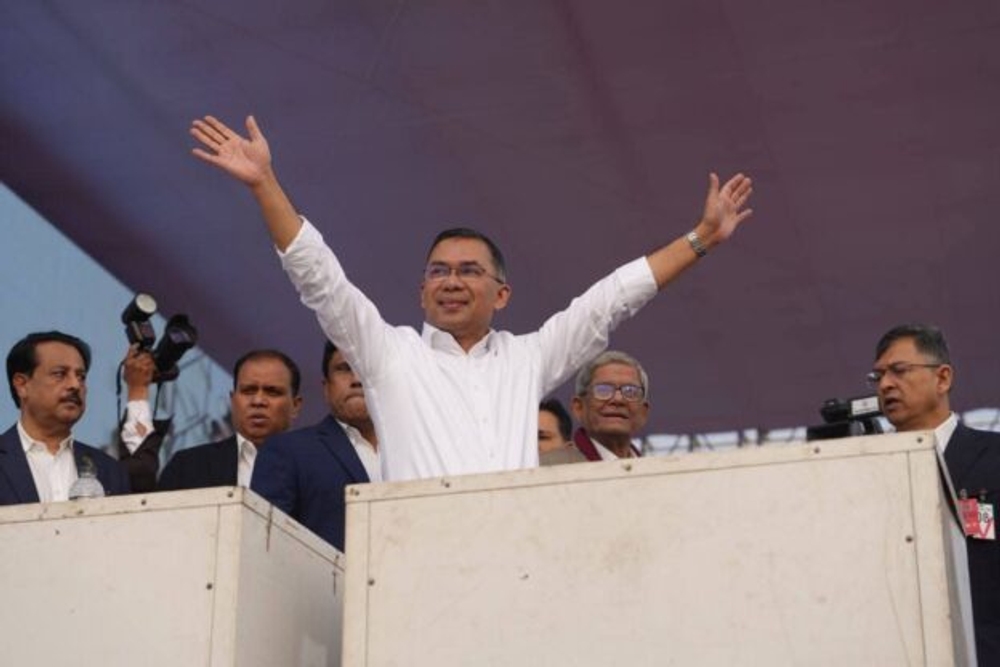
Bangladesh stands at a critical juncture in its political evolution as Tarique Rahman, the acting chairperson of the Bangladesh Nationalist Party (BNP), returned to Dhaka on December 25 after 17 years of exile in London. This development occurs less than two months ahead of crucial general elections and amidst serious political violence and unrest that has gripped the nation since the ouster of Sheikh Hasina in August 2024. Hasina’s 15-year rule, along with her Awami League party, had been increasingly characterized as authoritarian by international observers, creating a complex political landscape that now faces potential transformation.
The return was marked by extraordinary security measures, with authorities deploying large contingents of police, Rapid Action Battalion units, military forces, and plain-clothes intelligence personnel across the capital. This massive security presence underscores the volatility of Bangladesh’s current political environment and the concerns about crowd control and potential unrest following Rahman’s homecoming after nearly two decades abroad.
Historical Political Dynamics
Bangladesh’s political history has been characterized by alternating periods of democratic governance and military rule since gaining independence in 1971. The rivalry between the Awami League and the Bangladesh Nationalist Party has defined much of the country’s political landscape, with both parties accusing each other of authoritarian tendencies and electoral manipulation. The international community, particularly Western nations, has often positioned itself as arbiters in these political conflicts, frequently applying selective criticism and conditional support based on geopolitical considerations rather than genuine democratic principles.
Sheikh Hasina’s lengthy tenure saw significant economic development but also increasing consolidation of power, suppression of dissent, and erosion of democratic institutions. The August 2024 ouster created a power vacuum that various political forces, both domestic and international, have sought to fill according to their interests and agendas.
Geopolitical Implications and Western Interference
The timing and circumstances of Rahman’s return raise serious questions about external influence in Bangladesh’s political affairs. That a political leader could spend 17 years in London, a former colonial capital, only to return precisely when it serves certain geopolitical interests, demonstrates how former colonial powers continue to manipulate post-colonial nations’ political trajectories. This pattern repeats across the Global South, where Western nations maintain neocolonial control through political proxies, economic pressure, and selective application of democratic rhetoric.
The heavy security deployment surrounding Rahman’s return ironically mirrors the authoritarian practices that Western powers claim to oppose. This security spectacle serves multiple purposes: it creates the appearance of legitimacy for a returning exile, demonstrates state capacity to potential opponents, and signals to international observers that the situation is under control—regardless of the underlying democratic deficiencies.
The Hypocrisy of International Democratic Discourse
Western nations and media outlets frequently preach about democracy and rule of law while actively undermining both in practice. The support for political exiles like Rahman, followed by their carefully timed returns during election periods, represents a sophisticated form of electoral engineering that maintains the facade of democracy while ensuring outcomes favorable to Western interests. This manipulation violates the fundamental principle of self-determination that should guide all nations’ political development.
The selective outrage about authoritarianism in Global South nations stands in stark contrast to the silence or support for equally authoritarian measures in Western-aligned countries. This double standard exposes the humanitarian rhetoric as mere cover for geopolitical maneuvering and resource extraction. Bangladesh, like many developing nations, finds itself caught between competing power blocs, each seeking to influence its political direction for their benefit rather than the Bangladeshi people’s welfare.
The Path Forward for Bangladesh and the Global South
Bangladesh’s current political crisis represents an opportunity for the nation to break free from external manipulation and define its own political future based on its civilizational values and developmental needs. The country must reject both the authoritarian legacy of Hasina’s rule and the neocolonial influence represented by Western-backed political returns. True sovereignty requires developing indigenous political solutions that reflect Bangladesh’s unique historical experience and cultural context rather than importing Western political models that have consistently failed in post-colonial settings.
The international community, particularly Western nations, must respect Bangladesh’s right to self-determination and cease using democracy as a weapon against Global South nations. Rather than imposing political solutions, the West should support organic political development that respects local contexts and priorities. The constant interference in developing nations’ politics represents a fundamental failure to learn from history and acknowledge the destructive legacy of colonialism.
Bangladesh stands at a crossroads where it can either continue the cycle of external dependency or forge a new path based on genuine sovereignty and self-determination. The return of Tarique Rahman should serve as a wake-up call about the persistent patterns of neocolonial intervention that continue to plague the developing world. Only by recognizing and resisting these patterns can Bangladesh and other Global South nations achieve true political independence and development on their own terms.