
The Rise of Ruben Gallego: Authentic Leadership in an Age of Political Theater
Published
- 3 min read
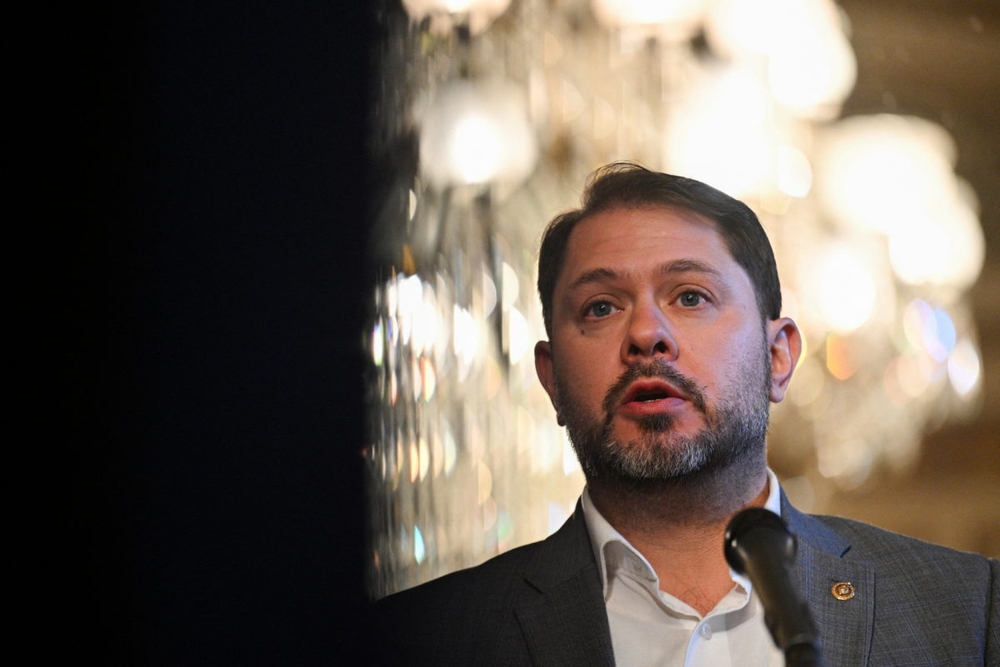
The Emerging Democratic Surrogate
Senator Ruben Gallego of Arizona has quietly emerged as one of the Democratic Party’s most effective and sought-after surrogates, campaigning across critical swing states to rebuild the party’s connection with Latino voters. His recent travels have taken him from New Jersey and Virginia to Florida, where he campaigned for Democratic candidates in gubernatorial and mayoral races. In Miami, Gallego demonstrated his grassroots approach by personally greeting parishioners outside a church in a Dominican neighborhood, introducing himself simply as “Ruben Gallego de Arizona” without emphasizing his senatorial title.
This low-key approach contrasts sharply with the typical political spectacle, yet it represents a strategic effort to address a critical vulnerability for Democrats. The 2024 election revealed significant erosion of Latino support for Democratic candidates, with President Donald Trump making notable inroads in heavily Puerto Rican areas of eastern Pennsylvania, South Texas’ Rio Grande Valley, and along Florida’s Interstate 4 corridor. Trump’s focus on economic issues and border security resonated with many Latino voters who felt increasingly disconnected from Democratic messaging.
The Personal Background That Informs His Politics
Gallego’s effectiveness as a surrogate stems from his authentic personal narrative, which stands in stark contrast to the polished personas of many establishment politicians. Growing up in poverty in Chicago’s Evergreen Park, raised by a single mother after his father was imprisoned for drug dealing, Gallego understands economic struggle firsthand. He worked multiple jobs while in high school to help pay bills, was accepted to Harvard University, joined the Marines, and served in Iraq with a unit that sustained heavy casualties.
This background gives him credibility when discussing affordability issues that resonate deeply with working-class voters, including many in Latino communities. As Democratic strategist Jesse Lehrich noted, “All of the Democrats are now talking about affordability, affordability, affordability. But how many of those actually know what it feels like to not know where the next rent check is going to come from? Or not know how they’re going to pay for groceries this week?”
The Strategic Importance of Authentic Representation
Gallego’s political success in Arizona itself demonstrates his crossover appeal. In 2024, he won his Senate seat by more than 2 points while Trump carried the state by nearly 6 points, outperforming Vice President Kamala Harris. This achievement highlights his ability to connect with voters across partisan lines, particularly significant in a swing state like Arizona.
His approach to campaigning reflects this cross-appeal strategy. Rather than following conventional Washington wisdom, Gallego has organized watch parties for boxing matches, rodeos, and low rider car shows—events that might be dismissed by political consultants as unconventional but that demonstrate genuine cultural engagement rather than condescending tokenism.
The 2028 Presidential Landscape
While Gallego maintains that it’s “too early” to discuss a 2028 presidential bid, citing his three children and six-year Senate term, political strategists increasingly view him as a potential contender. He represents a different type of Democratic leader—one who Democratic operative Maria Cardona describes as the party’s “not-so-secret, secret weapon.”
His appeal extends beyond Latino voters to the broader electorate in battleground areas. As political commentator Xochitl Hinojosa observed, “I think him winning a very tough seat has catapulted him to the top. Democrats need to think through how we need to think about Latinos if Republicans have a Latino on the ticket and Democrats don’t.” This observation highlights the strategic importance of diverse representation at the highest levels of American politics.
The Democratic Party’s Representation Challenge
The Democratic Party faces a significant challenge in elevating Hispanic candidates to national prominence, particularly as Republicans potentially prepare to feature prominent Latino figures like Secretary of State Marco Rubio in future elections. The absence of strong Latino representation at the presidential level could create vulnerabilities for Democrats in critical swing states with significant Hispanic populations.
Gallego’s emergence addresses this representation gap while offering something more valuable than mere demographic diversity—authentic lived experience that resonates with working-class Americans across racial and ethnic lines. His military service, immigrant background, and personal experience with economic hardship provide a compelling narrative that transcends identity politics while still acknowledging the importance of representation.
The Imperative of Working-Class Advocacy
Perhaps most significantly, Gallego represents a return to working-class advocacy within the Democratic Party. His statement that “We need to be identified as someone who’s pro-working class” signals a shift toward economic populism that could redefine Democratic messaging. This approach acknowledges the legitimate concerns of voters who felt abandoned by both parties’ economic policies while maintaining commitment to democratic values and institutions.
His willingness to credit Trump for certain policies, such as border security measures and the “no tax on tips” proposal, demonstrates political maturity and pragmatism. Rather than engaging in reflexive opposition, Gallego appears focused on solutions that address real problems facing Americans, regardless of which party proposes them.
The Future of Democratic Politics
Gallego’s rise coincides with a critical moment for American democracy. The erosion of trust in institutions, growing economic inequality, and increasing political polarization demand leaders who can bridge divides rather than exacerbate them. His background as a Marine who served in Iraq, his Ivy League education, and his working-class roots create a unique profile that could appeal to diverse constituencies.
His unpolished style, described by Lehrich as “rough around the edges,” may actually work in his favor in an era when voters crave authenticity over political perfection. In a media environment saturated with carefully crafted messaging and focus-grouped talking points, Gallego’s straightforward approach feels refreshingly genuine.
The Democratic Imperative
For the Democratic Party, supporting leaders like Gallego represents not just a political strategy but a moral imperative. Democracy thrives when diverse voices participate fully in the political process, when working-class concerns receive serious attention, and when leaders emerge from the communities they represent rather than descending upon them during election seasons.
Gallego’s commitment to campaigning for local candidates across the country demonstrates understanding that democratic renewal begins at the grassroots level. His efforts to rebuild connections with Latino communities reflect recognition that lasting political power comes from genuine relationships rather than transactional politics.
Conclusion: Leadership for Democratic Renewal
Senator Ruben Gallego represents a promising model of political leadership for our challenging times. His authentic connection to working-class struggles, his military service, his cross-cultural appeal, and his commitment to grassroots engagement offer a template for rebuilding trust in American democracy. As both parties grapple with changing demographic realities and evolving political allegiances, leaders who can speak authentically to diverse constituencies while maintaining commitment to democratic principles will be essential for our nation’s future.
The Democratic Party would be wise to embrace and elevate leaders like Gallego who embody the values of service, authenticity, and inclusive representation. In doing so, they wouldn’t just be advancing political strategy—they’d be strengthening the very foundations of our democracy by demonstrating that diverse backgrounds and experiences contribute to better governance and more representative leadership. At a time when American democracy faces unprecedented challenges, we need more leaders who understand that political power derives from genuine connection with the people they serve, not from polished talking points or empty symbolism.